Welcome to Our Travel Agency!




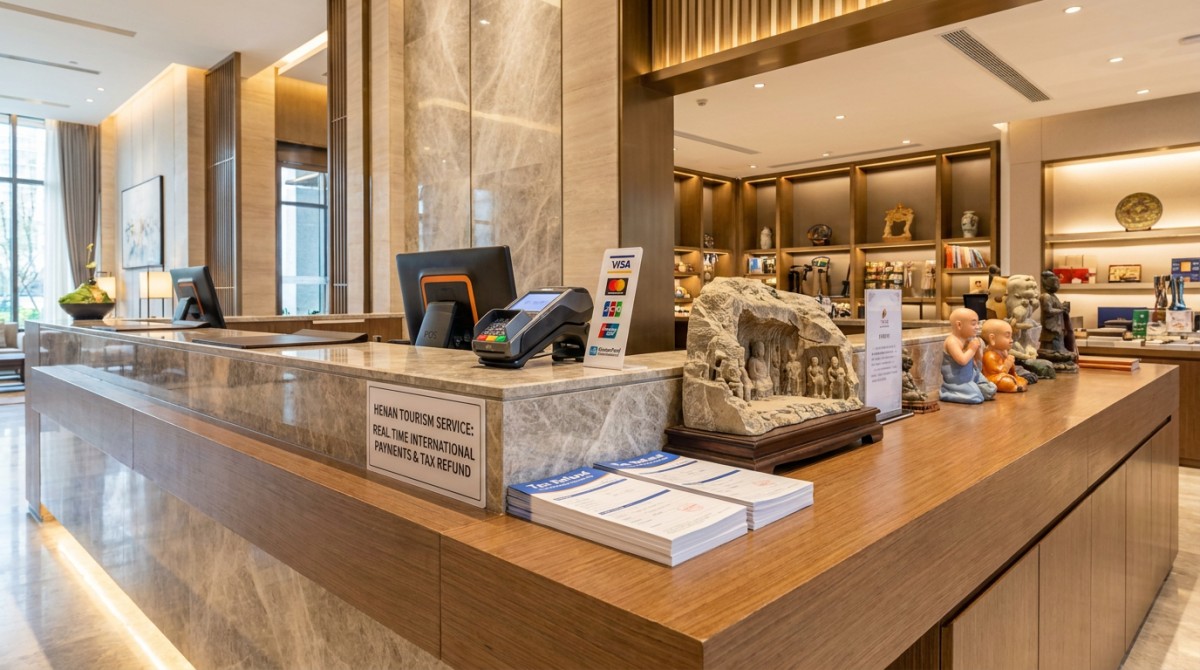
The specific reporting time of the incident is not clearly stated in the input information. The available information shows that China’s first inbound self-service consumption platform was launched on December 31, 2025, and by early June 2026, 127 A-grade scenic spots, star-rated hotels, and cultural creative stores in Henan had joined it, supporting real-time settlement with overseas bank cards such as Visa and Mastercard, and enabling “instant到账” for departure tax refunds. For cultural tourism merchants, inbound tourism service providers, payment service links, and overseas travel businesses, the key point worth noting in this development is not just the addition of a new payment tool, but that the efficiency of inbound consumption, settlement, and tax refunds has begun to be incorporated into the actual evaluation system of destination competitiveness.
Core progress disclosed by the platform
According to the input information, this platform is described as China’s first inbound self-service consumption platform, with a launch date of December 31, 2025.
By early June 2026, the platform’s coverage had expanded to 127 cultural tourism-related merchants in Henan, including A-grade scenic spots, star-rated hotels, and cultural creative stores.
In terms of payment capability, the platform already supports real-time settlement with overseas bank cards such as Visa and Mastercard; in the tax refund process, it has realized the experience of “one-click tax refund” and “instant到账” for departure tax refunds.
In addition, according to the information provided, the platform has been included in Beijing’s inbound tourism service standards system and is regarded by overseas travel businesses as one of the core indicators for evaluating payment convenience and fund return efficiency at Chinese destinations.
From payment to tax refund, the impact is spreading to multiple business roles
What cultural tourism merchants care about is not only payment collection, but whether the reception chain is complete
From an analytical perspective, A-grade scenic spots, star-rated hotels, and cultural creative stores, as the directly connected scenarios, are first affected in terms of front-desk payment collection, order conversion, and the consumption experience of overseas tourists. For such merchants, whether overseas bank cards can be settled smoothly and whether the tax refund experience is seamless will directly affect tourists’ willingness to stay and customer order conversion during the consumption process. What deserves more attention at present is that payment convenience is shifting from an “value-added service” to becoming part of inbound reception capability.
Inbound tourism service providers are facing changes in destination competitiveness standards
From an industry perspective, travel agencies, destination management service providers, and related inbound tourism organizers may incorporate such platform capabilities into route design, merchant screening, and destination recommendation logic. The reason is that the input information has clearly stated that overseas travel businesses will evaluate Chinese destinations based on payment convenience and fund return efficiency. This means that service providers will not only look at scenic resources and accommodation supply, but will also pay attention to whether tourists can smoothly complete consumption and tax refund procedures.
Payment and settlement service links will be required to emphasize stronger usability
From observation, the platform’s support for real-time settlement with overseas bank cards such as Visa and Mastercard indicates that payment usability in inbound consumption scenarios is being moved to a more critical position. For the relevant payment service links, the impact is mainly reflected in cross-border payment acceptance, settlement timeliness, and user operation experience. Whether the stable use of overseas cards can be supported is shifting from a technical issue to a destination service capability issue.
Local cultural tourism supply-side players will face the practical comparison of “whether to connect or not”
From the analysis, 127 cultural tourism merchants in Henan have already joined, sending the signal that inbound consumption infrastructure is being implemented in the form of a concrete merchant network. For scenic spots, hotels, and retail scenarios that have not yet connected to the relevant capabilities, what needs attention next is not conceptual digitalization, but whether they themselves will be prioritized or excluded in the consumption chain of inbound tourists.
Which practical issues should enterprises focus on now
First distinguish between “platform launch” and “business operation running smoothly”
For cultural tourism enterprises and service providers, the fact that the platform has been launched and merchants have joined is confirmed; however, in actual operations, whether stable consumption conversion has been formed and whether it can continue to operate in high-frequency scenarios still remains to be observed. When making internal judgments, enterprises should distinguish between policy or platform signals and daily operational results, avoiding equating access itself with business outcomes.
Focus on checking front-end touchpoints for overseas tourists
Combined with the known information, the platform’s value is mainly reflected in two links: overseas bank card payments and departure tax refund efficiency. Therefore, relevant merchants need to pay more attention to whether front-end touchpoints are clear, including whether the payment acceptance process, tax refund operation process, and on-site communication with tourists are smooth. The key here is not a generalized upgrade, but conducting business checks around “can payment be made, is the tax refund fast, and is it easy for tourists to understand.”
When communicating with channel partners, payment convenience is no longer just supplementary material
Since this platform has been included in Beijing’s inbound tourism service standards system and is used by overseas travel businesses to evaluate payment convenience and fund return efficiency, cultural tourism enterprises should attach greater importance to this capability when communicating with overseas channels or travel businesses. In connection materials, merchant introductions, and cooperation communication, whether the payment and tax refund process is clearly explained may affect partners’ judgment of a destination’s reception capability.
Continue to pay attention to subsequent changes in rule descriptions and coverage scope
At present, enterprises should also pay attention to whether more explicit official statements, expanded scope of application, or changes in access requirements will appear later. Especially for merchants that have already connected or plan to connect, they need to pay attention to whether the platform’s covered targets, business rules, and execution standards will be further refined. For practitioners, such changes have a more direct impact on implementation arrangements than conceptual discussions.
This is more like a long-term signal, rather than just a single event
From observation, the significance of this information lies not only in the launch of the “first” platform, nor only in the fact that 127 merchants in Henan have already joined, but in the fact that the evaluation standards for inbound tourism service capability are undergoing more refined changes. In the past, destination competition revolved more around resources, transportation, accommodation, and route organization; but based on the disclosed information, payment convenience and tax refund到账 efficiency have already entered the evaluation dimensions of travel businesses.
However, the analysis should also maintain boundaries. At this stage, what can be confirmed is the platform launch, the number of connected merchants, the payment and tax refund functions, and its inclusion in the standards system and evaluation indicators; as for whether it will create clear market differentiation results on a larger scale, the input information is still insufficient to support a conclusion. Therefore, it is more appropriate to understand this as a long-term signal worthy of continuous tracking, rather than an industry turning point that has already fully delivered results.
For the industry, the key lies in whether a “closed-loop consumption system” becomes standard configuration
Overall, the core message released by this information is that inbound consumption services are moving from single payment acceptance toward the building of a closed-loop capability linking payment, settlement, and tax refund. For cultural tourism merchants, inbound tourism channels, payment service links, and local destination operators, what truly needs to be understood is not a certain platform itself, but that the consumption convenience of overseas tourists is being quantified and compared, and is also affecting partners’ judgment of destination efficiency.
Therefore, at present, it is more appropriate to understand this development as an extensible industry signal: it has already formed observable implementation progress, but its final impact scope, replication speed, and business results still need to be continuously observed in combination with subsequent coverage, rule changes, and actual market feedback.
Basis of this article and directions for subsequent verification
This article is generated based on the information title, event occurrence time, and event summary provided by the user. The information used includes: China’s first inbound self-service consumption platform was launched on December 31, 2025; by early June 2026, it covered 127 A-grade scenic spots, star-rated hotels, and cultural creative stores in Henan; it supports real-time settlement with overseas bank cards such as Visa and Mastercard and “instant到账” for departure tax refunds; and it has been included in Beijing’s inbound tourism service standards system.
According to the common verification path for this type of information, follow-up comparison can usually be conducted continuously with official announcements, corporate notices, industry association information, authoritative media reports, and documents from standards organizations. It should be noted that the input information does not provide specific official source links, so further statements on platform rule details, subsequent coverage changes, and the related standards system still require continued verification and tracking.
Your 1:1 travel consultant will respond within 1 business day
How to plan your trip
- China Tourism Academy Releases Report on Autumn Trends in China's Domestic Customized Tour Market
- Visiting China for the First Time: How Many Cities Should You Include in a 15-Day Grand Tour?
- Is a geology exploration tour suitable for elementary school students?
- Is it worth hiring a guide for a visit to the Terracotta Army?
- Hebei Launches 5 “Trendy Hebei” Signature Tour Routes, Standardizing Inbound Tourism Services
Monthly travel guide
- Luoyang launches the “Autumn Charm of the Divine Capital” tourism promotion to build anticipation for winter travel
- Typhoon “White Dolphin” Forces Henan Scenic Areas to Close, Putting Summer Ground-Handling Services Under Pressure
- RCEP Implementing Rules for Indonesia Take Effect: Zero Tariffs for Cultural and Tourism Services Alongside Strict Customer Service Requirements
- Saudi Arabia’s New SASO Regulations Take Effect: Taqat Certification Required Before Chinese-Language Cultural Tourism Services Can Access Visit Saudi
- Zhengzhou Launches a Dedicated LCL Shipping Route for Cultural and Tourism Materials, Cutting Freight Costs by 18%
- Luoyang Cold Chain Intensification: Cultural and Creative Exports Delivered in 9 Days
- Expedited Pre-Approval for Group Visas to Three Southeast Asian Countries
- Tightening air freight capacity at Zhengzhou Airport delays the delivery of cultural and tourism materials
- Vietnam's New Regulations on Bus Monitoring Requirements for Group Tours
- Saudi SAMA New Regulations on Travel Liability Insurance Compliance Preparation
- Japanese tourists' new regulations for entering Henan local transport vehicles
- Wai Gao Qiao Wen Travel customs bonded warehouse summer group equipment fast lane
Popular destinations
- Henan Cultural Tourism Explores the Shift from Traffic to Immersive Experiences
- Liaoning Launches Inbound Tourism Promotion Event for Global Travel Trade, Releases Service Guide
- Shandong Hosts Cultural and Creative Industry Networking Event, Releases Annual Plan for Province-Wide Renewal
- Hong Kong Travel Industry Council Visits Henan, Aiming to Jointly Develop Distinctive Tourism Products
- The 2026 China Tourism Industry Impact Cases Announced in Shiyan, Hubei
Why choose us

High cost-performance and transparent experience
Offer astonishing low prices without hidden tourism traps, enabling travelers to explore at lower costs while avoiding unnecessary spending loopholes, ensuring transparent consumption.

Personalization and dedicated service
Support 100% free customization, paired with one-on-one expert service, crafting exclusive itineraries based on travelers' specific needs, while providing professional guidance to enhance the personalization and professionalism of the journey.

Premium itinerary planning
Compact yet rich itineraries allow travelers to experience more within limited time; simultaneously, carefully selected hotels in prime locations provide convenient lodging conditions, overall enhancing travel comfort and experience.