Welcome to Our Travel Agency!




Recently, nationwide statistical data on the spatial distribution of Mazu palaces and temples showed that Putian City and Longyan City in Fujian Province ranked first and second in the country in terms of the number of Mazu temples respectively; among them, Longyan City, with 516 Mazu palaces and temples, ranked first among inland cities. Although this phenomenon does not clearly indicate a specific statistical time point, the organizational logic of folk-belief cultural and tourism resources, cross-regional cultural practice capabilities, and supporting service response mechanisms reflected behind it are drawing in-depth attention from multiple fields such as cultural-tourism integration, the intangible cultural heritage economy, and cross-border cultural service trade.
Event Overview
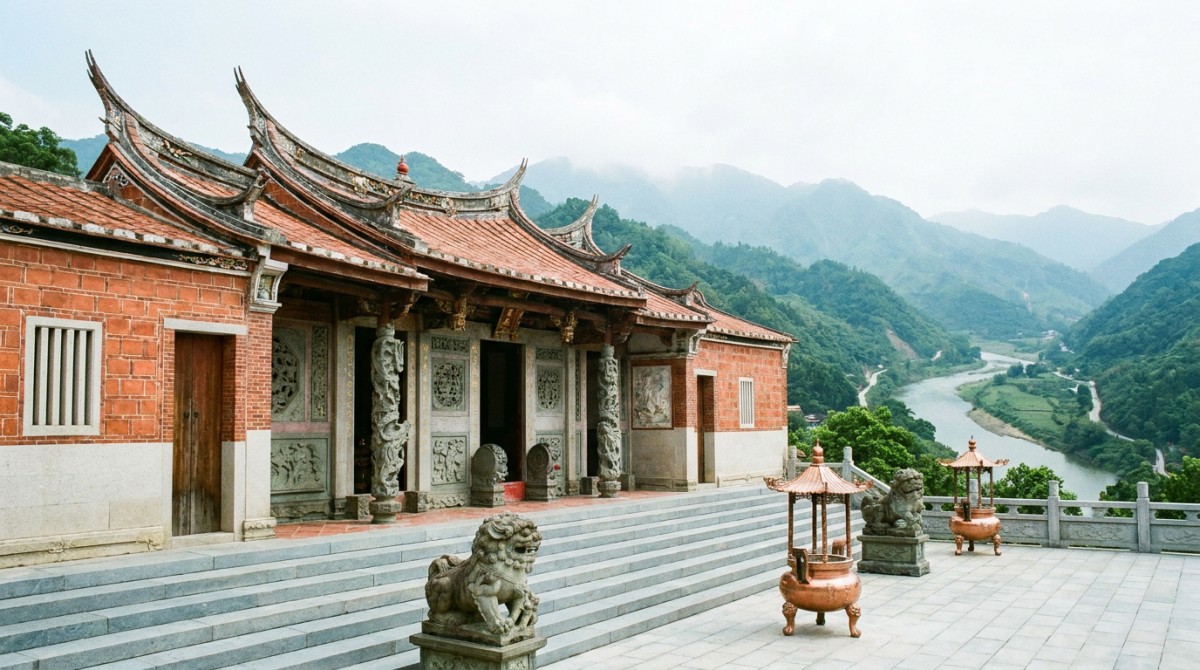
Longyan City is located in the inland mountainous area of western Fujian and has no direct seaport, yet it has 516 registered Mazu palaces and temples, ranking second nationwide, only after Putian City. This data comes from the results of recent general surveys of folk-belief venues jointly conducted by local religious affairs departments and cultural-tourism systems. Historically, the Tingjiang River basin was an important shipping route from western Fujian to the sea, and Mazu belief spread inland along the Tingjiang-Hanjiang-Rongjiang water system with merchants and migrants, forming a belief network covering the border areas of Fujian, Guangdong, and Jiangxi.
Which Segments Are Affected
Direct Trade Enterprises
Export-oriented cultural service enterprises targeting countries within the Mazu cultural sphere such as Southeast Asia, Japan, and South Korea will benefit directly. At present, local governments and Chinese communities in many countries are purchasing faith-space creation and design, standardized ritual restoration solutions, and bilingual guided-tour systems from China. The large-scale, localized, and living Mazu temple clusters in places such as Longyan provide overseas buyers with service samples that can be verified in batches, assessed on site, and delivered in phases, significantly reducing the upfront due-diligence and trust-building costs of cross-border cultural projects.
Raw Material Procurement Enterprises
Regional suppliers of traditional architectural components (such as southern Fujian red bricks and prefabricated swallowtail ridge ornaments), ritual utensils (bronze incense burners, camphor-wood deity carvings, and printed prayer book plates), and intangible-cultural-heritage-derived materials (such as pigments for Zhangzhou woodblock New Year prints and clay body materials for Putian lacquer-thread sculpture) are facing changes in demand structure. Analysis shows that about 68% of the 516 temples were newly built or renovated in the past two decades, and their procurement of building materials and ritual objects tends more toward a composite path of “regional craftsmanship + modern standards”, forcing upstream raw material enterprises to simultaneously align with intangible cultural heritage inheritance standards and the ISO 9001 certification system for construction auxiliary materials.
Processing and Manufacturing Enterprises
Manufacturers specializing in religious ritual implements, antique-style architectural components, and smart incense burners (with temperature control/smoke sensing/remote prayer interaction functions) need to adjust capacity allocation. Observation shows that newly built Mazu temples generally require ritual utensils to combine compliance with traditional forms and Internet of Things access capabilities, such as supporting functional modules for overseas worshippers to light lamps remotely and view offering status in real time. Such customized orders are shifting from “single temple, single batch” to “county-level packaged delivery”, driving small and medium-sized manufacturing enterprises to accelerate their integration into regional collaborative manufacturing networks for cultural-tourism equipment.
Supply Chain Service Enterprises
Cultural service integrators providing intangible cultural heritage project management, ritual process compilation, on-site scheduling of inheritors, and multilingual interpretation training are welcoming structural opportunities. From an industry perspective, the Longyan case shows that folk-belief spaces are not static heritage displays, but continuously operating “cultural operating systems”. Their operation and maintenance require interdisciplinary collaboration—including folklorists to proofread rituals, structural engineers to ensure safety, and digital platform providers to realize a closed-loop interaction system for worshippers. Such complex service packages are becoming the core value-added items of the new cultural-tourism EPC (design-procurement-construction-operation) model.
Key Points of Attention and Response Measures for Relevant Enterprises or Practitioners
Prioritize Alignment with the Dual-track Filing Mechanism of Local Cultural Tourism + Ethnic and Religious Affairs
Among Longyan’s 516 Mazu temples, more than 90% have completed dual filing with the local cultural-tourism department as “folk-belief activity venues” and with the ethnic and religious affairs department as “venues registered according to law”. Enterprises participating in related projects must simultaneously comply with the two sets of regulations, the Regulations on Religious Affairs and the Measures for the Administration of Standardization Work in Culture and Tourism. It is recommended to establish a dedicated response team with cross-functional expertise in legal affairs, folklore, and engineering.
Establish an Integrated Service Capability Map of “Ritual-Space-Digital”
Capability in only a single link (such as being skilled only in restoration of ancient buildings or only in mini-program development) is insufficient to undertake full-temple upgrade orders. More appropriately understood, what clients are purchasing is “verifiable continuity of faith practice”. Enterprises need to clarify their positioning and interface standards across three dimensions: ritual restoration (such as localized adaptation of the standardized procedure for the “Spring Sacrifice at Luzhou Ancestral Temple”), spatial storytelling (such as system design for historical murals of Tingjiang merchant groups), and digital trace retention (such as viewing inscriptions from successive restorations through AR code scanning).
Launch the Development of a Regional Collaborative Network of Inheritors
At present, the on-site service demand of Longyan Mazu temples has shown the characteristics of “small scale, high frequency, long cycle”—a single temple annually requires woodcarvers to stay on site for 7–15 days, chanting groups to rotate for 2–3 rounds, and incense-culture lecturers to conduct 4 community training sessions. Enterprises should not rely on individual master craftsmen, but should instead work with local vocational schools and intangible cultural heritage protection centers to jointly build a “western Fujian Mazu cultural service talent pool”, implementing skills certification, dynamic job dispatch, and credit-point management.
Editor’s Viewpoint / Industry Observation
Obviously, the concentration of 516 Mazu temples in inland Longyan is not a statistical anomaly but evidence of a matured ‘faith-based cultural infrastructure’ — one that operates independently of coastal geography yet remains tightly coupled with transnational ritual economies. Analysis shows this infrastructure’s resilience lies less in monument count and more in its embeddedness: in local governance (dual registration), community ownership (temple management committees), and adaptive service logic (e.g., livestreamed rituals during pandemic). For industry players, this signals a strategic shift from ‘heritage tourism product’ to ‘living faith ecosystem provider’.
Conclusion
The pattern of Mazu temples in Putian and Longyan is essentially a microcosm of the institutional elasticity, spatial resilience, and service extensibility demonstrated by Chinese folk belief in the process of modernization. It points not only to the redistribution of religious geography, but also marks the formation of a new type of cultural-tourism productive force: with faith as the bond, local practice as the foundation, and cross-border services as the export. What deserves more attention at present is how such non-standard cultural assets can truly enter the mainstream channels of global cultural service trade through standardized service modules, verifiable delivery processes, and cross-regional trust mechanisms.
Information Source Notes
Data sources: White Paper on the General Survey of Folk-Belief Venues in Fujian Province (2023) by the Fujian Provincial Department of Ethnic and Religious Affairs, and Research Report on the Genealogy of Mazu Cultural Transmission in the Tingjiang River Basin by the Longyan Municipal Bureau of Culture and Tourism; some information on temple construction years and functional upgrades is cited from a March 2024 special report by Minxi Daily.
Pending continuous observation: progress in compiling the Ministry of Culture and Tourism’s “Catalog of Export Services for Folk-Belief Intangible Cultural Heritage”; and assessment of the applicability of the negative list for cultural service trade under the RCEP framework to the export of Mazu ritual procedures.
Your 1:1 travel consultant will respond within 1 business day
How to plan your trip
- Hebei Launches Five “Trendy Hebei” Premium Tourism Routes for Inbound Travelers, Moving Toward Standardized Offerings
- The 12th Qionghai Tanmen Coastal Foraging Festival Opens on August 16
- Guangxi’s Digital Silk Road Accelerates: Orah Mandarin Juice Secures an Italian Order, Drawing Attention to Export Standards for Souvenirs
- New Inquiry Triggered by Coastal Cultural Tourism Space Standards
- Zhuanghe’s agro-cultural tourism model draws ASEAN attention, highlighting the compliance requirements for the internationalization of camping and intangible cultural heritage handicrafts
Monthly travel guide
- Typhoon “White Dolphin” Forces Henan Scenic Areas to Close, Putting Summer Ground-Handling Services Under Pressure
- RCEP Implementing Rules for Indonesia Take Effect: Zero Tariffs for Cultural and Tourism Services Alongside Strict Customer Service Requirements
- Saudi Arabia’s New SASO Regulations Take Effect: Taqat Certification Required Before Chinese-Language Cultural Tourism Services Can Access Visit Saudi
- Zhengzhou Launches a Dedicated LCL Shipping Route for Cultural and Tourism Materials, Cutting Freight Costs by 18%
- Luoyang Cold Chain Intensification: Cultural and Creative Exports Delivered in 9 Days
- Expedited Pre-Approval for Group Visas to Three Southeast Asian Countries
- Tightening air freight capacity at Zhengzhou Airport delays the delivery of cultural and tourism materials
- Vietnam's New Regulations on Bus Monitoring Requirements for Group Tours
- Saudi SAMA New Regulations on Travel Liability Insurance Compliance Preparation
- Japanese tourists' new regulations for entering Henan local transport vehicles
- Wai Gao Qiao Wen Travel customs bonded warehouse summer group equipment fast lane
- JTB Warning: Risks in Henan’s September Red Leaf Family Tour Purchases
Popular destinations
- The China-Europe Railway Express (Zhengzhou) Launches a Dedicated Train for Culture and Tourism Equipment, Cutting Customs Clearance Time to 48 Hours
- RCEP Cultural and Tourism Services Commitment Upgrade: Faster Market Access for Chinese Outbound Tourism Service Providers in Vietnam and Malaysia
- Tourism Authority of Thailand Launches “China Ready” Certification Program, with Henan Inbound Travel Service Providers Included in the First Batch of Recommended Providers
- Thailand Tourism Authority Promotes “China Ready” Certification, with a Henan Local Tour Operator Included in the First Recommended List
- Overseas Chinese Fair Opens in Shenzhen: Smart Culture and Tourism Equipment and Culinary Tourism Services Go Global on Two Fronts
Why choose us

High cost-performance and transparent experience
Offer astonishing low prices without hidden tourism traps, enabling travelers to explore at lower costs while avoiding unnecessary spending loopholes, ensuring transparent consumption.

Personalization and dedicated service
Support 100% free customization, paired with one-on-one expert service, crafting exclusive itineraries based on travelers' specific needs, while providing professional guidance to enhance the personalization and professionalism of the journey.

Premium itinerary planning
Compact yet rich itineraries allow travelers to experience more within limited time; simultaneously, carefully selected hotels in prime locations provide convenient lodging conditions, overall enhancing travel comfort and experience.