Welcome to Our Travel Agency!




Travel Guide
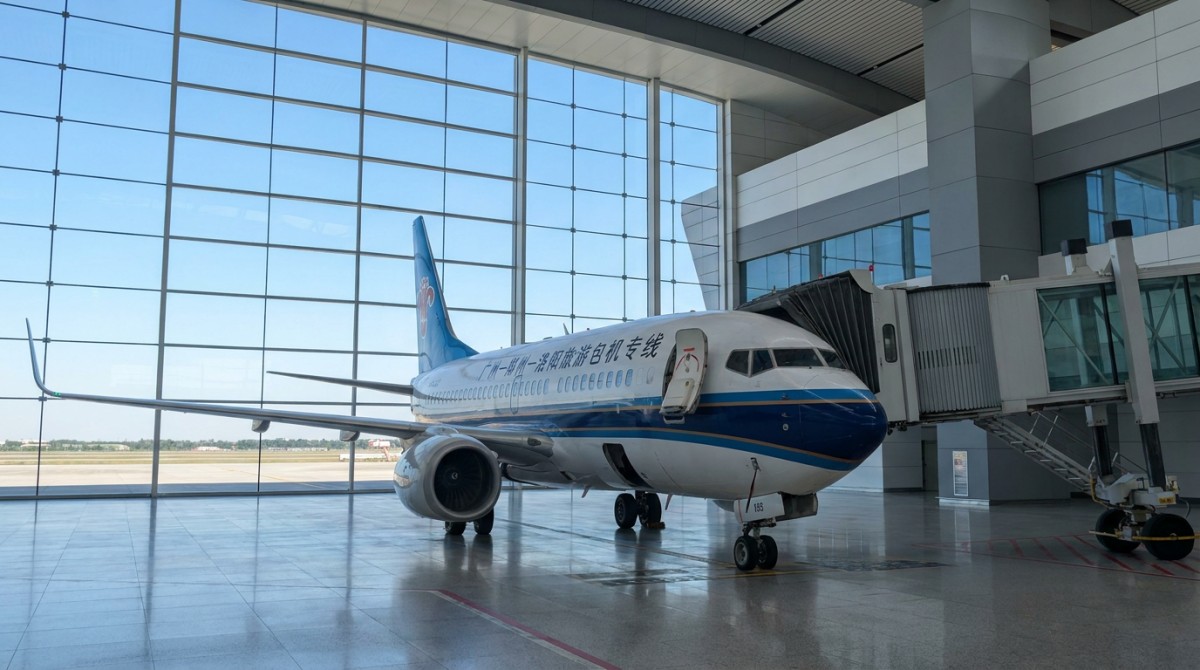
On May 20, 2026, China Southern Airlines officially launched the Guangzhou-Zhengzhou-Luoyang charter flight route, with its inaugural flight carrying a study tour group from Malaysia. This event marks a key advancement in the Central Plains cultural tourism supply chain's response to inbound tourism demand in the RCEP region. Sub-sectors such as cultural tourism operations, cross-border ground handling, air logistics, and study tour services need to pay close attention to the structural impact on delivery schedules, collaboration mechanisms, and business adaptability.
Event Overview
On May 20, 2026, China Southern Airlines launched a charter flight route connecting Guangzhou, Zhengzhou, and Luoyang, with the inaugural flight carrying a study tour group from Malaysia. This route achieves a closed-loop process from overseas group formation, flight scheduling, ground handling response to itinerary delivery, reducing the overall delivery cycle to within 72 hours. News reports clearly indicate that this move demonstrates the Central Plains cultural tourism supply chain's agile delivery capabilities for high-frequency, small-batch, and customized inbound tours from the RCEP region.
Which sub-sectors will be affected?
Cross-border study tour service organizations
Why will it be affected: The fact that the maiden voyage took on a study tour from Malaysia indicates that B2B orders for educational travel under the RCEP framework are extending to the central plains, and the original route design with coastal hubs as the destination is facing restructuring.
The impact is mainly reflected in the following aspects: overseas tour operators are tightening their review standards for ground handling qualifications of second-tier hubs in mainland China (such as Zhengzhou and Luoyang); the requirements for the coupling degree between study tour courses and transportation routes are increasing; and the 72-hour delivery cycle is forcing the standardization of pre-departure material preparation, visa coordination, insurance filing and other aspects.
Regional cultural and tourism ground handling enterprises
Why will it be affected? The dedicated line includes Zhengzhou and Luoyang as direct air hubs, changing the traditional path dependence of ground handling services from "entry—Beijing, Shanghai, Guangzhou, Shenzhen—transfer".
The main impacts are: the need to quickly establish a cross-provincial collaborative response mechanism (such as Guangzhou for passenger grouping, Zhengzhou for transit support, and Luoyang for on-site execution); the need for immediate adaptation of capabilities such as multilingual tour guides, international payment access, and overseas credit verification; and the need for the existing service pricing model based on single cities to evolve into an "air-rail intermodal transport + segmented fulfillment" model.
Air freight and ground handling service providers
Why will it be affected: Although chartered tourist flights are mainly for passenger transport, the derivative demands such as the transportation of teaching materials, temporary material allocation, and emergency spare parts delivery that accompany the operation of study tours are also increasing.
The impact is mainly reflected in the following aspects: the efficiency of cargo and mail connection in Zhengzhou as a central aviation hub is put to the forefront of testing; the ground support capabilities of Luoyang North Suburb Airport or surrounding general aviation airports (such as rapid baggage sorting, temporary warehousing, and pre-positioning for cross-border customs clearance) have become new bottlenecks in the service chain; and the 72-hour delivery cycle places higher demands on the real-time performance of data interfaces between airlines and ground services.
RCEP regional outbound travel agencies
Why is it affected? The fact that Malaysian tour operators directly connect to dedicated lines in the heart of China reflects that RCEP member countries are upgrading their tourism offerings to China from "general destinations" to "themed, scenario-based, and chain-based" approaches.
The impact is mainly reflected in the following aspects: the depth of resource control in cities in central and western China needs to be reassessed; the original route procurement method that relies on third-party distribution may give way to asset-light cooperation with direct airlines and ground handling; and the digital fulfillment capabilities of Chinese partners (such as real-time feedback of itinerary status and automatic early warning of anomalies) have become a new cooperation threshold.
What key areas should relevant businesses or practitioners focus on, and how should they respond at present?
Pay attention to the detailed statements from the Henan Province and Luoyang City cultural and tourism departments regarding the "supporting policies for charter flight routes".
What deserves more attention now is whether to introduce detailed operational rules for overseas study tour groups, such as ground handling subsidies, multilingual tour guide certification channels, and green channels for international student insurance registration—such policies will directly affect the sustainable operating costs and service granularity of dedicated lines.
Pay attention to the changes in the division of responsibilities between Zhengzhou Xinzheng International Airport and Luoyang Beijiao Airport in the international flight support process.
What deserves more attention now is whether a joint guarantee mechanism has been established between the two airports in terms of border inspection, customs, and health quarantine; and whether there are practical arrangements such as dedicated check-in counters, centralized inspection channels, and baggage direct check-in authority for charter flights—this will determine whether the 72-hour delivery cycle can be stably reproduced.
Distinguishing between the signal of a "successful maiden flight" and routine operations.
It is more appropriate to understand this as follows: the maiden voyage is a verification operation and does not mean that the fixed weekly schedule has been established; relevant companies should not immediately invest long-term resources in high-frequency capacity, but should prioritize testing the response flexibility and cost structure under small-batch trial operation (such as 1-2 flights per month).
Data integration plans with entities such as China Southern Airlines Henan Branch and Luoyang Culture & Tourism Group were activated ahead of schedule.
At present, it is more important to focus on whether to open basic connectivity capabilities such as flight status API, ground handling task distribution interface, and electronic itinerary verification port; it is recommended to complete system compatibility testing first to avoid delivery delays due to information interruptions.
Editor's Viewpoint / Industry Observation
Observably, this route launch is less a completed infrastructure upgrade and more a stress test of integrated regional service capacity under RCEP. It signals that air connectivity alone is no longer the bottleneck — rather, the ability to synchronize cross-jurisdictional regulatory compliance, real-time operational data sharing, and standardized service handovers across provincial boundaries has become the new threshold for inbound tourism scalability.
Analysis shows the 72-hour delivery cycle is not merely about flight speed, but reflects a deliberate of administrative latency — from group formation to on-ground execution. This implies that policy alignment (eg, unified visa facilitation rules), not just physical transport, is now central to competitiveness in the inbound travel supply chain.
It remains to be seen whether this model can scale beyond pilot groups like the Malaysian Study Group. Sustained viability hinges on repeatable commercial terms, not one-off diplomatic or promotional support.
Conclusion
The launch of this dedicated route is not simply about adding a new air route, but rather reflects the trend of inbound tourism service focus within the RCEP region shifting from port cities to hinterland hubs. It is more accurately understood as a "stress test" for the cultural tourism supply chain in central and western China. Its true value lies not in the maiden flight itself, but in its ability to promote the establishment of service standards and data sharing mechanisms across administrative regions and business segments. The industry should view the pilot program rationally, focusing on verifiable collaboration interfaces and quantifiable response indicators, rather than solely on flight frequency or passenger volume expectations.
Information source explanation
Main source: Official information released by China Southern Airlines (May 20, 2026).
The following areas require continued monitoring: the frequency of regular flights between Zhengzhou and Luoyang, the participation of RCEP member countries' study tour groups, and the actual achievement rate of the 72-hour delivery cycle in non-initial flight batches.
Your 1:1 travel consultant will respond within 1 business day
How to plan your trip
- Multiple regions announce autumn break dates for primary and secondary schools; attractions offer benefits such as discounted admission
- China’s Civil Aviation Industry to Implement the 2026/2027 Winter-Spring Flight Schedule from October 25
- Autumn Breaks in Multiple Regions Boost November Travel, Offering Hope for the Traditional Low Season
- China Tourism Academy Releases Report on Autumn Trends in China's Domestic Customized Tour Market
- What should I wear for a winter trip to Harbin and Mohe to cope with the extreme outdoor cold?
Monthly travel guide
- Luoyang launches the “Autumn Charm of the Divine Capital” tourism promotion to build anticipation for winter travel
- Typhoon “White Dolphin” Forces Henan Scenic Areas to Close, Putting Summer Ground-Handling Services Under Pressure
- RCEP Implementing Rules for Indonesia Take Effect: Zero Tariffs for Cultural and Tourism Services Alongside Strict Customer Service Requirements
- Saudi Arabia’s New SASO Regulations Take Effect: Taqat Certification Required Before Chinese-Language Cultural Tourism Services Can Access Visit Saudi
- Zhengzhou Launches a Dedicated LCL Shipping Route for Cultural and Tourism Materials, Cutting Freight Costs by 18%
- Luoyang Cold Chain Intensification: Cultural and Creative Exports Delivered in 9 Days
- Expedited Pre-Approval for Group Visas to Three Southeast Asian Countries
- Tightening air freight capacity at Zhengzhou Airport delays the delivery of cultural and tourism materials
- Vietnam's New Regulations on Bus Monitoring Requirements for Group Tours
- Saudi SAMA New Regulations on Travel Liability Insurance Compliance Preparation
- Japanese tourists' new regulations for entering Henan local transport vehicles
- Wai Gao Qiao Wen Travel customs bonded warehouse summer group equipment fast lane
Popular destinations
- The 17th China Yangtze Three Gorges International Tourism Festival Sees 17 Cultural and Tourism Projects Signed
- Henan Cultural Tourism Explores the Shift from Traffic to Immersive Experiences
- Liaoning Launches Inbound Tourism Promotion Event for Global Travel Trade, Releases Service Guide
- Shandong Hosts Cultural and Creative Industry Networking Event, Releases Annual Plan for Province-Wide Renewal
- Hong Kong Travel Industry Council Visits Henan, Aiming to Jointly Develop Distinctive Tourism Products
Why choose us

High cost-performance and transparent experience
Offer astonishing low prices without hidden tourism traps, enabling travelers to explore at lower costs while avoiding unnecessary spending loopholes, ensuring transparent consumption.

Personalization and dedicated service
Support 100% free customization, paired with one-on-one expert service, crafting exclusive itineraries based on travelers' specific needs, while providing professional guidance to enhance the personalization and professionalism of the journey.

Premium itinerary planning
Compact yet rich itineraries allow travelers to experience more within limited time; simultaneously, carefully selected hotels in prime locations provide convenient lodging conditions, overall enhancing travel comfort and experience.