Welcome to Our Travel Agency!




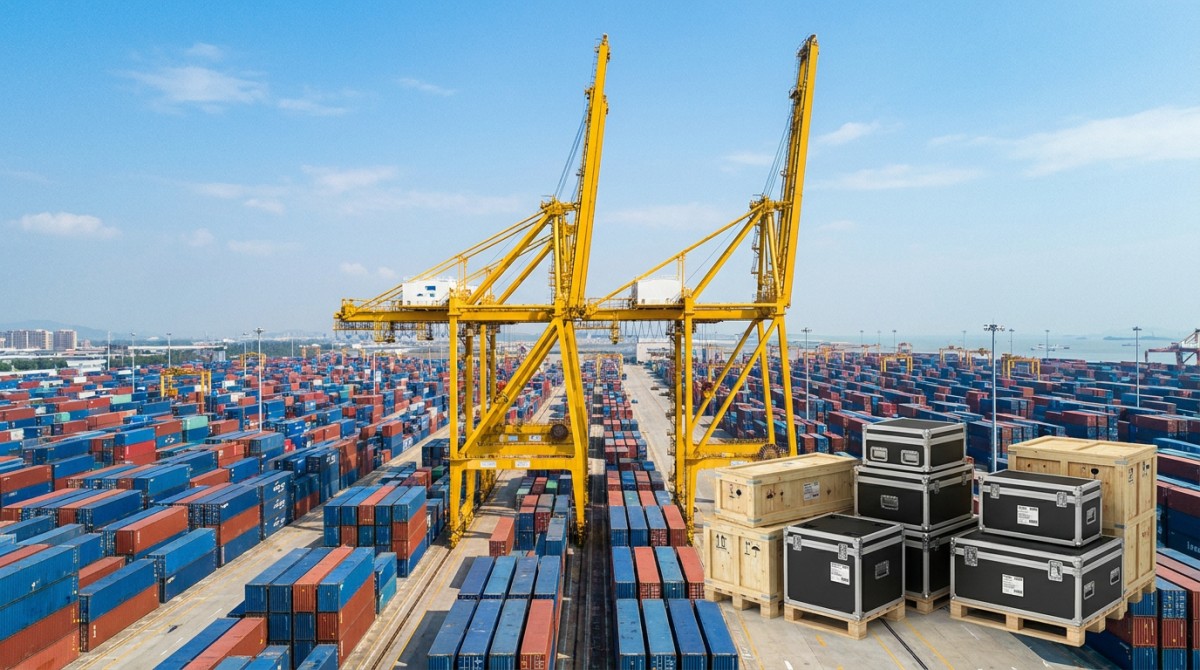
According to the latest index released by the Shanghai Shipping Exchange on May 24, 2026, container freight rates from major South China ports (Shenzhen Yantian, Guangzhou Nansha) to the Middle East, Southeast Asia, and the east coast of South America fell by 12% month-on-month, compounded by ample shipping space supply, extending the booking-to-loading cycle for exports of smart cultural and tourism equipment from 30 days to 45 days. This freight adjustment directly affects the shipping rhythm and supply chain cost structure of cultural and tourism equipment exports, generating systematic transmission effects across cross-border trade, manufacturing fulfillment, and logistics services.
Event Overview
Data from the Shanghai Shipping Exchange on May 24, 2026 shows: container freight rates from major South China ports (Shenzhen Yantian, Guangzhou Nansha) to the Middle East, Southeast Asia, and the east coast of South America dropped by 12% month-on-month; at the same time, shipping space supply became more relaxed; the average booking-to-loading cycle for exports of smart cultural and tourism equipment (including AR glasses, audio guide devices, and LED stage equipment) extended from 30 days to 45 days. This change has already occurred and constitutes verifiable market operation data, without involving policy intervention or being driven by sudden incidents.
Which Sub-sectors Are Affected
Direct trading enterprises: As exporting entities, their contract performance flexibility has increased, allowing them to proactively adjust order-splitting schedules and FOB delivery nodes based on declining freight rates and extended sailing windows; however, caution is still needed as exchange rate fluctuations and buyers' price-cutting tendencies may rise simultaneously, and the risk of shrinking profit margins has not been eliminated.
Raw material procurement enterprises: Many adopt the JIT (Just-in-Time) model to support the production of cultural and tourism equipment. After the delivery window is extended, greater stability is required in procurement planning for upstream key components such as optical modules, high-brightness LED chips, and low-power audio SoCs; if stock is still prepared based on the original 30-day cycle, it may easily lead to excess inventory or increased capital occupation.
Processing and manufacturing enterprises: Cultural and tourism equipment manufacturers primarily engaged in ODM/OEM are facing a restructuring of production scheduling logic——a longer loading cycle means some orders can be incorporated into a flexible production pool, improving production line utilization; however, it also weakens the traditional advantage of “rapid response + urgent replenishment orders,” placing higher adaptation requirements on capacity scheduling systems.
Supply chain service enterprises: International freight forwarders, customs brokers, and overseas warehouse service providers need to recalibrate their service pricing models: although extended sailing windows reduce the frequency of expedited operations, customers' demand for implicit services such as document compliance, destination port customs clearance timeliness, and localized after-sales spare parts pre-positioning has increased significantly, and service granularity is shifting from “transport execution” to “end-to-end fulfillment assurance.”
Key Points of Attention and Response Measures for Relevant Enterprises or Practitioners
Dynamically assess ocean freight costs and the threshold for air freight substitution
The current decline in freight rates combined with looser sailing schedules makes it possible for mid-to-high value-added cultural and tourism equipment that previously relied on air freight to meet deadlines (such as customized AR tour guide terminals) to return to ocean shipping; enterprises should establish a two-dimensional calculation model of “unit cargo value/volume ratio × sailing schedule tolerance” to quantify the critical point for switching from air freight to ocean freight.
Optimize the design of export order delivery terms
It is recommended to clearly define a “shipment period flexibility range” (such as 45±7 days) in newly signed contracts, and to establish a freight fluctuation sharing mechanism at the same time (for example, initiating price renegotiation when SCFI index changes exceed ±8%), so as to avoid unilaterally bearing the risk of fluctuations in the shipping capacity market.
Collaborate with overseas buyers to pilot VMI (Vendor Managed Inventory)
Using the 45-day delivery window, jointly build regional forward warehouses with leading cultural and tourism operators in the Middle East and Southeast Asia, and implement VMI management for some standardized products such as audio guide devices and portable LED lighting sets, thereby reducing the other party's safety stock level and enhancing the stickiness of long-term cooperation.
Editorial Viewpoint / Industry Observation
Observably, the 12% freight rate decline is not a structural reversal but a cyclical correction driven by post–peak-season demand softness and new vessel deliveries in Asia–Middle East routes. Analysis shows that the extension of lead time to 45 days reflects improved carrier capacity utilization—not enhanced port efficiency or regulatory easing. From an industry perspective, this window is better understood as a temporary operational buffer rather than a long-term logistics upgrade. Current priority should be on converting scheduling flexibility into inventory optimization gains, not merely extending production cycles.
Conclusion
This freight adjustment at South China ports and the delivery cycle changes it triggered are essentially a concrete manifestation of the rebalancing of global ocean shipping supply and demand within segmented vertical fields. It has not changed the core dimensions of competition for cultural and tourism equipment going overseas——technical adaptability, localized service capability, and cultural content compatibility remain the keys to determining market share. Rationally speaking, enterprises should regard the 45-day window as an opportunity to stress-test supply chain resilience, rather than simply as a dividend from cost savings.
Information Source Notes
Data source: Shanghai Shipping Exchange (Shanghai Shipping Exchange), “China Export Container Freight Index (CCFI) South China Regional Special Report, May 24, 2026”;
Items for continued observation: the intensity of replenishment demand release in the Middle East after Ramadan from June onward, changes in the congestion index of ports on the east coast of South America, as well as trends in import tariff adjustments by RCEP member countries on smart cultural and tourism equipment.
Your 1:1 travel consultant will respond within 1 business day
How to plan your trip
- Multiple regions announce autumn break dates for primary and secondary schools; attractions offer benefits such as discounted admission
- China’s Civil Aviation Industry to Implement the 2026/2027 Winter-Spring Flight Schedule from October 25
- Autumn Breaks in Multiple Regions Boost November Travel, Offering Hope for the Traditional Low Season
- China Tourism Academy Releases Report on Autumn Trends in China's Domestic Customized Tour Market
- What should I wear for a winter trip to Harbin and Mohe to cope with the extreme outdoor cold?
Monthly travel guide
- Luoyang launches the “Autumn Charm of the Divine Capital” tourism promotion to build anticipation for winter travel
- Typhoon “White Dolphin” Forces Henan Scenic Areas to Close, Putting Summer Ground-Handling Services Under Pressure
- RCEP Implementing Rules for Indonesia Take Effect: Zero Tariffs for Cultural and Tourism Services Alongside Strict Customer Service Requirements
- Saudi Arabia’s New SASO Regulations Take Effect: Taqat Certification Required Before Chinese-Language Cultural Tourism Services Can Access Visit Saudi
- Zhengzhou Launches a Dedicated LCL Shipping Route for Cultural and Tourism Materials, Cutting Freight Costs by 18%
- Luoyang Cold Chain Intensification: Cultural and Creative Exports Delivered in 9 Days
- Expedited Pre-Approval for Group Visas to Three Southeast Asian Countries
- Tightening air freight capacity at Zhengzhou Airport delays the delivery of cultural and tourism materials
- Vietnam's New Regulations on Bus Monitoring Requirements for Group Tours
- Saudi SAMA New Regulations on Travel Liability Insurance Compliance Preparation
- Japanese tourists' new regulations for entering Henan local transport vehicles
- Wai Gao Qiao Wen Travel customs bonded warehouse summer group equipment fast lane
Popular destinations
- The 17th China Yangtze Three Gorges International Tourism Festival Sees 17 Cultural and Tourism Projects Signed
- Henan Cultural Tourism Explores the Shift from Traffic to Immersive Experiences
- Liaoning Launches Inbound Tourism Promotion Event for Global Travel Trade, Releases Service Guide
- Shandong Hosts Cultural and Creative Industry Networking Event, Releases Annual Plan for Province-Wide Renewal
- Hong Kong Travel Industry Council Visits Henan, Aiming to Jointly Develop Distinctive Tourism Products
Why choose us

High cost-performance and transparent experience
Offer astonishing low prices without hidden tourism traps, enabling travelers to explore at lower costs while avoiding unnecessary spending loopholes, ensuring transparent consumption.

Personalization and dedicated service
Support 100% free customization, paired with one-on-one expert service, crafting exclusive itineraries based on travelers' specific needs, while providing professional guidance to enhance the personalization and professionalism of the journey.

Premium itinerary planning
Compact yet rich itineraries allow travelers to experience more within limited time; simultaneously, carefully selected hotels in prime locations provide convenient lodging conditions, overall enhancing travel comfort and experience.