Welcome to Our Travel Agency!




Travel Guide
Image placement plan: It is recommended to place one image near the beginning of the article to support the core news point on the growth of inbound tourism, the rise in K12 study tour bookings from Europe and North America, and the significance of international study certification and ISO 21101 pre-assessment for destination service readiness.
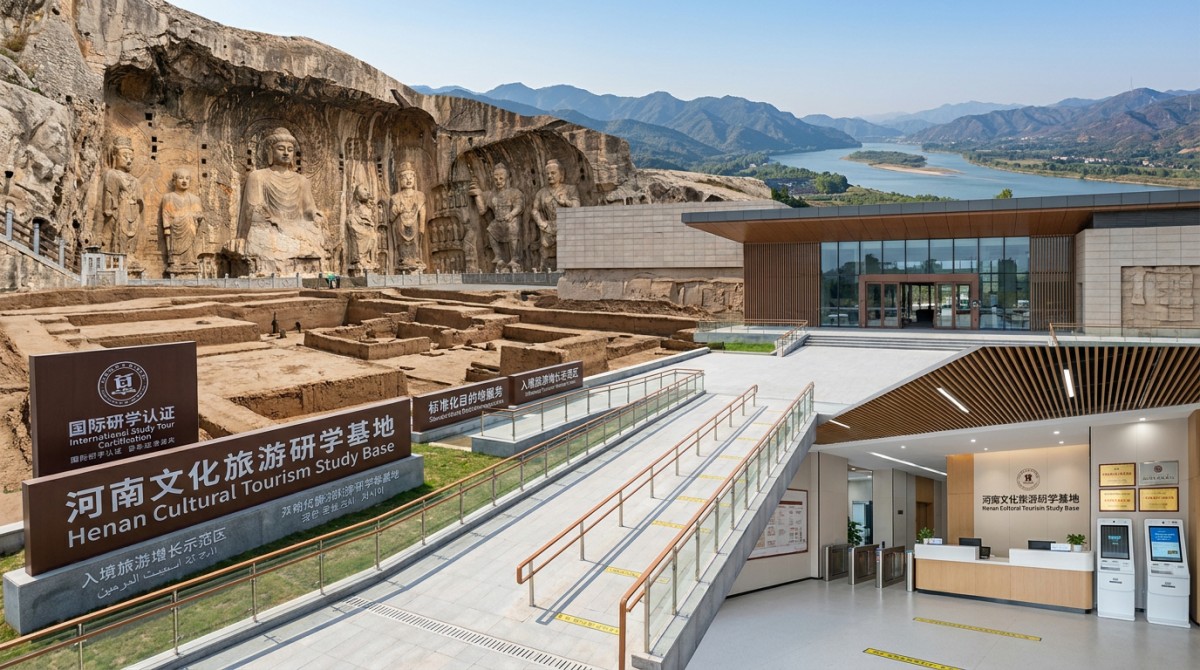
On May 29, 2026, a notice indicated that China received 28.92 million inbound visitors in 2025, up 17.1% year on year. This update is important to the cultural tourism, educational travel, destination operations, and service supply chain sectors because it links market growth with certification-based destination selection and internationally aligned service capability requirements.
Verified developments from the latest notice
According to the information provided, China received 28.92 million inbound visitors in 2025, representing year-on-year growth of 17.1%.
The same notice stated that K12 study tour orders from Europe and North America doubled compared with the previous year.
It was also stated that the Longmen Grottoes in Luoyang, the Yin Ruins in Anyang, and the Zhengzhou Shang City Site Museum were included in the first group of international study certification demonstration bases.
In addition, local reception service capacity at these destinations passed a pre-assessment under ISO 21101, an international standard referenced in the provided information.
How the change may affect market participants
Direct trading enterprises
From an industry perspective, companies directly selling destination products, study programs, admission packages, or cross-border travel services may be affected first because buyer decisions can become more closely tied to recognized certification status and internationally understandable service standards.
The impact is likely to appear in product design, partner selection, overseas marketing materials, and contract discussions. What deserves closer attention is whether buyers increasingly ask for proof of destination qualification, service process documentation, and risk-control arrangements that align with international expectations.
Raw material and procurement businesses
Analysis shows that procurement-oriented businesses supplying educational materials, visitor support items, signage systems, safety equipment, or site service consumables may also see indirect effects. If study travel demand rises and certified destinations attract more group traffic, procurement planning may need to adjust to more structured operational requirements.
The most relevant business links may include specification matching, order timing, and supplier documentation. It is more appropriate to understand this as a compliance-driven procurement shift rather than simple volume growth, especially where service readiness is reviewed against recognized standards.
Processing and manufacturing companies
Manufacturers involved in museum support equipment, interpretation systems, safety-related devices, mobility support facilities, or other destination-use products may face stronger expectations regarding documentation, reliability, and suitability for organized international group reception.
Observably, the influence would be reflected in technical specifications, testing records, maintenance support, and product traceability. Companies in this part of the chain may need to monitor whether destination operators and integrators tighten technical acceptance requirements as certified study travel sites become more prominent.
Supply chain service providers
Logistics firms, on-site service coordinators, training providers, translation support teams, and destination management partners may be affected because larger inbound study groups usually require more standardized coordination across transport, scheduling, safety management, and visitor communication.
The key changes to watch include delivery timing, service continuity, multilingual support capability, and documentation handover. From an industry perspective, service providers that can align with internationally understandable procedures may be in a better position when destinations strengthen their operating frameworks.
What companies should prepare for next
Closer review of certification and compliance evidence
Businesses working with study travel destinations should pay close attention to how certification status and pre-assessed service capability are presented in tenders, commercial proposals, and partnership reviews. The information provided suggests that recognized destination designation and ISO 21101 pre-assessment may become important trust signals in cross-border business communication.
Readiness of equipment, materials, and supporting systems
Companies supplying on-site operational materials or visitor-facing equipment should review whether their products are suitable for organized educational group use. This includes checking technical files, service instructions, inspection records, and replacement planning so that destination operators can respond more efficiently if international study travel demand continues to strengthen.
Alignment with technical specifications and buyer documents
Where projects involve procurement documents, operating specifications, or service tenders, enterprises should be ready for more explicit technical bid alignment. The relevant issue is not only product availability, but also whether documentation, performance descriptions, and service commitments can be clearly matched to destination operating requirements.
Delivery planning and partner qualification control
Enterprises should also assess delivery cycles, peak-period support capacity, and partner qualification management. Given the reported rise in inbound demand and the doubling of orders from Europe and North America in the K12 segment, supplier coordination, after-sales response, and quality traceability may become more important in destination-side decision-making.
Industry observation: standards may shape destination competition
Analysis shows that the more notable signal in this development is not only the higher volume of inbound visitors, but also the way market demand is being connected to certifiable service capability. When destinations are identified as demonstration bases and service capacity is linked with ISO 21101 pre-assessment, buyer confidence may increasingly depend on structured operational proof rather than promotional positioning alone.
From an industry perspective, this can be interpreted as a rules-based shift in how educational travel products are evaluated. It may increase the importance of safety management, service consistency, multilingual coordination, and verifiable operating procedures across the supply chain.
What deserves closer attention is that such a shift may also affect upstream manufacturers and service vendors. Even without any newly stated regulation in the provided information, standards and certification signals can function as practical market filters in procurement and partnership selection.
Measured conclusion
The reported increase in inbound visitors, the doubling of K12 study tour orders from Europe and North America, and the inclusion of key cultural sites in Henan in the first group of international study certification demonstration bases together indicate a meaningful development for cultural tourism and study travel operations.
A rational reading is that internationally recognizable standards, pre-assessment results, and destination service readiness are becoming more relevant in commercial decisions. The full market effect will still depend on how operators, suppliers, and buyers respond in practice, but the direction of attention toward compliance-capable delivery is already clear from the information provided.
Source note and follow-up items
This article was generated based on the user-provided news title, event date, and event summary. Relevant source types for this kind of development typically include notices from competent authorities, destination certification announcements, standardization bodies, procurement documents, and industry feedback channels.
Specific official source links were not provided in the input and should be continuously verified.
Items that still require ongoing observation include the detailed application of certification criteria, the practical interpretation of ISO 21101-related service requirements, changes in tender or procurement documents, destination-side implementation progress, and market feedback from study travel organizers and service partners.
Your 1:1 travel consultant will respond within 1 business day
How to plan your trip
- China Tourism Academy Releases Report on Autumn Trends in China's Domestic Customized Tour Market
- Visiting China for the First Time: How Many Cities Should You Include in a 15-Day Grand Tour?
- Is a geology exploration tour suitable for elementary school students?
- Is it worth hiring a guide for a visit to the Terracotta Army?
- Hebei Launches 5 “Trendy Hebei” Signature Tour Routes, Standardizing Inbound Tourism Services
Monthly travel guide
- Luoyang launches the “Autumn Charm of the Divine Capital” tourism promotion to build anticipation for winter travel
- Typhoon “White Dolphin” Forces Henan Scenic Areas to Close, Putting Summer Ground-Handling Services Under Pressure
- RCEP Implementing Rules for Indonesia Take Effect: Zero Tariffs for Cultural and Tourism Services Alongside Strict Customer Service Requirements
- Saudi Arabia’s New SASO Regulations Take Effect: Taqat Certification Required Before Chinese-Language Cultural Tourism Services Can Access Visit Saudi
- Zhengzhou Launches a Dedicated LCL Shipping Route for Cultural and Tourism Materials, Cutting Freight Costs by 18%
- Luoyang Cold Chain Intensification: Cultural and Creative Exports Delivered in 9 Days
- Expedited Pre-Approval for Group Visas to Three Southeast Asian Countries
- Tightening air freight capacity at Zhengzhou Airport delays the delivery of cultural and tourism materials
- Vietnam's New Regulations on Bus Monitoring Requirements for Group Tours
- Saudi SAMA New Regulations on Travel Liability Insurance Compliance Preparation
- Japanese tourists' new regulations for entering Henan local transport vehicles
- Wai Gao Qiao Wen Travel customs bonded warehouse summer group equipment fast lane
Popular destinations
- Henan Cultural Tourism Explores the Shift from Traffic to Immersive Experiences
- Liaoning Launches Inbound Tourism Promotion Event for Global Travel Trade, Releases Service Guide
- Shandong Hosts Cultural and Creative Industry Networking Event, Releases Annual Plan for Province-Wide Renewal
- Hong Kong Travel Industry Council Visits Henan, Aiming to Jointly Develop Distinctive Tourism Products
- The 2026 China Tourism Industry Impact Cases Announced in Shiyan, Hubei
Why choose us

High cost-performance and transparent experience
Offer astonishing low prices without hidden tourism traps, enabling travelers to explore at lower costs while avoiding unnecessary spending loopholes, ensuring transparent consumption.

Personalization and dedicated service
Support 100% free customization, paired with one-on-one expert service, crafting exclusive itineraries based on travelers' specific needs, while providing professional guidance to enhance the personalization and professionalism of the journey.

Premium itinerary planning
Compact yet rich itineraries allow travelers to experience more within limited time; simultaneously, carefully selected hotels in prime locations provide convenient lodging conditions, overall enhancing travel comfort and experience.