Welcome to Our Travel Agency!




The 34th Guangzhou International Travel Fair (GITF2026) opened on May 21, 2026, and lasted for three days. As an important annual cross-border platform for China's culture and tourism industry, this exhibition has expanded in scale and significantly increased international participation, directly reflecting the accelerated restructuring of the culture and tourism supply chain in the post-pandemic era and the deeper implementation of the ‘culture and tourism going global’ policy, producing substantial transmission effects on cultural and tourism product trade, cross-border services, and regional industrial chain coordination.
Event Overview
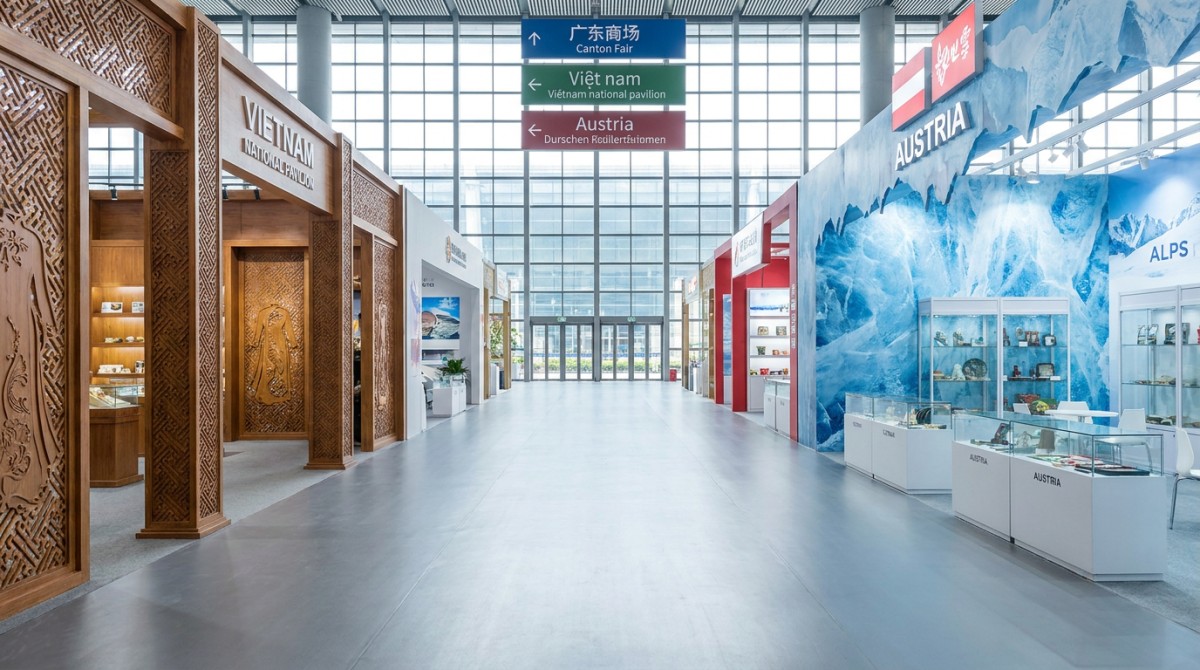
The 34th Guangzhou International Travel Fair (GITF2026) was held from May 21–23 at Area C of the Canton Fair Complex, with the total exhibition area expanded by 25%, attracting more than 1,000 culture and tourism institutions from 55 countries and regions, with 7 first-time exhibiting destinations added, including Vietnam, Austria, Pakistan, and Uganda. The exhibition simultaneously launched a ‘Culture and Tourism+’ cross-border consumption zone and a cross-border e-commerce exhibition area, providing efficient channels for overseas buyers to connect with Chinese culture and tourism products going global.
Which Segments of the Industry Will Be Affected
Direct trading enterprises: More than 60% of the participating culture and tourism institutions are overseas tourism boards, national pavilions, and international wholesalers, with procurement intentions concentrated on high value-added services such as customized itinerary products, intangible cultural heritage experience packages, and digital culture and tourism IP licensing. The impact is reflected in shorter order pre-positioning cycles and improved B2B contract signing efficiency, but it also places higher demands on enterprises’ multilingual fulfillment capabilities and overseas compliance qualifications (such as EU GDPR adaptation and Southeast Asian local payment licenses).
Raw material procurement enterprises: Upstream suppliers of culture and tourism derivative products (such as scenic-area cultural and creative products, festival handicrafts, and intangible cultural heritage material kits), driven by the ‘Culture and Tourism+’ zone’s focus on “commercializing local culture,” are seeing structurally rising demand for specialty raw materials such as natural dyes, traditional textile base materials, and biodegradable packaging materials; however, stable export standards have not yet been formed, and consistency across raw material batches and traceability of cultural symbol licensing have become potential bottlenecks.
Processing and manufacturing enterprises: Companies focusing on culture and tourism equipment (smart guide terminals, portable AR display devices) and immersive content hardware (lightweight VR backpacks, multimodal interactive devices) benefit from the “fast track for culture and tourism technology going global” established in the cross-border e-commerce exhibition area, but face practical constraints such as long CE/FCC certification cycles and difficulty responding to small-batch, multi-SKU delivery.
Supply chain service enterprises: Including cross-border logistics service providers, multilingual content localization agencies, and culture and tourism SaaS platforms. The exhibition explicitly lists “culture and tourism products going global” as an independent service module, driving them to shift from supporting roles to solution integrators; the impact is reflected in service pricing models tilting toward “payment based on project outcomes,” but the industry has not yet established a unified service quality evaluation indicator system.
Key Focus Areas and Response Measures for Relevant Enterprises or Practitioners
Focus on differences in market entry rules among first-time exhibiting countries
The 7 newly participating countries, including Vietnam and Austria, show significant differences in visa facilitation, import tariffs on culture and tourism products, and the scope of cultural content review. Enterprises need to complete a recheck of HS code classifications for culture and tourism categories in target countries before the exhibition, and simultaneously initiate customs clearance testing for small-batch samples.
Leverage the ‘Culture and Tourism+’ zone to verify product localization suitability
This zone features immersive negotiation cabins and cultural translation workshops. Enterprises are advised to bring 3–5 core product prototypes, focusing on collecting first-hand buyer feedback on price sensitivity ranges, pain points in usage scenarios, and thresholds for symbol acceptance, so as to avoid mismatches in later large-scale production.
Connect in advance with the cross-border compliance support channels provided by the exhibition
The organizers, together with the Guangdong Provincial Department of Culture and Tourism and the Canton Fair Legal Service Center, have set up an “Overseas Expansion Compliance Consultation Desk,” covering high-frequency issues such as cross-border data transfer agreements (SCCs), overseas advertising law adaptation, and multilingual user agreement templates. Enterprises should complete a preliminary diagnosis during the booth setup stage.
Editorial Viewpoint / Industry Observation
Observably, the scale-up of GITF2026 — especially the 25% exhibition area expansion and the inclusion of seven first-time national pavilions — signals a structural shift from ‘market access’ to ‘systemic integration’ in China’s outbound cultural tourism strategy. Analysis shows that the concurrent launch of the ‘Culture-Tourism Plus’ cross-border consumption zone is not merely thematic branding, but an institutional attempt to decouple cultural product exports from traditional tour-package dependency. This better reflects policy intent to treat intangible cultural assets (e.g., craft techniques, festival IP) as tradable commodities with standardized valuation frameworks — though operational maturity remains uneven across provincial implementation.
Conclusion
GITF2026 is not merely an exhibition event, but a key interface for repositioning the global division of labor in the culture and tourism industry. Its value lies not in short-term transaction volume, but in accelerating the formation of a new model for going global: “policy guidance—scenario validation—standard consolidation—service closed loop”. What is more worthy of attention at present is whether the first-time exhibiting countries will subsequently establish permanent culture and tourism promotion offices, whether the ‘Culture and Tourism+’ zone can incubate the first cross-border group standard, and whether the participation of small and medium-sized culture and tourism manufacturing enterprises can break through the shallow stage of “booth rental—sample display”.
Information Source Notes
Official information comes from the announcement on the official website of the Guangzhou International Travel Fair Organizing Committee (released on May 18, 2026), the Guangdong Provincial Department of Culture and Tourism’s “Several Measures on Supporting High-Quality Overseas Expansion of Culture and Tourism Enterprises” (Yue Wen Lv Fa [2025] No. 12), and the China Council for the Promotion of International Trade Culture and Tourism Industry Committee’s “2026 Q1 Briefing on Cross-Border Culture and Tourism Trade Compliance Developments”. Some details of national exhibition participation, buyer directories, and special zone operation mechanisms will be disclosed uniformly by the organizers after the exhibition ends. It is recommended to continue monitoring the “GITF2026 Results White Paper” to be released in early June.”
Your 1:1 travel consultant will respond within 1 business day
How to plan your trip
- Multiple regions announce autumn break dates for primary and secondary schools; attractions offer benefits such as discounted admission
- China’s Civil Aviation Industry to Implement the 2026/2027 Winter-Spring Flight Schedule from October 25
- Autumn Breaks in Multiple Regions Boost November Travel, Offering Hope for the Traditional Low Season
- China Tourism Academy Releases Report on Autumn Trends in China's Domestic Customized Tour Market
- What should I wear for a winter trip to Harbin and Mohe to cope with the extreme outdoor cold?
Monthly travel guide
- Luoyang launches the “Autumn Charm of the Divine Capital” tourism promotion to build anticipation for winter travel
- Typhoon “White Dolphin” Forces Henan Scenic Areas to Close, Putting Summer Ground-Handling Services Under Pressure
- RCEP Implementing Rules for Indonesia Take Effect: Zero Tariffs for Cultural and Tourism Services Alongside Strict Customer Service Requirements
- Saudi Arabia’s New SASO Regulations Take Effect: Taqat Certification Required Before Chinese-Language Cultural Tourism Services Can Access Visit Saudi
- Zhengzhou Launches a Dedicated LCL Shipping Route for Cultural and Tourism Materials, Cutting Freight Costs by 18%
- Luoyang Cold Chain Intensification: Cultural and Creative Exports Delivered in 9 Days
- Expedited Pre-Approval for Group Visas to Three Southeast Asian Countries
- Tightening air freight capacity at Zhengzhou Airport delays the delivery of cultural and tourism materials
- Vietnam's New Regulations on Bus Monitoring Requirements for Group Tours
- Saudi SAMA New Regulations on Travel Liability Insurance Compliance Preparation
- Japanese tourists' new regulations for entering Henan local transport vehicles
- Wai Gao Qiao Wen Travel customs bonded warehouse summer group equipment fast lane
Popular destinations
- The 17th China Yangtze Three Gorges International Tourism Festival Sees 17 Cultural and Tourism Projects Signed
- Henan Cultural Tourism Explores the Shift from Traffic to Immersive Experiences
- Liaoning Launches Inbound Tourism Promotion Event for Global Travel Trade, Releases Service Guide
- Shandong Hosts Cultural and Creative Industry Networking Event, Releases Annual Plan for Province-Wide Renewal
- Hong Kong Travel Industry Council Visits Henan, Aiming to Jointly Develop Distinctive Tourism Products
Why choose us

High cost-performance and transparent experience
Offer astonishing low prices without hidden tourism traps, enabling travelers to explore at lower costs while avoiding unnecessary spending loopholes, ensuring transparent consumption.

Personalization and dedicated service
Support 100% free customization, paired with one-on-one expert service, crafting exclusive itineraries based on travelers' specific needs, while providing professional guidance to enhance the personalization and professionalism of the journey.

Premium itinerary planning
Compact yet rich itineraries allow travelers to experience more within limited time; simultaneously, carefully selected hotels in prime locations provide convenient lodging conditions, overall enhancing travel comfort and experience.