Welcome to Our Travel Agency!




Travel Guide
Image placement plan: Place one image after the lead paragraph to show the conference setting, overseas buyer engagement, or a destination product presentation related to inbound tourism supply chains.
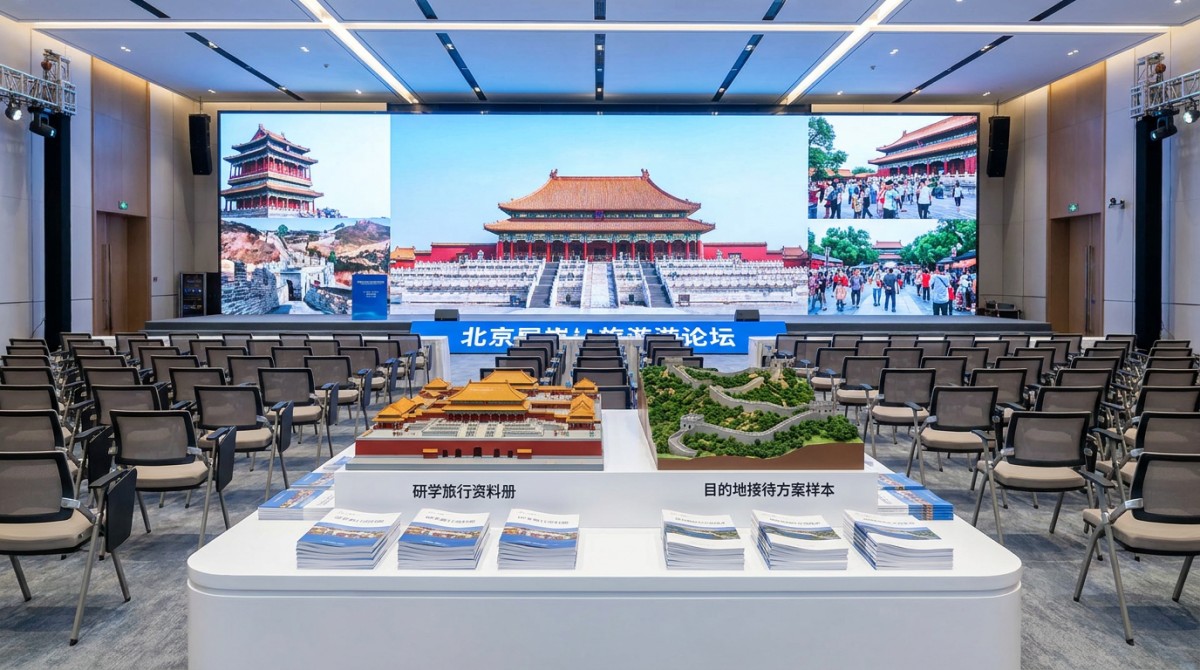
On June 1, 2026, a Beijing inbound tourism development conference hosted by the national authority responsible for culture and tourism opened, drawing more than 300 overseas travel businesses from 23 countries and regions to assess China’s destination management capacity. The event is relevant to the cultural tourism, inbound travel, study travel, industrial tourism, procurement, and supply chain service sectors because standardized export-ready products and buyer-side due diligence are becoming more visible in cross-border tourism cooperation.
Confirmed Event Details
The conference opened on June 1, 2026, in Beijing and was hosted by the national authority responsible for culture and tourism. More than 300 overseas travel businesses from the United States, Germany, Japan, South Korea, Australia, Southeast Asia, and other markets across 23 countries and regions took part in a concentrated review of China’s cultural tourism ground-handling capability.
Luoyang in Henan was presented as a key recommended destination. Local leading destination management companies, including Letrip Travel Agency, displayed standardized products designed for international distribution, including an immersive ancient-capital themed route and a study route focused on early Chinese writing heritage. The event also highlighted the response capability of Central China’s cultural resources in international study travel and industrial tourism.
How Buyer Review May Affect Industry Roles
Direct trade enterprises facing overseas buyers
From an industry perspective, inbound tour operators and companies selling destination products directly to overseas travel businesses may be affected first because the conference put buyer assessment at the center of cooperation. The impact is likely to appear in product quotation, itinerary explanation, contract communication, service-level commitments, and post-tour feedback handling. These companies may need to watch whether overseas partners ask for clearer compliance files, standardized product descriptions, risk notices, and service accountability mechanisms before placing groups.
Procurement teams managing tourism inputs
Analysis shows that procurement enterprises and departments sourcing tourism inputs may face more detailed checks on hotels, transport, venues, guides, interpretation services, meals, and educational activity resources. The reason is that exportable destination products depend on stable upstream service quality. Business impact may appear in supplier screening, backup capacity, scheduling, insurance confirmation, safety documentation, and cost-control planning. The key change to monitor is whether overseas travel businesses require more traceable supplier qualification records during route evaluation.
Manufacturers and site operators linked to industrial tourism
For manufacturing companies or site operators involved in industrial tourism, the event signals a possible increase in scrutiny over visitor reception readiness. This does not confirm new mandatory rules, but it suggests that production-site tours may need clearer visitor routes, safety boundaries, explanation scripts, reservation rules, and emergency coordination. The affected links may include facility preparation, visitor-flow management, safety briefings, and documentation for overseas partners.
Supply chain service providers supporting ground handling
Supply chain service enterprises, including destination management support providers, booking coordinators, translation service providers, transport dispatch teams, and quality-tracking partners, may be influenced because overseas buyers are evaluating the overall response capability rather than a single attraction. Their business links may involve order confirmation, itinerary adjustment, multilingual communication, service recovery, and quality traceability. What deserves closer attention is whether future cooperation shifts from loose itinerary matching to more structured service-level coordination.
Practical Priorities for Companies
Prepare compliance files before buyer inspection
Companies presenting inbound tourism products should review applicable business qualifications, service contracts, safety notices, insurance-related documents, and supplier records before meeting overseas travel businesses. The event showed that standardized products are being introduced to international buyers, so incomplete documentation may weaken buyer confidence even when the destination resource itself is attractive.
Turn cultural routes into export-ready product specifications
The Luoyang presentations indicate that cultural heritage and study travel routes are being packaged for external distribution. Companies should convert route concepts into clear product sheets covering itinerary structure, service scope, reception capacity, included and excluded items, cancellation handling, and service standards. This is especially important for study travel and industrial tourism, where overseas partners may need to understand educational objectives, safety arrangements, and operating conditions before promotion.
Align procurement schedules with delivery commitments
Because more than 300 overseas travel businesses participated in concentrated review, companies should avoid presenting products that cannot be delivered consistently. Procurement planning should consider guide availability, transport coordination, venue access, seasonal operating conditions, and backup arrangements. The key issue is not only product creativity, but whether the supply chain can respond reliably once overseas demand turns into group orders.
Strengthen supplier qualification and service traceability
Destination management companies may need to maintain clearer supplier profiles and quality records for hotels, transport providers, venues, interpretation teams, and activity operators. For overseas buyers, traceability can support risk review, complaint handling, and long-term cooperation. Companies should therefore treat supplier management as part of product export readiness rather than a purely internal purchasing task.
Industry Observation: Standardization Is Becoming a Competitive Test
Analysis shows that this event is more appropriately understood as a buyer-facing stress test of inbound tourism supply chains rather than a simple destination promotion activity. The confirmed facts do not indicate a new regulation or a specific certification rule, but the presence of a national-level host and a large group of overseas travel businesses may raise market expectations for standardized service documents, clearer supplier accountability, and more transparent product execution.
From an industry perspective, cultural tourism companies may face higher informal thresholds in overseas cooperation. These thresholds may include product comparability, compliance readiness, safety explanation, multilingual communication, and the ability to support study travel or industrial tourism with documented service processes. Such requirements are not necessarily statutory rules, but they can become practical purchasing conditions when international partners select local ground handlers.
What deserves closer attention is whether future tenders, cooperation requests, or buyer evaluation forms begin to reflect stricter destination management requirements. If that happens, local suppliers with stronger documentation, stable upstream resources, and faster response mechanisms may gain an advantage, while companies relying only on resource appeal may need additional preparation time.
Measured Outlook
The opening of the Beijing inbound tourism development conference highlights a shift in inbound tourism cooperation from destination display toward supply chain verification. For Henan and Luoyang, the presentation of standardized cultural and study travel products offers an opportunity to demonstrate regional resource integration. However, the actual business impact will depend on subsequent buyer feedback, product execution, cooperation terms, and the consistency of ground-handling delivery. Companies should treat the event as a signal to improve compliance, product specifications, procurement planning, and service traceability without assuming automatic market growth.
Source and Follow-up Verification
This article is based on the user-provided news title, event date, and event summary. Relevant source types for this category of event may include official announcements from culture and tourism authorities, conference materials, destination promotion documents, and statements from participating travel businesses. Specific official source links were not provided in the input and should be verified continuously.
Further observation is still needed on policy details, certification interpretation, buyer evaluation criteria, tender or cooperation document changes, supplier qualification requirements, industry feedback, and how standardized inbound tourism products are implemented after the conference.
Your 1:1 travel consultant will respond within 1 business day
How to plan your trip
- Hebei Launches 5 “Trendy Hebei” Signature Tour Routes, Standardizing Inbound Tourism Services
- The 12th Qionghai Tanmen Beachcombing Festival Opens on August 16
- Guangxi’s Digital Silk Road Accelerates: Orah Mandarin Juice Secures an Italian Order, Drawing Attention to Export Standards for Souvenirs
- New Inquiry Triggered by Coastal Cultural Tourism Space Standards
- Zhuanghe’s agro-cultural tourism model draws ASEAN attention, highlighting the compliance requirements for the internationalization of camping and intangible cultural heritage handicrafts
Monthly travel guide
- Typhoon “White Dolphin” Forces Henan Scenic Areas to Close, Putting Summer Ground-Handling Services Under Pressure
- RCEP Implementing Rules for Indonesia Take Effect: Zero Tariffs for Cultural and Tourism Services Alongside Strict Customer Service Requirements
- Saudi Arabia’s New SASO Regulations Take Effect: Taqat Certification Required Before Chinese-Language Cultural Tourism Services Can Access Visit Saudi
- Zhengzhou Launches a Dedicated LCL Shipping Route for Cultural and Tourism Materials, Cutting Freight Costs by 18%
- Luoyang Cold Chain Intensification: Cultural and Creative Exports Delivered in 9 Days
- Expedited Pre-Approval for Group Visas to Three Southeast Asian Countries
- Tightening air freight capacity at Zhengzhou Airport delays the delivery of cultural and tourism materials
- Vietnam's New Regulations on Bus Monitoring Requirements for Group Tours
- Saudi SAMA New Regulations on Travel Liability Insurance Compliance Preparation
- Japanese tourists' new regulations for entering Henan local transport vehicles
- Wai Gao Qiao Wen Travel customs bonded warehouse summer group equipment fast lane
- JTB Warning: Risks in Henan’s September Red Leaf Family Tour Purchases
Popular destinations
- The China-Europe Railway Express (Zhengzhou) Launches a Dedicated Train for Cultural Tourism Equipment, Cutting Customs Clearance Time to 48 Hours
- RCEP Tourism Services Commitments Upgraded: Faster Market Access for Chinese Outbound Travel Service Providers in Vietnam and Malaysia
- Tourism Authority of Thailand Launches “China Ready” Certification Program, with Henan Inbound Travel Service Providers Included in the First Batch of Recommended Providers
- Thailand Tourism Authority Promotes “China Ready” Certification, with a Henan Local Tour Operator Included in the First Recommended List
- Overseas Chinese Fair Opens in Shenzhen: Smart Culture and Tourism Equipment and Culinary Tourism Services Go Global on Two Fronts
Why choose us

High cost-performance and transparent experience
Offer astonishing low prices without hidden tourism traps, enabling travelers to explore at lower costs while avoiding unnecessary spending loopholes, ensuring transparent consumption.

Personalization and dedicated service
Support 100% free customization, paired with one-on-one expert service, crafting exclusive itineraries based on travelers' specific needs, while providing professional guidance to enhance the personalization and professionalism of the journey.

Premium itinerary planning
Compact yet rich itineraries allow travelers to experience more within limited time; simultaneously, carefully selected hotels in prime locations provide convenient lodging conditions, overall enhancing travel comfort and experience.