Welcome to Our Travel Agency!




On May 16, 2026, the 2026 China International Camping Conference opened in Jinhua, Zhejiang. As the country’s first national-level industry platform focused on collaborative camping consumption within the RCEP region, this conference directly connects multiple links including outdoor equipment manufacturing, cross-border supply chains, green packaging, and international standards compliance. The procurement intention list and technical market access requirements released at the event are accelerating the transformation of export enterprises from ‘products going global’ to ‘standards-adapted globalization’.
Event Overview
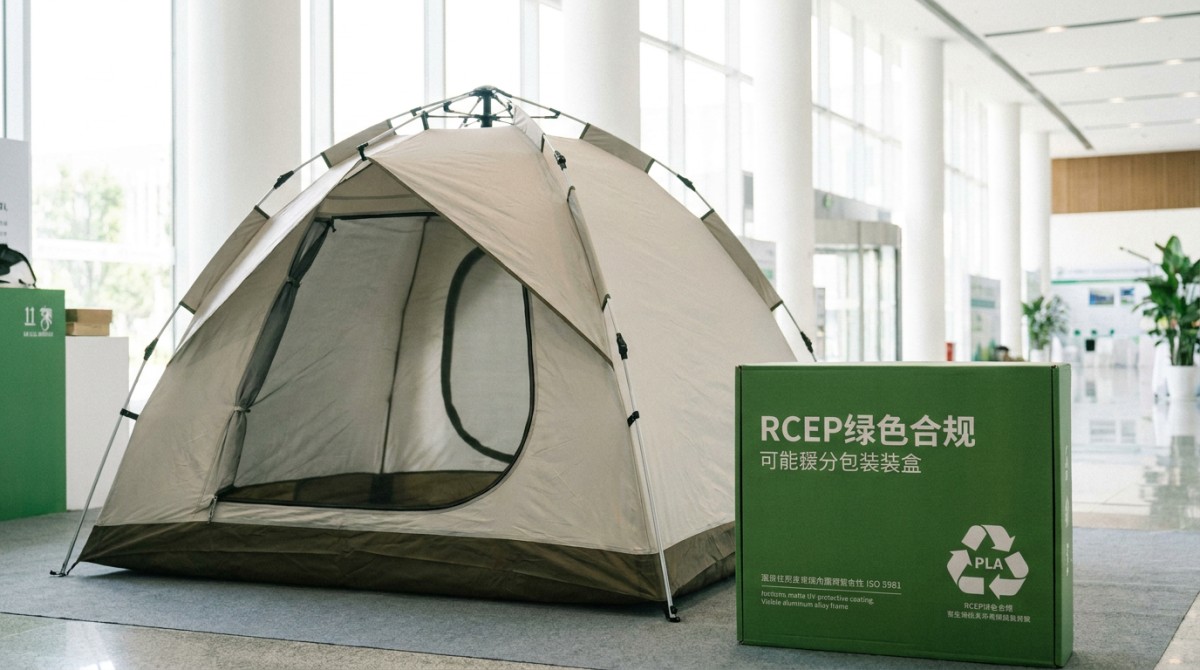
From May 16–17, the 2026 China International Camping Conference was held in Jinhua, Zhejiang, attracting buyers from 7 countries including Spain, Malaysia, South Korea, and Vietnam. At the conference, the RCEP Camping Consumption Scenario Adaptation White Paper and the first recommended list of 32 Chinese camping equipment export enterprises were released. The organizers explicitly required that all exhibited products comply with ISO 5981 (outdoor equipment safety standard) and the new ASEAN green packaging regulations.
Which Sub-Sectors Will Be Affected
Direct trading enterprises: As the conference directionally releases procurement intention lists from RCEP countries, trading enterprises are facing changes in order structure——the proportion of non-price-oriented procurement is rising, placing rigid requirements on the completeness of product certification, scenario-based documentation (such as multilingual user manuals), and localized after-sales response capabilities; the impact is reflected in increased complexity of export documentation and higher upfront compliance investment, but in the long run it is expected to improve customer stickiness and bargaining room.
Raw material procurement enterprises: The new ASEAN green packaging regulations explicitly restrict PFAS additives, non-degradable plastic composite layers, and VOC content in inks, forcing upstream suppliers of textile base fabrics, coating adhesives, aluminum surface treatment, and others to accelerate validation of environmentally friendly substitute solutions; the impact is reflected in increased frequency of raw material testing, with traceable batch management becoming a prerequisite for cooperation.
Processing and manufacturing enterprises: The ISO 5981 standard adds rigid indicators such as graded wind-resistance testing for tents, tolerance limits for measured deviation in sleeping bag temperature ratings (±1.5℃), and dynamic load cycle counts for folding chairs, requiring production lines to add third-party pre-inspection stations and environmental simulation laboratories; the impact is reflected in rising retrofit costs for small-batch flexible production lines, but enterprises with rapid certification response capabilities are more likely to enter the recommended list.
Supply chain service enterprises: Including international logistics, certification agency services, multilingual technical documentation translation, and other service providers, because the white paper emphasizes ‘scenario adaptation’ (such as differentiated needs for tropical high humidity/island salt corrosion/high-altitude ultraviolet conditions), they need to upgrade from single-standard application to regional scenario package services (including climate adaptability descriptions, summaries of local regulations, and dialect dubbing for installation videos); the impact is reflected in finer service granularity and a higher proportion of knowledge-based added value.
Key Focus Areas and Response Measures for Relevant Enterprises or Practitioners
Immediately review gaps in ISO 5981 compliance for existing export products
Refer to the 12 mandatory test items in Annex A of the standard (including structural strength, flammability performance, and chemical migration limits), and prioritize completion of tent frame stress reports and re-testing of formaldehyde emissions from sleeping bag filling materials to avoid full-batch returns caused by a single non-compliant item.
Launch a compliance replacement roadmap for ASEAN green packaging
For products exported to countries such as Vietnam and Malaysia, complete updates to packaging material MSDS within 6 months, validate the process of replacing traditional PE composite film with PLA laminated paper, and simultaneously submit pre-review documents for EN13432 industrial compostability certification to customers.
Connect to the RCEP camping consumption scenario database
The white paper has opened an online query portal, allowing enterprises to retrieve 27 scenario parameters by target country, such as the altitude distribution of mainstream local campsites, average humidity zones, and commonly used fuel types, for optimizing product function design (such as adding anti-mildew coating options for the Thai market).
Editorial Viewpoint / Industry Observation
显然,这一事件标志着一种结构性转变:RCEP的价值已不再只是关税减免,而是监管趋同的支撑框架。ASEAN绿色包装规则——此前仅适用于电子产品和食品接触材料——如今被扩展至户外装备,这表明跨行业环境治理溢出正在发生。分析显示,入选的32家推荐企业有一个共同特征:它们都在过去12个月内完成了ISO 5981认证,这表明在标准采纳早期阶段,先发周期优势比规模更重要。从行业视角看,‘场景适配’白皮书更应被理解为一种需求侧规格工具——而非技术指南——这意味着制造商必须将气候数据视为研发输入,而不仅仅是合规输出。
Conclusion
This conference is not merely a promotional exhibition event, but the first systematic docking attempt under the RCEP framework anchored in segmented consumption scenarios and driven by mutual recognition of multilateral standards. Its significance lies in validating a new export logic of ‘standards first—scenario definition—procurement implementation’, providing a reusable institutional opening-up model for other consumer goods industries. What deserves more attention at present is whether a quarterly updated negative list for RCEP camping categories and a joint inspection mechanism will be formed subsequently.
Source Information
Organizers: China Chamber of Commerce for Import and Export of Textiles, Jinhua Municipal People’s Government; Technical basis: ISO 5981:2023 “Outdoor equipment — Safety requirements and test methods”, ASEAN Guideline on Green Packaging for Non-Food Consumer Goods (2025 Draft). Note: The official text of the new ASEAN green packaging regulations is expected to be released by the ASEAN Centre for Energy in Q3 2026, and the relevant content remains subject to ongoing observation.
Your 1:1 travel consultant will respond within 1 business day
How to plan your trip
- Hebei Launches Five “Trendy Hebei” Premium Tourism Routes for Inbound Travelers, Moving Toward Standardized Offerings
- The 12th Qionghai Tanmen Coastal Foraging Festival Opens on August 16
- Guangxi’s Digital Silk Road Accelerates: Orah Mandarin Juice Secures an Italian Order, Drawing Attention to Export Standards for Souvenirs
- New Inquiry Triggered by Coastal Cultural Tourism Space Standards
- Zhuanghe’s agro-cultural tourism model draws ASEAN attention, highlighting the compliance requirements for the internationalization of camping and intangible cultural heritage handicrafts
Monthly travel guide
- Typhoon “White Dolphin” Forces Henan Scenic Areas to Close, Putting Summer Ground-Handling Services Under Pressure
- RCEP Implementing Rules for Indonesia Take Effect: Zero Tariffs for Cultural and Tourism Services Alongside Strict Customer Service Requirements
- Saudi Arabia’s New SASO Regulations Take Effect: Taqat Certification Required Before Chinese-Language Cultural Tourism Services Can Access Visit Saudi
- Zhengzhou Launches a Dedicated LCL Shipping Route for Cultural and Tourism Materials, Cutting Freight Costs by 18%
- Luoyang Cold Chain Intensification: Cultural and Creative Exports Delivered in 9 Days
- Expedited Pre-Approval for Group Visas to Three Southeast Asian Countries
- Tightening air freight capacity at Zhengzhou Airport delays the delivery of cultural and tourism materials
- Vietnam's New Regulations on Bus Monitoring Requirements for Group Tours
- Saudi SAMA New Regulations on Travel Liability Insurance Compliance Preparation
- Japanese tourists' new regulations for entering Henan local transport vehicles
- Wai Gao Qiao Wen Travel customs bonded warehouse summer group equipment fast lane
- JTB Warning: Risks in Henan’s September Red Leaf Family Tour Purchases
Popular destinations
- The China-Europe Railway Express (Zhengzhou) Launches a Dedicated Train for Culture and Tourism Equipment, Cutting Customs Clearance Time to 48 Hours
- RCEP Cultural and Tourism Services Commitment Upgrade: Faster Market Access for Chinese Outbound Tourism Service Providers in Vietnam and Malaysia
- Tourism Authority of Thailand Launches “China Ready” Certification Program, with Henan Inbound Travel Service Providers Included in the First Batch of Recommended Providers
- Thailand Tourism Authority Promotes “China Ready” Certification, with a Henan Local Tour Operator Included in the First Recommended List
- Overseas Chinese Fair Opens in Shenzhen: Smart Culture and Tourism Equipment and Culinary Tourism Services Go Global on Two Fronts
Why choose us

High cost-performance and transparent experience
Offer astonishing low prices without hidden tourism traps, enabling travelers to explore at lower costs while avoiding unnecessary spending loopholes, ensuring transparent consumption.

Personalization and dedicated service
Support 100% free customization, paired with one-on-one expert service, crafting exclusive itineraries based on travelers' specific needs, while providing professional guidance to enhance the personalization and professionalism of the journey.

Premium itinerary planning
Compact yet rich itineraries allow travelers to experience more within limited time; simultaneously, carefully selected hotels in prime locations provide convenient lodging conditions, overall enhancing travel comfort and experience.