Welcome to Our Travel Agency!




Travel Guide
On June 5, 2026, focusing on the digital integration of inbound culture and tourism services, the Ministry of Culture and Tourism launched a pilot program for the “Yuyoutong” multilingual culture and tourism reservation service platform, covering key provinces such as Henan, with the first batch supporting English, French, German, Spanish, and opening API direct connection capabilities to overseas OTAs such as Booking.com and Klook. For scenic areas, hotels, tour guide service providers, cross-border distribution channels, as well as business links related to electronic invoicing and departure tax refunds, this move is worth attention because it not only involves front-end multilingual services, but also points to the system integration of reservation, booking, documentation, and compliance processes.
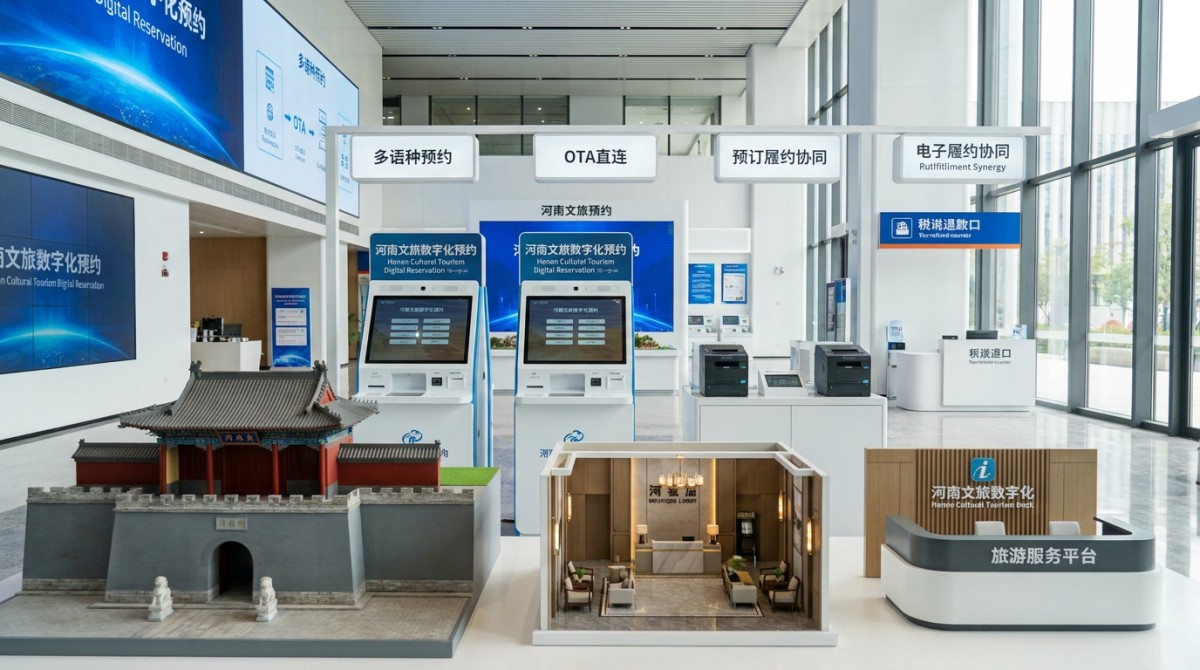
Core content disclosed for the pilot platform
According to the disclosed information, “Yuyoutong” will carry out a pilot program for a multilingual culture and tourism reservation service platform in key provinces such as Henan starting from June 2026. The first batch of supported languages includes English, French, German, and Spanish.
The platform opens API interfaces to leading overseas OTAs, and it has been explicitly mentioned that systems such as Booking.com and Klook can connect directly. In terms of business coverage, the platform has connected processes including scenic area reservations, hotel bookings, tour guide reservations, electronic invoicing, and departure tax refunds.
The direct effect confirmed from the summary information is that this platform helps lower the technical access threshold for overseas distributors and reduces their costs in compliant operations.
The impact is not only on the platform side, but also across the culture and tourism service chain
The focus for scenic areas and cultural tourism destinations lies in reservation access
From an analysis perspective, scenic areas and destination management-related entities may be the first to feel the changes. The reason is that the platform first connects reservation entry points, and scenic area reservations themselves are an important precondition in inbound tourists’ consumption decision-making. If multilingual information and overseas OTA distribution interfaces are gradually integrated, scenic areas will need to pay attention to whether their own reservation capabilities can be smoothly incorporated into a unified chain, and whether information display, quota management, and fulfillment coordination can operate smoothly after connecting with overseas channels.
Hotels and accommodation operators need to pay attention to the coordination of the booking chain
From an industry perspective, after hotel bookings are incorporated into the same platform, it means that inbound tourists’ travel arrangements may tend more toward being completed within one relatively coherent service process. For accommodation operators, the impact is mainly reflected in channel integration, order acceptance, and the efficiency of linkage with surrounding services such as scenic areas and tour guides. What is currently more worth attention is whether, after the platform is connected, it will change existing distribution access methods and the rhythm of order processing.
Tour guides and local service providers face standardized integration requirements
The inclusion of tour guide reservations in the platform chain means that the supply of local services is being brought into a clearer reservation system. Observationally, this kind of impact may not immediately appear as an increase or decrease in demand, but it will be more directly reflected in reservation confirmation, service scheduling, information presentation, and customer communication. For relevant service providers, it will be necessary to continue paying attention to whether fulfillment requirements become more detailed after platform rules and interface integration are implemented.
Overseas OTAs and distribution service providers are affected most directly
In this pilot program, overseas OTAs and related distribution service providers are among the most directly affected parties. Opening API direct connections and covering processes such as reservation, booking, electronic invoicing, and departure tax refunds means that their system access path for distributing China’s culture and tourism products is expected to be simplified. From an analytical point of view, the focus of this change is not only “whether they can sell,” but also “whether they can operate sustainably at lower technical and compliance costs.”
Which practical issues should related enterprises focus on now
First distinguish between “pilot launch” and “full implementation”
What has currently been confirmed is that the pilot will begin in key provinces such as Henan starting from June 2026. For enterprises, the first step is to distinguish between policy signals and actual coverage: a pilot is not equivalent to nationwide unified implementation, nor does it mean that all culture and tourism supply entities have already completed integration. When advancing business, priority should be given to areas already opened, interfaces already defined, and processes already executable.
Focus on verifying interface, process, and document integration
Since the platform covers not only front-end reservations, but also involves electronic invoicing and departure tax refunds, enterprises should focus on whether the process is truly end-to-end. For channel operators, hotels, scenic areas, and service providers, what needs further verification is whether, between order generation, service confirmation, invoice issuance, and subsequent tax refund links, there are still materials, systems, or manual operations that need to be supplemented separately.
Multilingual service capabilities should not remain only at the page display level
From observation, the first batch supports English, French, German, and Spanish, which means multilingual capability has already been brought into actual transaction scenarios. What relevant enterprises need to pay attention to is not only page translation or product listing, but also whether reservation instructions, fulfillment notifications, order confirmations, and tourist communication can remain consistent, otherwise front-end sellability does not necessarily mean smooth back-end delivery.
Continue to follow up on subsequent official statements and integration details
Since the currently disclosed information focuses on the launch of the pilot and its functional scope, enterprises still need to continue paying attention to whether subsequent official statements further refine access conditions, scope of application, process rules, or cooperation methods. In particular, distributors and service providers already operating in the inbound market should promptly assess whether their own systems, products, and customer service processes need adjustment.
This is more like a digital integration signal for inbound culture and tourism
From an editorial observation perspective, the value of this information lies not only in adding a new multilingual platform, but in putting scenic area reservations, hotel bookings, tour guide services, electronic invoicing, and departure tax refunds into the same service chain. For the industry, this indicates that services related to inbound tourists are moving toward an integrated direction of being “bookable, fulfillable, invoiceable, and compliantly manageable.”
However, at present it is more appropriate to understand it as a clear pilot signal rather than an already formed nationwide result. The reason is that the disclosed information is still concentrated on pilot regions, the first batch of languages, and the direction of interface opening, while the subsequent scope of coverage, pace of integration, and actual execution results still require continued observation.
How this pilot should be understood at the current stage
Overall, the industry implication released by the “Yuyoutong” pilot is relatively clear: the digitalization of inbound culture and tourism services is no longer just a matter of multilingual display, but a matter of coordination across transaction, fulfillment, and compliance chains. For scenic areas, hotels, tour guide service providers, and overseas distribution channels, this change in the short term is more like an increase in integration and preparation requirements, while in the medium to long term it may become an important window for observing the degree of standardization in inbound culture and tourism services.
Therefore, the more rational judgment at present is: this pilot has already provided a clear direction, but its actual scope of impact and business depth should still be continuously evaluated in conjunction with subsequent pilot progress.
Basis of this article and directions for subsequent verification
This article is generated based on the news headline, event occurrence time, and event summary provided by the user. The known information includes: starting from June 2026, the “Yuyoutong” multilingual culture and tourism reservation service platform will be piloted in key provinces such as Henan, with the first batch supporting English, French, German, and Spanish, opening APIs for direct connection with leading overseas OTA systems such as Booking.com and Klook, and connecting processes including scenic area reservations, hotel bookings, tour guide reservations, electronic invoicing, and departure tax refunds. This article does not introduce unverified data, market size, or additional cases.
Verification sources usually related to this type of information include official announcements, information released by主管 departments, corporate announcements, industry association information, and authoritative media reports. Since no specific official source link was provided in the input, the relevant details still require continuous follow-up verification. Directions worth attention in the future include whether the pilot coverage will expand, whether interfaces and access rules will be further clarified, and how the full-process integration will be implemented in actual business operations.
Your 1:1 travel consultant will respond within 1 business day
How to plan your trip
- China Tourism Academy Releases Report on Autumn Trends in China's Domestic Customized Tour Market
- Visiting China for the First Time: How Many Cities Should You Include in a 15-Day Grand Tour?
- Is a geology exploration tour suitable for elementary school students?
- Is it worth hiring a guide for a visit to the Terracotta Army?
- Hebei Launches 5 “Trendy Hebei” Signature Tour Routes, Standardizing Inbound Tourism Services
Monthly travel guide
- Luoyang launches the “Autumn Charm of the Divine Capital” tourism promotion to build anticipation for winter travel
- Typhoon “White Dolphin” Forces Henan Scenic Areas to Close, Putting Summer Ground-Handling Services Under Pressure
- RCEP Implementing Rules for Indonesia Take Effect: Zero Tariffs for Cultural and Tourism Services Alongside Strict Customer Service Requirements
- Saudi Arabia’s New SASO Regulations Take Effect: Taqat Certification Required Before Chinese-Language Cultural Tourism Services Can Access Visit Saudi
- Zhengzhou Launches a Dedicated LCL Shipping Route for Cultural and Tourism Materials, Cutting Freight Costs by 18%
- Luoyang Cold Chain Intensification: Cultural and Creative Exports Delivered in 9 Days
- Expedited Pre-Approval for Group Visas to Three Southeast Asian Countries
- Tightening air freight capacity at Zhengzhou Airport delays the delivery of cultural and tourism materials
- Vietnam's New Regulations on Bus Monitoring Requirements for Group Tours
- Saudi SAMA New Regulations on Travel Liability Insurance Compliance Preparation
- Japanese tourists' new regulations for entering Henan local transport vehicles
- Wai Gao Qiao Wen Travel customs bonded warehouse summer group equipment fast lane
Popular destinations
- Henan Cultural Tourism Explores the Shift from Traffic to Immersive Experiences
- Liaoning Launches Inbound Tourism Promotion Event for Global Travel Trade, Releases Service Guide
- Shandong Hosts Cultural and Creative Industry Networking Event, Releases Annual Plan for Province-Wide Renewal
- Hong Kong Travel Industry Council Visits Henan, Aiming to Jointly Develop Distinctive Tourism Products
- The 2026 China Tourism Industry Impact Cases Announced in Shiyan, Hubei
Why choose us

High cost-performance and transparent experience
Offer astonishing low prices without hidden tourism traps, enabling travelers to explore at lower costs while avoiding unnecessary spending loopholes, ensuring transparent consumption.

Personalization and dedicated service
Support 100% free customization, paired with one-on-one expert service, crafting exclusive itineraries based on travelers' specific needs, while providing professional guidance to enhance the personalization and professionalism of the journey.

Premium itinerary planning
Compact yet rich itineraries allow travelers to experience more within limited time; simultaneously, carefully selected hotels in prime locations provide convenient lodging conditions, overall enhancing travel comfort and experience.