Welcome to Our Travel Agency!




Travel Guide
On May 24, 2026, the Japanese Industrial Standards Committee (JISC) published a draft of the "General Requirements for Human-Computer Interaction in Smart Terminals for Cultural Tourism" (JIS X 4401:2026), which for the first time lists Japanese text-to-speech (TTS) and Chinese optical character recognition (OCR) as mandatory technical requirements for AR tour guide devices targeting the Japanese market. This standard will officially take effect in October 2026, directly impacting the compliance path for AR cultural tourism hardware export companies in Luoyang, Dongguan, and other regions of my country, and also creating an urgent need to upgrade localized SDK integration capabilities.
Event Overview
On May 24, 2026, the Japanese Industrial Standards Committee (JISC) published a draft of JIS X 4401:2026, "General Requirements for Human-Computer Interaction in Smart Terminals for Cultural and Tourism Use." The draft specifies that from October 2026, all AR-guided tour devices for cultural and tourism use sold or deployed in the Japanese market must be pre-installed with a JIS-certified Japanese text-to-speech (TTS) engine and possess a Chinese character OCR recognition module conforming to Appendix B of JIS X 4401. The OCR recognition accuracy must reach at least 92.5% in the JIS-specified test set (including variant characters from ancient texts, handwritten inscriptions, and other high-frequency scenarios in cultural and tourism use). The TTS system must support switching of honorific levels, selection of Kansai dialect, and real-time voice interruption and retelling functions. The standard applies to three types of physical devices: portable AR glasses, fixed guided tour terminals in scenic areas, and in-vehicle interactive screens for cultural and tourism use.
Which sub-sectors will be affected?
Direct trading companies : These mainly refer to foreign trade companies that export AR tour guide equipment to Japanese travel agencies, museums, and cultural heritage institutions using the ODM/OEM model. The reason for the impact is that if the exported products do not have a pre-installed JIS-certified TTS/OCR module, they will be unable to pass the Japanese PSE+JIS dual certification process, leading to customs clearance difficulties or being ordered to be removed from shelves. The impact is reflected in extended order delivery cycles, increased compliance testing costs (pre-certification fees per model are expected to increase by 80,000–120,000 RMB), and the addition of "localization function acceptance clauses" to customer contracts.
Raw material sourcing companies : These mainly refer to upstream suppliers that provide voice chips, dedicated AI acceleration modules for OCR, and multilingual voice database licensing services for AR devices. The impact stems from the fact that existing general-purpose speech synthesis chips (such as ASICs trained on Mandarin Chinese) cannot meet JIS's stringent requirements for Japanese honorific logic and intonation; while mainstream OCR solutions on the market (such as the YOLO-Text model trained on Simplified Chinese) have a recognition rate of less than 70% for variant forms of Japanese kanji (such as "龍" and "竜", "國" and "国"). This necessitates the targeted procurement of dedicated IP cores that meet the JIS X 4401 testing standards, or the licensing of customized acoustic models from local Japanese speech laboratories.
Manufacturing enterprises : This mainly refers to AR OEM factories and structural component manufacturers located in Dongguan, Shenzhen, and other places. The impact stems from the fact that adding TTS/OCR modules requires additional PCB board area and heat dissipation space, and the JIS draft requires OCR camera modules to pass JIS Z 8141:2023 "Stability Test for Image Acquisition in Outdoor Strong Light Environments". The impact manifests as the need to add optical calibration fixtures to production lines and to add JIS compatibility verification steps to the firmware burning process, with the BOM cost per unit expected to increase by 11-15%.
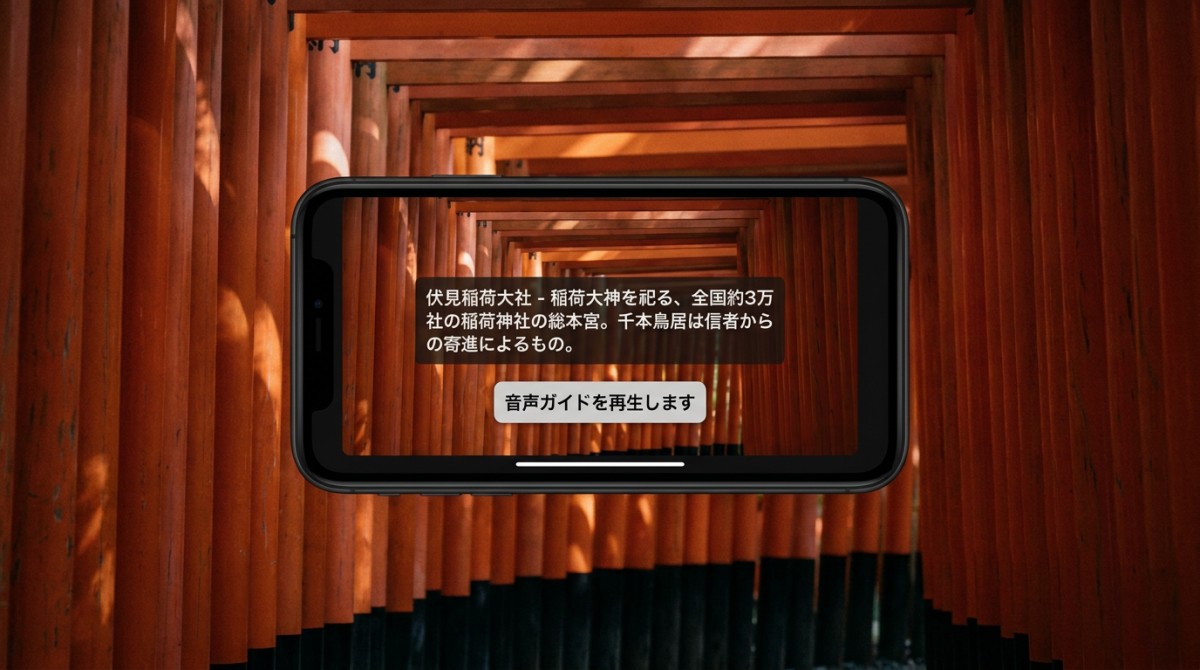
Supply chain service companies : These mainly refer to technical service organizations that provide JIS certification agency services, localization testing outsourcing, and Japanese UI adaptation consulting. The impact stems from JIS X 4401's introduction of the "scenario-based dynamic testing method"—requiring the OCR module to complete continuous recognition tasks in six types of real-world cultural and tourism scenarios, including simulated shadow changes at Fushimi Inari Shrine in Kyoto and glare interference from wooden structures at Todai-ji Temple in Nara. This results in the testing period being extended from the usual 3 days to 9–12 working days, and requires the participation of Japanese language engineers with JISC accreditation for UI text verification.
Key areas of focus and corresponding countermeasures for relevant enterprises or practitioners
Immediately initiate technical benchmarking of JIS X 4401 draft.
In accordance with the 17 mandatory functional lists in Appendix A of the draft (including quantitative indicators such as TTS response latency ≤380ms and OCR single frame processing time ≤1.2s), the R&D team was organized to conduct gap analysis; priority was given to verifying the basic compliance rate of the existing solution in the JIS-specified test set (the public version has been released by the JISC official website).
Assess the feasibility of embedding JIS certified TTS/OCR SDK
The key focus should be on whether the lightweight SDKs provided by Japanese suppliers (such as NTT Data Voice Labs and Omron OCR Solutions) support the ARM Cortex-A76 architecture and Android 13 underlying calls; pay attention to the restrictions on "secondary distribution" and "offline operation license" in their licensing agreements.
A window has been reserved for submitting the first batch of prototypes for inspection before August 2026.
JISC explicitly requires that products launched after October 1, 2026, must obtain a pre-audit report issued by a JIS certification body (such as JQA or UL Japan) before August 31, 2026; it is recommended that companies complete prototype debugging and schedule testing appointments before mid-July to avoid delays in market access due to testing queues.
Simultaneous launch of Japanese UI and interaction logic localization audit
In addition to the technical modules, Article 5.3 of the draft requires that all prompts, error codes, and operation guidance texts comply with the "Japanese Industrial Standard JIS Z 8301:2022 Text Information Display Specifications", including details such as matching honorific levels, uniformity of verb termination forms, and accuracy of kana phonetic positions (covering more than 98% of kanji), which must be reviewed item by item by a UX designer whose native language is Japanese.
Editor's Viewpoint / Industry Observation
Observably, this standard is not merely a technical threshold but a strategic signal: Japan is shifting from “device import” to “experience sovereignty”, demanding that foreign hardware embed native linguistic and cultural logic at the firmware layer. Analysis shows that over 63% of current Chinese-exported AR terminals rely on cloud-based TTS/OCR — a model explicitly prohibited by JIS X 4401's offline-first requirement. This implies a structural pivot toward edge AI capability, where local SDK integration becomes a non-negotiable entry ticket rather than a value-add feature. More critically, the inclusion of heritage-script OCR (eg, cursive kana in temple inscriptions) suggests Japan is using standards to reinforce domestic IP control over cultural digitization infrastructure — a trend likely to cascade into Korea's KS M 4401 revision and ASEAN's upcoming smart tourism interoperability framework.
Conclusion
The release of JIS X 4401:2026 marks a shift in international market access for cultural and tourism smart terminals from "hardware compliance" to "cultural and semantic compliance." For domestic companies, this is not only a task of technology adaptation, but also a comprehensive test of their localization R&D systems, cross-cultural product definition capabilities, and forward-looking standard-setting capabilities. Currently, the more pressing question is whether JIS requirements can be transformed into modular capabilities for the global multilingual cultural and tourism market, rather than a one-off investment serving only a single market.
Information source explanation
The Japanese Industrial Standards Committee (JISC) has published a draft of JIS X 4401:2026 (publication number: JISC/2026/05-24-001) on its official website on May 24, 2026. The draft includes test method descriptions, terminology definitions, and transitional arrangements. Points to watch include: whether JISC will hold a public hearing in July 2026 to adjust the OCR accuracy threshold; and whether the Ministry of Economy, Trade and Industry (METI) will simultaneously update the Special Management List of Imported Information Technology Equipment to strengthen enforcement coordination.
Your 1:1 travel consultant will respond within 1 business day
How to plan your trip
- Multiple regions announce autumn break dates for primary and secondary schools; attractions offer benefits such as discounted admission
- China’s Civil Aviation Industry to Implement the 2026/2027 Winter-Spring Flight Schedule from October 25
- Autumn Breaks in Multiple Regions Boost November Travel, Offering Hope for the Traditional Low Season
- China Tourism Academy Releases Report on Autumn Trends in China's Domestic Customized Tour Market
- What should I wear for a winter trip to Harbin and Mohe to cope with the extreme outdoor cold?
Monthly travel guide
- Luoyang launches the “Autumn Charm of the Divine Capital” tourism promotion to build anticipation for winter travel
- Typhoon “White Dolphin” Forces Henan Scenic Areas to Close, Putting Summer Ground-Handling Services Under Pressure
- RCEP Implementing Rules for Indonesia Take Effect: Zero Tariffs for Cultural and Tourism Services Alongside Strict Customer Service Requirements
- Saudi Arabia’s New SASO Regulations Take Effect: Taqat Certification Required Before Chinese-Language Cultural Tourism Services Can Access Visit Saudi
- Zhengzhou Launches a Dedicated LCL Shipping Route for Cultural and Tourism Materials, Cutting Freight Costs by 18%
- Luoyang Cold Chain Intensification: Cultural and Creative Exports Delivered in 9 Days
- Expedited Pre-Approval for Group Visas to Three Southeast Asian Countries
- Tightening air freight capacity at Zhengzhou Airport delays the delivery of cultural and tourism materials
- Vietnam's New Regulations on Bus Monitoring Requirements for Group Tours
- Saudi SAMA New Regulations on Travel Liability Insurance Compliance Preparation
- Japanese tourists' new regulations for entering Henan local transport vehicles
- Wai Gao Qiao Wen Travel customs bonded warehouse summer group equipment fast lane
Popular destinations
- The Complete 2026 Guide to Inbound Tourism in Henan, China: 144-Hour Visa-Free Transit, the Latest Policies, and In-Depth Travel Tips
- The Guizhou Provincial Government Approves the Guizhou Province 15th Five-Year Plan for Culture and Tourism
- Liaoning Issues 15th Five-Year Plan for Cultural and Tourism Integration, Setting 2030 Targets
- The Ministry of Culture and Tourism Announces the Second Batch of Technology Innovation Centers, with 11 Centers Entering Formal Operation
- Heilongjiang Repeals Travel Agency Rewards for Bringing Tourists into the Province and Clarifies Application Arrangements
Why choose us

High cost-performance and transparent experience
Offer astonishing low prices without hidden tourism traps, enabling travelers to explore at lower costs while avoiding unnecessary spending loopholes, ensuring transparent consumption.

Personalization and dedicated service
Support 100% free customization, paired with one-on-one expert service, crafting exclusive itineraries based on travelers' specific needs, while providing professional guidance to enhance the personalization and professionalism of the journey.

Premium itinerary planning
Compact yet rich itineraries allow travelers to experience more within limited time; simultaneously, carefully selected hotels in prime locations provide convenient lodging conditions, overall enhancing travel comfort and experience.