Welcome to Our Travel Agency!




Travel Guide
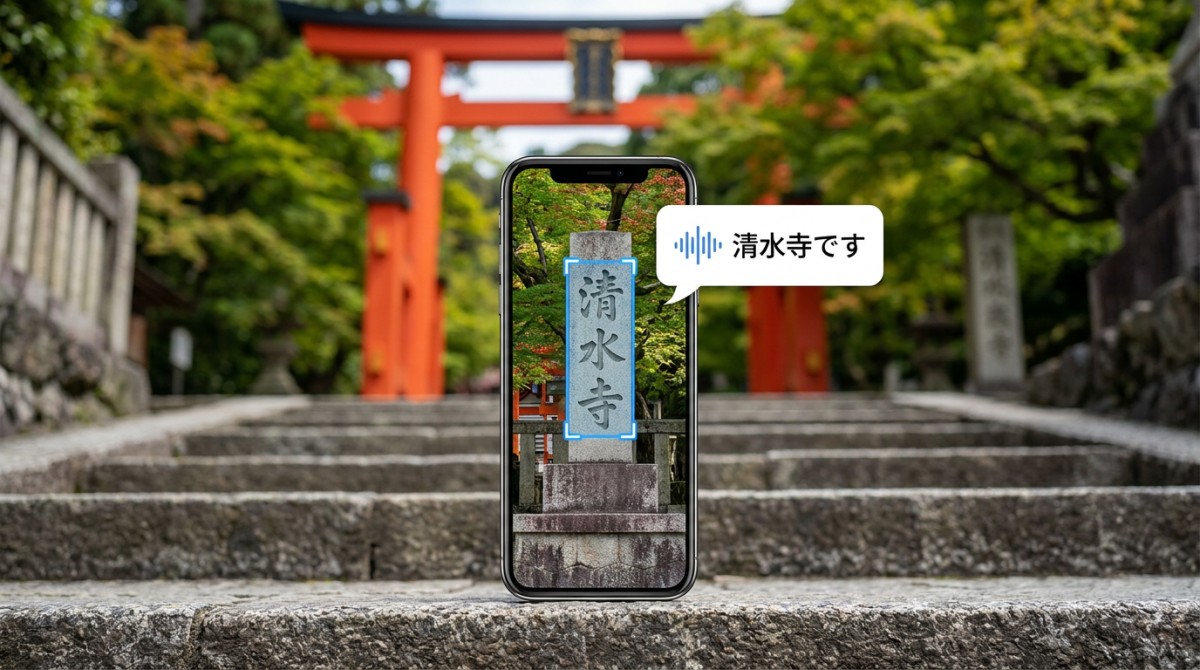
On May 22, 2026, the Japanese Industrial Standards Committee (JISC) published a draft revision of JIS X 8352:2026, which for the first time includes augmented reality (AR) tour guide terminal devices for tourists in the mandatory localization technical specifications. The new regulations focus on language adaptation capabilities, requiring devices to have a built-in Japanese text-to-speech (TTS) engine compliant with JIS T 0107 and a Chinese character optical character recognition (OCR) module certified by JIS X 4081. This draft is scheduled to officially take effect on October 1, 2026, and will directly reshape the technical compliance path and localization response time for Chinese AR hardware companies exporting to Japan.
Event Overview
The Japanese Industrial Standards Committee (JISC) published a draft revision of JIS X 8352:2026 on May 22, 2026. The draft clarifies that all AR navigation terminal devices (including portable glasses, handheld terminals, and fixed interactive screens) providing services to overseas tourists in cultural tourism settings must be pre-installed with a Japanese speech synthesis engine certified by JIS T 0107 and integrate a Chinese character OCR recognition module that has passed the JIS X 4081 standard test. This standard does not apply to purely back-end systems or internal maintenance equipment that is not directly faced by tourists. The public comment period for the draft ends on July 21, 2026, with a proposed effective date of October 1, 2026.
Which sub-sectors will be affected?
Direct trading companies : mainly refers to Chinese brand owners and channel agents engaged in B2B export of AR tour guide equipment to Japan. The impact is reflected in a substantial increase in entry barriers—the previous model of only meeting basic functional requirements and CE/JIS basic safety standards (such as the JIS C 61000 series) for customs clearance will become invalid; after October 2026, equipment without TTS/OCR dual-module compliance certificates will be unable to complete the PSE mark supplementary registration under Japan's Electrical Appliance and Material Safety Law (DENAN), and will also find it difficult to pass the review of the Japan Tourism Agency's recommended cultural and tourism supplier list. Customs clearance time and third-party testing costs are expected to increase by 30%–50%.
Raw material sourcing companies : These mainly refer to upstream suppliers providing voice chips, dedicated AI acceleration modules for OCR, and licensed Japanese voice databases for AR terminals. The impact is reflected in a shift in demand structure—orders previously focused on general Chinese/English voice SDKs will rapidly shift towards Japanese TTS middleware with full JIS T 0107 certification, and OCR solutions verified for JIS X 4081 Chinese character recognition accuracy (≥98.5%, including handwritten characters, variant characters from ancient texts, and low-light blurred text). Companies that have not proactively secured JIS certification resources may face the risk of order shifts.
Manufacturing enterprises : mainly referring to ODM/OEM manufacturers and complete machine assembly plants. The impact is reflected in increased pressure on production line adaptation—requiring collaborative redefinition of firmware burning processes, reserving TTS voice engine running memory (≥512MB RAM) and OCR image processing computing power (≥2 TOPS INT8), and establishing JIS standard-compliant factory testing stations. Some small and medium-sized OEM manufacturers, lacking experience in connecting with JIS-certified laboratories, may experience delivery delays or increased rework rates.
Supply chain service companies include JIS certification agencies in Japan, multilingual localization testing service providers, and cross-border compliance consulting platforms. The impact is reflected in a surge in service demand and a rise in professional barriers—simple translation and UI adaptation are no longer sufficient; it needs to extend to subjective evaluation of TTS naturalness (according to JIS T 0107 Annex B method), construction of OCR real-world sample libraries (covering typical scenarios such as Kyoto temple inscriptions, Tokyo subway station nameplates, and Hokkaido bilingual menus), and DENAN-PSE joint application. Organizations with full-process JIS standard service capabilities have significantly enhanced bargaining power.
Key areas of focus and corresponding countermeasures for relevant enterprises or practitioners
Immediately initiate the assessment of the JIS T 0107 and X 4081 dual certification path.
Before the public announcement deadline in July 2026, companies must commission a designated Japanese certification body (such as JQA or UL Japan) to conduct a gap analysis. The analysis should focus on confirming whether the existing TTS engine supports the control of the 12 types of Japanese prosody parameters specified in JIS T 0107 (such as the duration accuracy of "gekonin" and "nagami" ±5ms) and whether the OCR module covers the robustness of recognition of the 2,136 commonly used kanji and 1,000 extended kanji listed in Appendix A of JIS X 4081.
Reconstructing the localization development collaboration mechanism
It is recommended that hardware manufacturers establish joint development agreements with Japanese speech technology providers (such as Preferred Networks and AI-ON) and OCR algorithm companies (such as OptiQuest Japan) to avoid certification failure due to simply purchasing a black-box SDK. In particular, the legality of the training data source must be clearly defined—JIS X 4081 explicitly requires that the Chinese character images used for OCR model training must have written authorization from the copyright holder, and commercially available ancient book scan libraries require separate rights confirmation.
Dynamically track the development of supporting policies of the Japan Tourism Agency
Although JIS X 8352:2026 is a voluntary standard, the Japan Tourism Agency has listed it as a "recommended adoption benchmark" in its "Guidelines for Upgrading Digital Services for Visitors to Japan," released in April 2026. If it is subsequently upgraded to a mandatory bonus item in the Agency's procurement tenders, its impact will be substantially expanded. Companies should simultaneously monitor updates to their official websites and local tourism bureaus' (such as Kyoto City and Osaka City) smart tourism project tender documents.
Editor's Viewpoint / Industry Observation
Observably, this draft marks Japan's first technical standard explicitly linking AR hardware compliance to linguistic accessibility in tourism — a shift from generic ICT safety to experiential inclusivity. Analysis shows the dual-module requirement (TTS + OCR) is not merely additive but interdependent: OCR feeds text input to TTS for real-time audio guidance, making end-to-end pipeline validation essential. From industry perspective, the 4.5-month gap between publicity and enforcement is tighter than typical JIS transitions, suggesting JISC prioritizes rapid alignment with Japan's 2025–2030 Tourism Digitalization Roadmap. It is more appropriately understood as a signal of tightening 'soft infrastructure' barriers — where language capability now functions as de facto market access control, parallel to cybersecurity or data residency rules.
Conclusion
This JIS revision is not an isolated technological upgrade, but a key step in Japan's integration of language service capabilities into its national digital infrastructure system in the context of the recovery of inbound tourism. For China's AR industry, in the short term, it needs to cope with the pressure of compliance costs and development cycles; in the long term, it will force the technology stack to evolve from 'functionality implementation' to 'scenario symbiosis'. Rationally speaking, whether the JIS adaptation process can be transformed into the accumulation of high-value-added capabilities such as Japanese voice interaction and cultural heritage image understanding will determine whether companies can leap from 'exporting equipment' to the new stage of 'exporting service standards'.
Information source explanation
Official sources: Japan Industrial Standards Committee (JISC) official website (JIS X 8352:2026 Draft, Notice No. 2026-0522); Ministry of Economy, Trade and Industry of Japan's "JIS Standard Development Procedure Manual (2025 Edition)"; Japan Tourism Agency's "Guidelines for Upgrading Digital Services for Visitors to Japan (April 2026 Edition)". Areas to be monitored: Summary of feedback during the JISC public comment period (released July 22, 2026), details of the official text of JIS X 8352:2026, and whether local governments in major Japanese tourist destinations have introduced supporting subsidies or transitional arrangements.
Your 1:1 travel consultant will respond within 1 business day
How to plan your trip
- Multiple regions announce autumn break dates for primary and secondary schools; attractions offer benefits such as discounted admission
- China’s Civil Aviation Industry to Implement the 2026/2027 Winter-Spring Flight Schedule from October 25
- Autumn Breaks in Multiple Regions Boost November Travel, Offering Hope for the Traditional Low Season
- China Tourism Academy Releases Report on Autumn Trends in China's Domestic Customized Tour Market
- What should I wear for a winter trip to Harbin and Mohe to cope with the extreme outdoor cold?
Monthly travel guide
- Luoyang launches the “Autumn Charm of the Divine Capital” tourism promotion to build anticipation for winter travel
- Typhoon “White Dolphin” Forces Henan Scenic Areas to Close, Putting Summer Ground-Handling Services Under Pressure
- RCEP Implementing Rules for Indonesia Take Effect: Zero Tariffs for Cultural and Tourism Services Alongside Strict Customer Service Requirements
- Saudi Arabia’s New SASO Regulations Take Effect: Taqat Certification Required Before Chinese-Language Cultural Tourism Services Can Access Visit Saudi
- Zhengzhou Launches a Dedicated LCL Shipping Route for Cultural and Tourism Materials, Cutting Freight Costs by 18%
- Luoyang Cold Chain Intensification: Cultural and Creative Exports Delivered in 9 Days
- Expedited Pre-Approval for Group Visas to Three Southeast Asian Countries
- Tightening air freight capacity at Zhengzhou Airport delays the delivery of cultural and tourism materials
- Vietnam's New Regulations on Bus Monitoring Requirements for Group Tours
- Saudi SAMA New Regulations on Travel Liability Insurance Compliance Preparation
- Japanese tourists' new regulations for entering Henan local transport vehicles
- Wai Gao Qiao Wen Travel customs bonded warehouse summer group equipment fast lane
Popular destinations
- The Complete 2026 Guide to Inbound Tourism in Henan, China: 144-Hour Visa-Free Transit, the Latest Policies, and In-Depth Travel Tips
- The Guizhou Provincial Government Approves the Guizhou Province 15th Five-Year Plan for Culture and Tourism
- Liaoning Issues 15th Five-Year Plan for Cultural and Tourism Integration, Setting 2030 Targets
- The Ministry of Culture and Tourism Announces the Second Batch of Technology Innovation Centers, with 11 Centers Entering Formal Operation
- Heilongjiang Repeals Travel Agency Rewards for Bringing Tourists into the Province and Clarifies Application Arrangements
Why choose us

High cost-performance and transparent experience
Offer astonishing low prices without hidden tourism traps, enabling travelers to explore at lower costs while avoiding unnecessary spending loopholes, ensuring transparent consumption.

Personalization and dedicated service
Support 100% free customization, paired with one-on-one expert service, crafting exclusive itineraries based on travelers' specific needs, while providing professional guidance to enhance the personalization and professionalism of the journey.

Premium itinerary planning
Compact yet rich itineraries allow travelers to experience more within limited time; simultaneously, carefully selected hotels in prime locations provide convenient lodging conditions, overall enhancing travel comfort and experience.