Welcome to Our Travel Agency!




Travel Guide
On 27 April 2026, the European Commission published the implementing rules for the Regulation on Sustainability Disclosure for Digital Tourism Platforms (EU/2026/782), making it clear that from 1 May 2026, Chinese supplier pages on major tourism platforms such as Booking.com and GetYourGuide must mandatorily display carbon footprint data verified by a third party. This requirement covers the three major service segments of transport, accommodation, and activities, directly affecting Chinese destination management companies, OTA partner suppliers, and green service certification bodies serving the European market, marking the formal entry of Chinese tourism service exports into a regulatory phase of carbon information transparency.
Event Overview
On 27 April 2026, the European Commission officially issued the implementing rules for the Regulation on Sustainability Disclosure for Digital Tourism Platforms (EU/2026/782). According to this document, from 1 May 2026, digital tourism platforms applicable to the EU market (including Booking.com and GetYourGuide, among others) must mandatorily display carbon footprint verification reports issued by recognized third-party bodies on their Chinese supplier detail pages. The data scope must cover the three categories of services provided by suppliers: transport transfers, accommodation arrangements, and local activity organization. The implementing rules also clarify that PAS 2060 is currently one of the compliance bases recognized by the EU.
Which Sub-sectors Will Be Affected
Chinese Outbound Tourism Destination Management Companies (including destination clusters in Henan and other regions)
As carbon footprint data will be displayed directly to European consumers on platform pages, destination management companies will become the front-end entities responsible for compliance. Those that have not completed carbon accounting and certification may face practical impacts such as reduced product visibility, traffic diversion of orders, or higher cooperation thresholds; service providers that have already obtained PAS 2060 certification will be more likely to receive priority platform recommendations and targeted procurement preference from European distributors.
China-based Supplier Management Service Providers for Tourism Platforms
Service providers offering support to platforms in supplier review, qualification management, content listing, and related areas need to upgrade their due diligence processes simultaneously by adding steps to verify the authenticity of carbon data. Their service agreements, system fields, and training materials must all be adapted to the new regulatory requirements, otherwise their ability to deliver compliance on the platform side will be affected.
Third-party Carbon Verification and Certification Bodies (Domestic Certified Institutions)
The regulation clearly requires “third-party certification recognized by the EU”, and PAS 2060 is currently a listed pathway. Domestic institutions that hold PAS 2060 certification qualifications and have been included in the EU ECCP (European Carbon Certification Platform) recognized directory will see phased growth in business demand; institutions that have not yet obtained relevant mutual recognition qualifications will find it difficult in the short term to support large-scale verification needs on the platform side.
What Relevant Companies or Practitioners Should Focus On and How to Respond at Present
Pay Attention to the Follow-up List of Recognized Institutions and Technical Guidelines Issued by the EU Authorities
At present, the implementing rules only make it clear that PAS 2060 is one of the compliance pathways, but the complete list of recognized verification bodies and the detailed methodology for carbon accounting have not yet been published. Companies should continuously monitor updates on the European Commission’s official website and the ECCP platform to avoid duplicate investment caused by choosing certification pathways that have not yet obtained mutual recognition.
Differentiate the Business Timing Differences Between the Platform Pilot Period and the Full Implementation Period
Starting in May, this will be the pilot implementation phase, which may initially be limited to some leading platforms and specific categories (such as low-carbon themed routes and in-depth city tours). Companies may prioritize supplier lines with high gross margins, high repurchase rates, and direct links to European B-end clients, and launch carbon inventory checks and certification in batches rather than making a sudden full-scale preparation effort.
Verify in Advance the Data Authorization and Disclosure Clauses in Existing Supplier Contracts
Displaying carbon footprints on platforms requires explicit authorization from suppliers. At present, most contracts with Chinese destination management companies do not stipulate the scope of use for carbon data. Companies should immediately review existing cooperation agreements and add written clauses regarding the collection, verification, and public use of environmental data to prevent spillover compliance risks.
Establish an Internal Carbon Information Base Ledger Rather Than Relying Solely on One-time Certification Reports
Carbon footprints need to be disclosed by service type (transport/accommodation/activities), and annual updates may be required in the future. It is recommended to standardize underlying parameters such as fuel types, vehicle passenger capacity, hotel energy consumption benchmarks, and activity venue area in the form of Excel or a lightweight database, so as to improve the efficiency of subsequent reviews and updates.
Editorial Viewpoint / Industry Observation
显然, this regulation is not yet a full-scale compliance mandate across all EU digital platforms, but rather a phased pilot targeting high-visibility service categories and certified suppliers. Analysis shows it functions primarily as a market-shaping signal: it accelerates alignment between Chinese regional service standards (e.g., Henan’s ground handling protocols) and internationally recognized carbon accountability frameworks—not through direct enforcement on Chinese firms, but via platform-mediated commercial incentives. From an industry perspective, the real impact lies less in immediate penalties and more in reshaping procurement hierarchies among European tour operators, who will increasingly treat verified carbon data as a de facto qualification filter.
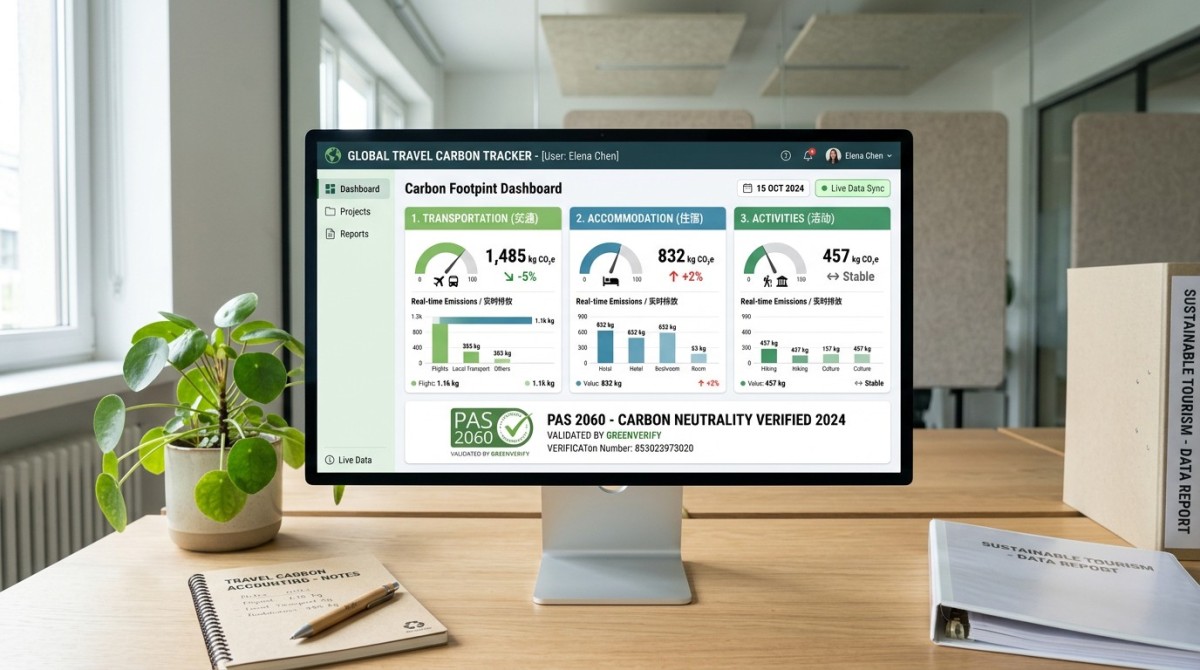
Conclusion: this regulation does not impose direct administrative obligations on Chinese tourism service providers, but instead indirectly drives the development of carbon information capabilities on the Chinese supply chain side by constraining platform behavior within the EU. At present, it is more appropriate to understand it as a “pre-compliance pressure test”——its value does not lie in whether full compliance is achieved in May, but in whether it can be used to identify the real breakpoints in carbon data collection, verification, and application, and to complete mechanism adaptation during the pilot window period. The key to a rational industry response lies in distinguishing policy signals from rigid implementation requirements, and focusing on the development of foundational capabilities that are verifiable, iterative, and reusable.
Source note: announcement on the official website of the European Commission (issued on 27 April 2026, implementing rules for the Regulation on Sustainability Disclosure for Digital Tourism Platforms EU/2026/782); items pending continued observation: the final list of third-party verification bodies recognized by the EU ECCP platform, supplementary explanations of certification pathways other than PAS 2060, and whether the scope will be expanded after the pilot period to all categories and small and medium-sized platforms.
Your 1:1 travel consultant will respond within 1 business day
How to plan your trip
- Hebei Launches Five “Trendy Hebei” Premium Tourism Routes for Inbound Travelers, Moving Toward Standardized Offerings
- The 12th Qionghai Tanmen Coastal Foraging Festival Opens on August 16
- Guangxi’s Digital Silk Road Accelerates: Orah Mandarin Juice Secures an Italian Order, Drawing Attention to Export Standards for Souvenirs
- New Inquiry Triggered by Coastal Cultural Tourism Space Standards
- Zhuanghe’s agro-cultural tourism model draws ASEAN attention, highlighting the compliance requirements for the internationalization of camping and intangible cultural heritage handicrafts
Monthly travel guide
- Typhoon “White Dolphin” Forces Henan Scenic Areas to Close, Putting Summer Ground-Handling Services Under Pressure
- RCEP Implementing Rules for Indonesia Take Effect: Zero Tariffs for Cultural and Tourism Services Alongside Strict Customer Service Requirements
- Saudi Arabia’s New SASO Regulations Take Effect: Taqat Certification Required Before Chinese-Language Cultural Tourism Services Can Access Visit Saudi
- Zhengzhou Launches a Dedicated LCL Shipping Route for Cultural and Tourism Materials, Cutting Freight Costs by 18%
- Luoyang Cold Chain Intensification: Cultural and Creative Exports Delivered in 9 Days
- Expedited Pre-Approval for Group Visas to Three Southeast Asian Countries
- Tightening air freight capacity at Zhengzhou Airport delays the delivery of cultural and tourism materials
- Vietnam's New Regulations on Bus Monitoring Requirements for Group Tours
- Saudi SAMA New Regulations on Travel Liability Insurance Compliance Preparation
- Japanese tourists' new regulations for entering Henan local transport vehicles
- Wai Gao Qiao Wen Travel customs bonded warehouse summer group equipment fast lane
- JTB Warning: Risks in Henan’s September Red Leaf Family Tour Purchases
Popular destinations
- China's Henan Province 144-Hour Visa-Free Transit Policy in 2026: Latest Regulations & In-Depth Travel Strategies
- Japan to Introduce a Credit Point System for Chinese-Speaking Tour Guides, Trial Operation in August
- The EU Clarifies That Digital Platforms for Culture and Tourism Are Subject to GDPR Regulation
- Thailand Upgrades “China Ready” Certification, Adding AI Voice Compliance Testing for Chinese-Language Commentary
- Japan Revises the Tourism Services Industry Act, Introducing a Credit Points System for Chinese-Speaking Tour Guides
Why choose us

High cost-performance and transparent experience
Offer astonishing low prices without hidden tourism traps, enabling travelers to explore at lower costs while avoiding unnecessary spending loopholes, ensuring transparent consumption.

Personalization and dedicated service
Support 100% free customization, paired with one-on-one expert service, crafting exclusive itineraries based on travelers' specific needs, while providing professional guidance to enhance the personalization and professionalism of the journey.

Premium itinerary planning
Compact yet rich itineraries allow travelers to experience more within limited time; simultaneously, carefully selected hotels in prime locations provide convenient lodging conditions, overall enhancing travel comfort and experience.