Welcome to Our Travel Agency!




On April 27, 2026, the Cultural and Tourism Services Working Group of the RCEP Joint Committee completed technical consultations on the cumulative rules of origin for cross-border study tour travel services, and explicitly included them in the pilot scope of the Annex B type commitment list for trade in services. China, Japan, South Korea, and ASEAN member states are expected to implement zero-tariff market access starting from the third quarter of 2026. This development directly affects the cost structure and compliance pathways for overseas educational institutions and study tour operators procuring destination management services in China, and constitutes a substantive benefit in particular for study tour suppliers in the Central Plains region that possess bilingual guide service capabilities, a curriculum-based product system, and ISO21001 certification for educational services. Relevant enterprises should focus on the pace of policy implementation and preparations for business adaptation.
Event Overview
On April 27, 2026, the Cultural and Tourism Services Working Group of the RCEP Joint Committee carried out technical consultations on rules of origin in the cultural and tourism services sector and reached preliminary consensus. The consultation results confirmed that: 'cross-border study tour travel services' will be formally included in the pilot scope of the Annex B type commitment list for RCEP trade in services; the applicable region covers China, Japan, South Korea, and the ten ASEAN countries; the implementation is planned to begin from the third quarter of 2026; and the applicable treatment will be zero-tariff market access. This decision is based on the rules of origin accumulation, allowing multi-country elements in the service delivery process, such as curriculum design, teacher training, and on-site guided tours, to jointly satisfy the conditions for origin qualification determination.
Which Sub-sectors Will Be Affected
Cross-border Study Tour Service Export Enterprises
As study tour travel services are, for the first time under the RCEP framework, separately included in the Annex B type commitment list with a clearly defined zero-tariff pathway, such enterprises can directly reduce the institutional costs of exporting destination management services to RCEP member states. The impact is mainly reflected in enhanced competitiveness of quotations for overseas clients, more refined compliance requirements for contract performance, such as declarations of origin qualification and service process trace records, and higher management requirements for service standardization, such as curriculum delivery records and documentation of teacher qualifications.
International Education Cooperation Institutions and Overseas Study Tour Operators
As service purchasers, when selecting destination management service providers within China, they will be more inclined to choose partners that can provide a complete chain of origin certification, including curriculum development ownership, teacher locality, and on-site execution records. The impact is mainly reflected in upgraded procurement standards, increased supplier due diligence procedures, and greater recognition of certifications such as ISO21001 educational service management system certification held by Chinese service providers.
Domestic Study Tour Product Development and Certification Service Institutions
Demand for supporting services such as curriculum development, teacher training, and quality certification for the RCEP market will rise. The impact is mainly reflected in increased demand for defining curriculum intellectual property ownership, localization and adaptation of multilingual teaching materials, and certification services for educational service quality management systems such as ISO21001.
Regional Study Tour Resource Operators (such as receiving parties in Henan and other places)
The information specifically points out that suppliers in the Central Plains region with bilingual guide services, curriculum-based products, and ISO21001 certification will benefit more. The impact is mainly reflected in increased visibility of regional resources in RCEP trade in services, while at the same time imposing higher practical requirements on traceability of service processes, completeness of collaboration records for multi-country elements, and stability of cross-cultural delivery.
What Key Points Relevant Enterprises or Practitioners Should Watch, and How to Respond at Present
Pay Attention to Subsequent Official Wording and the Release Schedule of Implementation Details
At present, only preliminary consensus has been reached through technical consultations, and the formal amendment text and updated version of the Annex B type list have not yet been released. Enterprises should continue tracking announcements on the official website of the RCEP Joint Committee, China’s Ministry of Commerce, and the competent authorities of various countries, with particular attention to whether the 'Explanation of Revisions to Annex B Type Commitments for Trade in Services' and the operational guidelines for declarations of origin will be issued before the end of the second quarter of 2026.
Review Key Links in the Existing Study Tour Service Chain That Can Be Counted Toward Origin Accumulation
According to the publicly available principles of the 'rules of origin accumulation,' enterprises need to identify and document elements in the service process that meet the RCEP definition of origin, for example: curriculum plans are originally created and iteratively led by a Chinese entity, teacher training is completed by domestic certification institutions, and on-site guided tours are conducted by certified Chinese personnel. Avoid mistakenly counting purely overseas procured content, such as authorized use of third-party international teaching materials, as originating components.
Distinguish Between Policy Signals and the Time Gap in Actual Business Implementation
Zero-tariff market access will be implemented starting from the third quarter of 2026, but customer procurement decisions, contract renegotiations, and system adaptation, such as adding declaration-of-origin fields in quotation forms, all require lead time. It is recommended to complete communication with the first batch of target customers before the end of June 2026, while simultaneously initiating internal compliance self-checks of service processes, rather than waiting until the policy takes effect before taking action.
Prepare Templates for Supporting Origin Qualification Materials and Internal Coordination Mechanisms in Advance
For the three core links of curriculum development, teacher management, and on-site execution, establish standardized record templates, such as curriculum version registration forms, teacher locality and qualification filing forms, and daily guided itinerary sign-off sheets, and clearly define the joint sign-off process among legal, operations, and quality control departments before issuing declarations of origin, so as to ensure that the declarations are verifiable and traceable.
Editor’s View / Industry Observation
Observably, this outcome is a procedural milestone rather than an immediate market access event — it reflects technical alignment among RCEP members on how to apply origin accumulation rules to intangible education services, not yet the legal enactment of tariff elimination. Analysis shows that the inclusion in Annex B indicates political willingness to treat study tour travel service as a tradable service under RCEP’s positive-list approach, but actual implementation still depends on each member’s domestic ratification and notification procedures. From an industry perspective, the focus should remain on operational readiness: the policy lowers structural barriers, but does not substitute for service quality, cross-cultural delivery capability, or documentation discipline. Current attention should center on whether the ‘zero-tariff’ treatment translates into verifiable customs clearance facilitation at border agencies — a point not yet clarified in public documents.
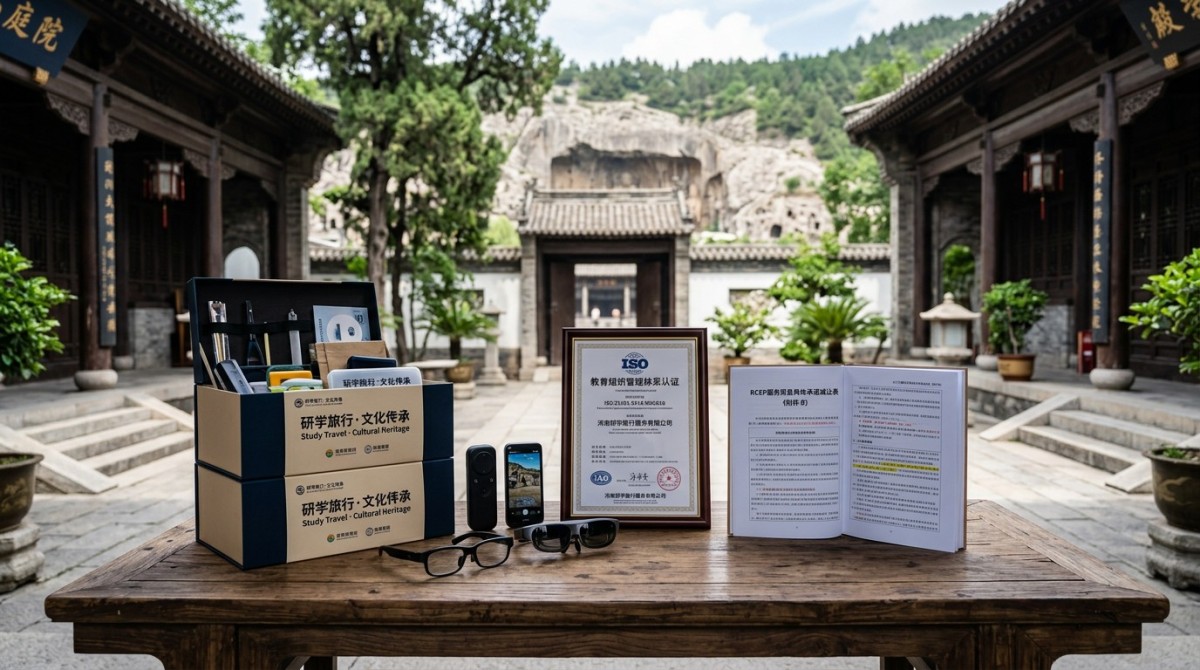
Conclusion: This round of technical consultations marks an important step in extending cultural and tourism service rules under the RCEP framework from a goods-oriented approach toward a services-oriented approach, but its industry significance is currently better understood as 'the initial opening of the institutional interface' rather than the immediate realization of market dividends. Enterprises need to rationally assess the transmission lag between policy signals and business implementation, and focus on standardization of service processes, verifiability of origin elements, and the development of cross-entity coordination mechanisms, so as to effectively undertake follow-up opportunities once the detailed rules are clarified.
Source note: Public briefing of the Cultural and Tourism Services Working Group of the RCEP Joint Committee on April 27, 2026; RCEP special topic section on the official website of China’s Ministry of Commerce (subject to continued observation: the release timing of the final revised text of the Annex B type commitment list by each member state and the progress of issuing domestic implementation measures)
Your 1:1 travel consultant will respond within 1 business day
How to plan your trip
- Hebei Launches Five “Trendy Hebei” Premium Tourism Routes for Inbound Travelers, Moving Toward Standardized Offerings
- The 12th Qionghai Tanmen Coastal Foraging Festival Opens on August 16
- Guangxi’s Digital Silk Road Accelerates: Orah Mandarin Juice Secures an Italian Order, Drawing Attention to Export Standards for Souvenirs
- New Inquiry Triggered by Coastal Cultural Tourism Space Standards
- Zhuanghe’s agro-cultural tourism model draws ASEAN attention, highlighting the compliance requirements for the internationalization of camping and intangible cultural heritage handicrafts
Monthly travel guide
- Typhoon “White Dolphin” Forces Henan Scenic Areas to Close, Putting Summer Ground-Handling Services Under Pressure
- RCEP Implementing Rules for Indonesia Take Effect: Zero Tariffs for Cultural and Tourism Services Alongside Strict Customer Service Requirements
- Saudi Arabia’s New SASO Regulations Take Effect: Taqat Certification Required Before Chinese-Language Cultural Tourism Services Can Access Visit Saudi
- Zhengzhou Launches a Dedicated LCL Shipping Route for Cultural and Tourism Materials, Cutting Freight Costs by 18%
- Luoyang Cold Chain Intensification: Cultural and Creative Exports Delivered in 9 Days
- Expedited Pre-Approval for Group Visas to Three Southeast Asian Countries
- Tightening air freight capacity at Zhengzhou Airport delays the delivery of cultural and tourism materials
- Vietnam's New Regulations on Bus Monitoring Requirements for Group Tours
- Saudi SAMA New Regulations on Travel Liability Insurance Compliance Preparation
- Japanese tourists' new regulations for entering Henan local transport vehicles
- Wai Gao Qiao Wen Travel customs bonded warehouse summer group equipment fast lane
- JTB Warning: Risks in Henan’s September Red Leaf Family Tour Purchases
Popular destinations
- China's Henan Province 144-Hour Visa-Free Transit Policy in 2026: Latest Regulations & In-Depth Travel Strategies
- Japan to Introduce a Credit Point System for Chinese-Speaking Tour Guides, Trial Operation in August
- The EU Clarifies That Digital Platforms for Culture and Tourism Are Subject to GDPR Regulation
- Thailand Upgrades “China Ready” Certification, Adding AI Voice Compliance Testing for Chinese-Language Commentary
- Japan Revises the Tourism Services Industry Act, Introducing a Credit Points System for Chinese-Speaking Tour Guides
Why choose us

High cost-performance and transparent experience
Offer astonishing low prices without hidden tourism traps, enabling travelers to explore at lower costs while avoiding unnecessary spending loopholes, ensuring transparent consumption.

Personalization and dedicated service
Support 100% free customization, paired with one-on-one expert service, crafting exclusive itineraries based on travelers' specific needs, while providing professional guidance to enhance the personalization and professionalism of the journey.

Premium itinerary planning
Compact yet rich itineraries allow travelers to experience more within limited time; simultaneously, carefully selected hotels in prime locations provide convenient lodging conditions, overall enhancing travel comfort and experience.