Welcome to Our Travel Agency!




On 2026年5月12日, the Standardization Administration of China officially issued 4 recommended national standards for the tourism industry. This move marks a new stage of standardized implementation for China’s cultural and tourism service sector across four key dimensions: digitalization, inclusiveness, sustainability, and internationalization, and it will systematically affect multiple stakeholders involved in scenic area operations, technical services, payment infrastructure, and ESG compliance.
Event Overview
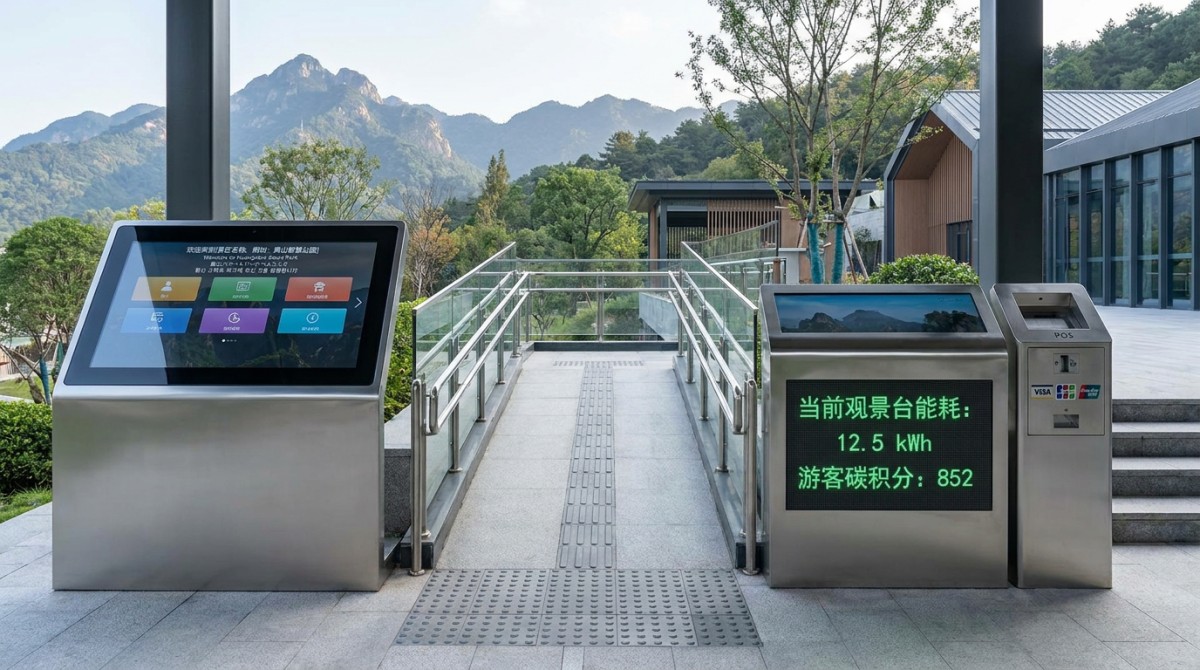
On 2026年5月12日, the Standardization Administration of China issued 4 newly approved recommended national standards for the tourism industry, covering smart tour guide data interfaces, accessibility service specifications for scenic areas, carbon footprint accounting for cultural and tourism venues, and compatibility requirements for multi-currency POS systems. This series of standards will accelerate the alignment of China’s cultural and tourism service providers with international payment platforms, ESG rating agencies, and accessibility certification systems.
Which Sub-sectors Will Be Affected
Direct Trade Enterprises
OTA platforms, cross-border travel agencies, and duty-free retail enterprises that provide overseas tourists with services such as ticketing, guided tours, and accommodation bookings will be directly subject to the multi-currency POS system compatibility standard (GB/T XXXX-2026) and the accessibility service specification (GB/T XXXX-2026). The impact is reflected in the following areas: acquiring systems must complete EMV 3DS2 and ISO 8583 multi-currency extension upgrades; offline service points must pass certification for accessible traffic flow design and information adaptation, otherwise this may affect the qualification for listing inbound tourism products and the compliance recommendation weighting on international tourism platforms (such as TripAdvisor, Klook).
Raw Material Procurement Enterprises
Enterprises supplying smart hardware (such as multilingual tour guide terminals and accessible signage systems), green building materials (materials for low-carbon venue construction), and carbon monitoring sensors for cultural and tourism venues must synchronize their product technical parameters with the data formats explicitly defined in the new standards (for example, JSON-LD Schema for smart guide interfaces), accessibility information coding rules (ISO/IEC 13066-2), and carbon accounting boundary definitions (with reference to Appendix B of PAS 2060). Failure to complete adaptation in time may result in delayed orders or exclusion from government procurement lists.
Processing and Manufacturing Enterprises
Manufacturers producing specialized equipment for the cultural and tourism industry (such as scenic area gate manufacturers, POS terminal integrators, and carbon emission monitoring instrument manufacturers) must reconstruct product firmware and communication protocols in accordance with the new standards. For example, the smart guide data interface standard mandatorily requires support for UTF-8 multilingual metadata fields and geofencing event callbacks; the carbon footprint accounting standard stipulates that equipment-level energy consumption data must be collected by category in accordance with ISO 14067 requirements and uploaded in encrypted form to provincial cultural and tourism carbon management platforms. Non-compliant enterprises will face pressure to upgrade production lines and the risk of extended certification cycles.
Supply Chain Service Enterprises
Enterprises providing cultural and tourism SaaS system integration, ESG data assurance, third-party accessibility assessments, and cross-border payment channel integration services need to recalibrate their service models. For example, SaaS providers must complete compatibility encapsulation for the new guide interface standard in their API gateways within 6 months; ESG consulting firms need to master the three-stage carbon accounting methodology specific to cultural and tourism venues: “tourist transport connections—facility energy consumption—waste disposal”; payment service providers, meanwhile, must submit multi-currency POS compatibility self-declaration reports to partners such as UnionPay, Visa, and JCB, and accept annual penetrating audits.
Key Points of Attention and Response Measures for Relevant Enterprises or Practitioners
Prioritize Gap Assessments for Standards Compliance
Enterprises should benchmark against the 4 standards texts (GB/T XXXX.1–XXXX.4-2026) and review, item by item, the compliance gaps in existing systems, facilities, and processes, with particular focus on the missing-field rate of smart guide interfaces, the integrity of accessibility service record retention, the granularity of carbon accounting activity data (whether it is refined down to the lighting circuit of an individual viewing platform), and whether the currency code field in POS transaction messages (Currency Code) complies with the latest version of ISO 4217.
Launch a Cross-department Collaborative Upgrade Mechanism
The implementation of the standards involves IT, operations, procurement, legal, and ESG functions. It is recommended to establish a dedicated task force. Taking the “accessibility service specification” as an example, the operations department needs to revise service SOPs, the IT department needs to upgrade the Braille output module of the ticketing system, the procurement department needs to update supplier admission clauses, and the legal department needs to review compliance liability transfer clauses in foreign-related service agreements.
Pay Attention to Transitional Arrangements and Local Supporting Rules
All 4 standards are recommended national standards, but the Ministry of Culture and Tourism has made it clear that their core indicators will be incorporated into the review and evaluation system for A-level scenic areas and the assessment of national cultural and tourism consumption pilot cities starting in 2027. Local authorities are successively formulating implementation rules—for example, Zhejiang Province has already released the "Local Adaptation Guidelines for Smart Tour Guide Interfaces (Draft for Comments)," clearly requiring 100% implementation for new projects starting from 2026年Q4; Beijing, on the other hand, will incorporate the accessibility service compliance rate as a prerequisite for the issuance of cultural and tourism subsidies. Enterprises need to dynamically track the policy pace in their respective regions.
Editorial Viewpoint / Industry Observation
Observably, this quartet of standards does not merely codify existing practices—it redefines the baseline for market access in high-value segments of China’s tourism value chain. The integration of ISO-aligned payment protocols and PAS-based carbon accounting signals a strategic pivot: regulatory emphasis is shifting from service volume to interoperability integrity and verifiable sustainability. Analysis shows that firms treating these as “compliance checkboxes” will likely face diminishing returns; those embedding the standards into product architecture (e.g., POS vendors building modular currency engines) or operational DNA (e.g., scenic areas integrating carbon accounting data flows into daily energy dispatch systems) stand to gain first-mover advantage in international certification pathways such as Green Key or Access City.
Conclusion
The introduction of these 4 national standards is, in essence, a structural upgrade of the infrastructure of the cultural and tourism industry. It is neither a mere technical patch nor a short-term policy stimulus, but a systematic response to global tourist experience expectations, climate governance commitments, and demands for digital sovereignty. What deserves even more attention at present is the coupling effect among the standards—for example, if the smart guide interface does not reserve carbon footprint label fields, it will constrain the future deployment of “green tour route” algorithms; if accessibility service data is not aggregated under unified coding, it will be difficult to support the automated generation of cultural and tourism ESG reports. A more appropriate understanding is this: it is an emerging “new infrastructure language for cultural and tourism,” whose long-term value lies not in the written provisions themselves, but in whether it can truly drive every link in the industry chain to shift from “fragmented governance” to “semantic interoperability.”
Source Information
- Official announcement on the website of the Standardization Administration of China (2026年第X号)
- 4 standards texts including "Technical Requirements for Smart Tourism Tour Guide Data Interfaces" (GB/T XXXX.1-2026) (full texts pending public release)
- Internal notice issued by the Department of Science, Technology and Education of the Ministry of Culture and Tourism regarding standards promotion and implementation work (issued in 2026年5月)
Note: details such as standard numbers, specific implementation dates, and the directory of supporting testing and certification bodies are pending subsequent release by the Standardization Administration of China; progress on local implementation rules requires continuous observation.
Your 1:1 travel consultant will respond within 1 business day
How to plan your trip
- Hebei Launches Five “Trendy Hebei” Premium Tourism Routes for Inbound Travelers, Moving Toward Standardized Offerings
- The 12th Qionghai Tanmen Coastal Foraging Festival Opens on August 16
- Guangxi’s Digital Silk Road Accelerates: Orah Mandarin Juice Secures an Italian Order, Drawing Attention to Export Standards for Souvenirs
- New Inquiry Triggered by Coastal Cultural Tourism Space Standards
- Zhuanghe’s agro-cultural tourism model draws ASEAN attention, highlighting the compliance requirements for the internationalization of camping and intangible cultural heritage handicrafts
Monthly travel guide
- Typhoon “White Dolphin” Forces Henan Scenic Areas to Close, Putting Summer Ground-Handling Services Under Pressure
- RCEP Implementing Rules for Indonesia Take Effect: Zero Tariffs for Cultural and Tourism Services Alongside Strict Customer Service Requirements
- Saudi Arabia’s New SASO Regulations Take Effect: Taqat Certification Required Before Chinese-Language Cultural Tourism Services Can Access Visit Saudi
- Zhengzhou Launches a Dedicated LCL Shipping Route for Cultural and Tourism Materials, Cutting Freight Costs by 18%
- Luoyang Cold Chain Intensification: Cultural and Creative Exports Delivered in 9 Days
- Expedited Pre-Approval for Group Visas to Three Southeast Asian Countries
- Tightening air freight capacity at Zhengzhou Airport delays the delivery of cultural and tourism materials
- Vietnam's New Regulations on Bus Monitoring Requirements for Group Tours
- Saudi SAMA New Regulations on Travel Liability Insurance Compliance Preparation
- Japanese tourists' new regulations for entering Henan local transport vehicles
- Wai Gao Qiao Wen Travel customs bonded warehouse summer group equipment fast lane
- JTB Warning: Risks in Henan’s September Red Leaf Family Tour Purchases
Popular destinations
- China's Henan Province 144-Hour Visa-Free Transit Policy in 2026: Latest Regulations & In-Depth Travel Strategies
- Japan to Introduce a Credit Point System for Chinese-Speaking Tour Guides, Trial Operation in August
- The EU Clarifies That Digital Platforms for Culture and Tourism Are Subject to GDPR Regulation
- Thailand Upgrades “China Ready” Certification, Adding AI Voice Compliance Testing for Chinese-Language Commentary
- Japan Revises the Tourism Services Industry Act, Introducing a Credit Points System for Chinese-Speaking Tour Guides
Why choose us

High cost-performance and transparent experience
Offer astonishing low prices without hidden tourism traps, enabling travelers to explore at lower costs while avoiding unnecessary spending loopholes, ensuring transparent consumption.

Personalization and dedicated service
Support 100% free customization, paired with one-on-one expert service, crafting exclusive itineraries based on travelers' specific needs, while providing professional guidance to enhance the personalization and professionalism of the journey.

Premium itinerary planning
Compact yet rich itineraries allow travelers to experience more within limited time; simultaneously, carefully selected hotels in prime locations provide convenient lodging conditions, overall enhancing travel comfort and experience.