Welcome to Our Travel Agency!




On April 27, 2026, Sichuan Cultural Tourism mascot ‘Anyi Panda’ launched a pop-up event at the 2026 Hong Kong International Licensing Show, and simultaneously released IP licensing cooperation standards and an export compliance framework for cultural tourism derivative products. This event marks a structural shift in the overseas expansion path of Chinese local cultural tourism IP—from one-way image display to the collaborative construction of an executable rules system with overseas channel partners, directly affecting compliance practices and market response rhythms for multiple stakeholders across cultural trade, light industry manufacturing, cross-border supply chains, and other links.
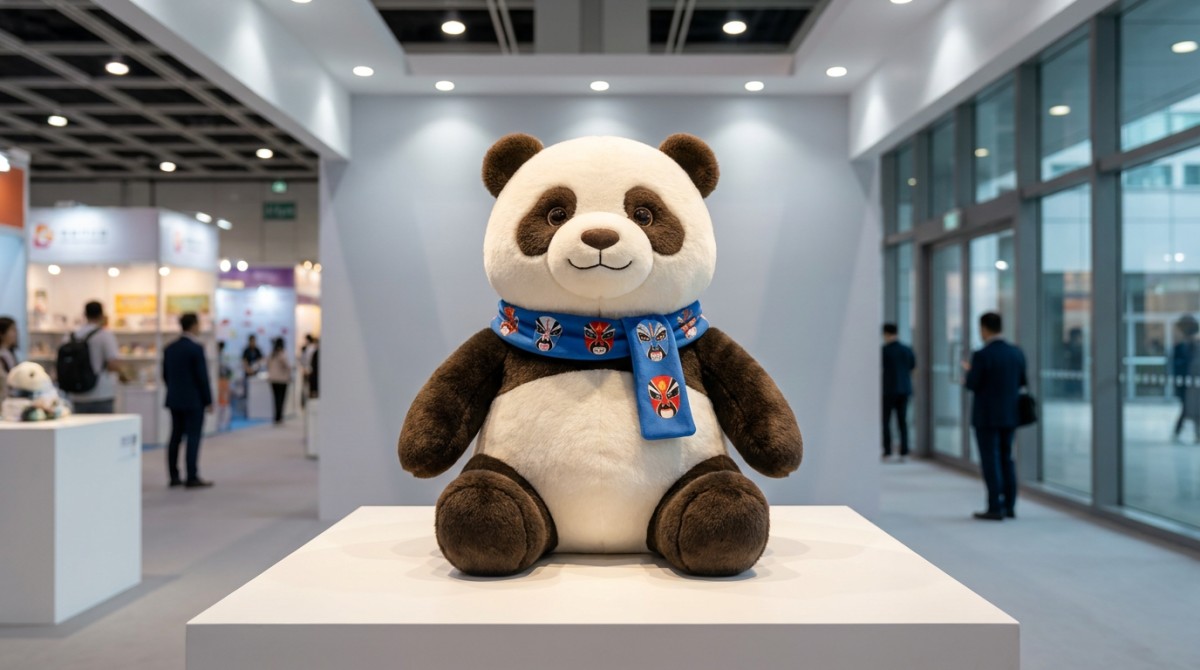
Event Overview
From April 27–28, 2026, Sichuan Cultural Tourism mascot ‘Anyi Panda’ held a pop-up event at the 2026 Hong Kong International Licensing Show; during the same period, the organizers, together with the Sichuan Provincial Copyright Administration, Chengdu Customs, and the China Chamber of Commerce for Import & Export of Light Industrial Arts and Crafts, officially released the Guidelines for Export Compliance Operations of Cultural Tourism IP Derivative Products (Trial), covering product copyright recordation procedures, recommendations for customs HS code classification (with key coverage of three high-frequency export categories: plush toys, ceramic ornaments, and stationery sets), a notice checklist of overseas importer responsibilities, and standards for preserving evidence along the licensing chain.
Which Sub-sectors Will Be Affected
Direct trading enterprises: As the principal exporter or agent of IP-licensed exports, they must complete prior copyright registration recordation under the new rules and submit supporting documents proving the licensing chain at the time of customs declaration; the impact is reflected in longer export document preparation cycles and higher overseas customer due diligence costs, but in the long run it may reduce the risks of returns or claims caused by unclear ownership rights.
Raw material procurement enterprises: For suppliers involving environmentally friendly materials (such as OEKO-TEX-certified textile accessories), food-grade silicone (used in children’s stationery accessories), and other special materials, their product testing reports and compliance declarations must be embedded into the full-chain traceability system for IP derivative products; the impact is reflected in the addition of compliance appendix clauses to procurement contracts, while some small and medium-sized suppliers face pressure in adapting their third-party testing capabilities.
Processing and manufacturing enterprises: Especially OEM factories serving the Hong Kong, Macao, and Southeast Asian markets, they must establish IP material segregated storage, a dual-signature system for licensing labels, and a batch sample retention mechanism in accordance with the guidelines; the impact is reflected in finer-grained production line management, the need for ERP systems to connect with copyright recordation number fields, and increased short-term labor input for compliance operations.
Supply chain service enterprises: Including cross-border logistics service providers, intellectual property agencies, and customs brokers, they need to quickly adapt to the new rule’s dual-element declaration requirements of ‘copyright recordation number + HS code’; the impact is reflected in moving document review checkpoints forward, requiring overseas warehouse labeling services to embed copyright information verification procedures, thereby forcing standardized upgrades of service modules.
Key Focus Areas and Response Measures for Relevant Enterprises or Practitioners
Complete copyright recordation and licensing chain evidence preservation in a timely manner
According to Article 3.2 of the Guidelines, starting from July 1, 2026, any export goods designed on the basis of provincial-level or higher cultural tourism IP such as ‘Anyi Panda’ must complete registration through the National Copyright Administration’s ‘special recordation channel for cultural tourism IP’ within 30 days before export, and upload tripartite evidence records including the licensing contract, design drafts, and production authorization letter.
Optimize product definitions by referring to HS code classification recommendations
Appendix B of the Guidelines clearly classifies ‘ceramic commemorative plates containing IP images’ under tariff code 6913.90 (other ornamental ceramic articles), rather than 6911.10 (tableware); enterprises need to review the wording in existing BOM sheets and product specifications to avoid customs queries or tax rate discrepancies caused by classification errors.
Initiate overseas importer compliance notification procedures
The new rules require exporters to provide overseas buyers with the Notice of Import Compliance for IP Derivative Products (template published on the official website of the Sichuan Provincial Department of Culture and Tourism), listing local copyright registration obligations, labeling language requirements, and the boundaries of joint liability for infringement; if the notification obligation is not fulfilled, domestic export credit insurance will not cover related dispute losses.
Editorial Viewpoint / Industry Observation
显然,这一举措并不只是规范出口程序——它重新定义了IP授权,将其视为一种跨国治理过程,在这一过程中,地方文化资产成为协调不同司法辖区监管预期的切入点。分析表明,海关归类指引的纳入,标志着政策逻辑正从‘版权优先’转向‘贸易流优先’,即相较于象征性保护,更优先考虑市场准入。从行业角度看,真正的考验不在于采用速度,而在于区域IP管理机构(如省级版权局)能否在不制造新瓶颈的情况下扩大核验能力。更准确地说,应将其解读为‘监管互操作性’的一次试点——而不仅仅是合规对齐。
Conclusion
This overseas expansion of ‘Anyi Panda’ appears on the surface to be the debut of an IP image, but in essence it is a concrete attempt by China’s cultural tourism industry to participate in the construction of global cultural trade rules. Its significance lies not in the commercialization of a single mascot, but in providing a reusable ‘compliance interface’ model for small and medium-sized cultural tourism IP operators: for the first time, copyright confirmation, product definition, and responsibility allocation have been integrated into the same operational framework. Rationally speaking, this is not the end point, but the starting point for local cultural assets to move from ‘being licensed’ to ‘co-defining’.
Information Source Note
This information is compiled based on the following public sources: the official website of the Sichuan Provincial Department of Culture and Tourism, Notice on Issuing the Guidelines for Export Compliance Operations of Cultural Tourism IP Derivative Products (Trial) (Chuan Wen Lv Fa [2026] No. 17), the official press release of the 2026 Hong Kong International Licensing Show (published on April 27, 2026), and Chengdu Customs’ Practical Q&A on Export Classification of Cultural Tourism Products (Issue 1, 2026). Details such as the launch time of the recordation system and the applicable scope of HS codes mentioned in this article remain subject to further observation and confirmation after the National Copyright Administration and the General Administration of Customs release subsequent implementation rules.
Your 1:1 travel consultant will respond within 1 business day
How to plan your trip
- Hebei Launches Five “Trendy Hebei” Premium Tourism Routes for Inbound Travelers, Moving Toward Standardized Offerings
- The 12th Qionghai Tanmen Coastal Foraging Festival Opens on August 16
- Guangxi’s Digital Silk Road Accelerates: Orah Mandarin Juice Secures an Italian Order, Drawing Attention to Export Standards for Souvenirs
- New Inquiry Triggered by Coastal Cultural Tourism Space Standards
- Zhuanghe’s agro-cultural tourism model draws ASEAN attention, highlighting the compliance requirements for the internationalization of camping and intangible cultural heritage handicrafts
Monthly travel guide
- Typhoon “White Dolphin” Forces Henan Scenic Areas to Close, Putting Summer Ground-Handling Services Under Pressure
- RCEP Implementing Rules for Indonesia Take Effect: Zero Tariffs for Cultural and Tourism Services Alongside Strict Customer Service Requirements
- Saudi Arabia’s New SASO Regulations Take Effect: Taqat Certification Required Before Chinese-Language Cultural Tourism Services Can Access Visit Saudi
- Zhengzhou Launches a Dedicated LCL Shipping Route for Cultural and Tourism Materials, Cutting Freight Costs by 18%
- Luoyang Cold Chain Intensification: Cultural and Creative Exports Delivered in 9 Days
- Expedited Pre-Approval for Group Visas to Three Southeast Asian Countries
- Tightening air freight capacity at Zhengzhou Airport delays the delivery of cultural and tourism materials
- Vietnam's New Regulations on Bus Monitoring Requirements for Group Tours
- Saudi SAMA New Regulations on Travel Liability Insurance Compliance Preparation
- Japanese tourists' new regulations for entering Henan local transport vehicles
- Wai Gao Qiao Wen Travel customs bonded warehouse summer group equipment fast lane
- JTB Warning: Risks in Henan’s September Red Leaf Family Tour Purchases
Popular destinations
- China's Henan Province 144-Hour Visa-Free Transit Policy in 2026: Latest Regulations & In-Depth Travel Strategies
- Japan to Introduce a Credit Point System for Chinese-Speaking Tour Guides, Trial Operation in August
- The EU Clarifies That Digital Platforms for Culture and Tourism Are Subject to GDPR Regulation
- Thailand Upgrades “China Ready” Certification, Adding AI Voice Compliance Testing for Chinese-Language Commentary
- Japan Revises the Tourism Services Industry Act, Introducing a Credit Points System for Chinese-Speaking Tour Guides
Why choose us

High cost-performance and transparent experience
Offer astonishing low prices without hidden tourism traps, enabling travelers to explore at lower costs while avoiding unnecessary spending loopholes, ensuring transparent consumption.

Personalization and dedicated service
Support 100% free customization, paired with one-on-one expert service, crafting exclusive itineraries based on travelers' specific needs, while providing professional guidance to enhance the personalization and professionalism of the journey.

Premium itinerary planning
Compact yet rich itineraries allow travelers to experience more within limited time; simultaneously, carefully selected hotels in prime locations provide convenient lodging conditions, overall enhancing travel comfort and experience.