Welcome to Our Travel Agency!




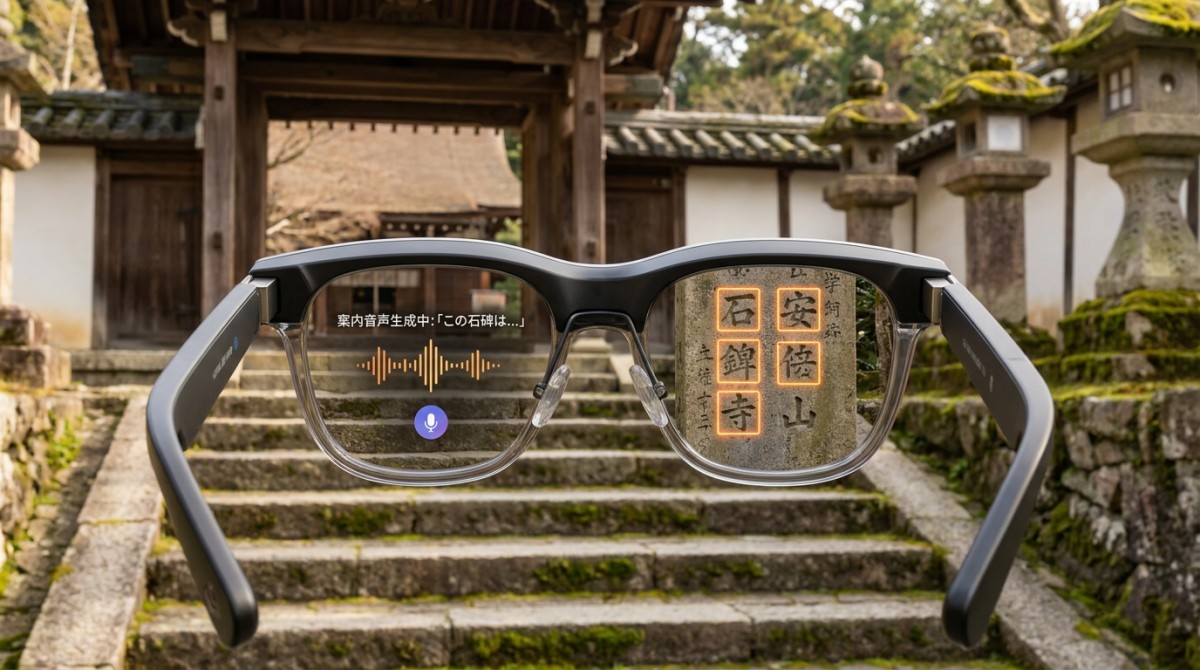
The Japanese Industrial Standards Committee (JISC) officially announced the draft revision of JIS X 4302:2026 on January 1, 2027, proposing mandatory human-machine interaction technical requirements for AR tour guide devices designed for Japanese tourists in the cultural and tourism sector. The draft explicitly requires such devices to have a built-in Japanese speech synthesis engine compliant with JIS standards, and to support real-time Kanji OCR recognition and translation. Although the matter is still in the public comment stage, it has a substantive impact on niche sectors such as AR hardware manufacturers, cross-border cultural tourism technology service providers, and smart terminal localization solution providers due to its direct relevance to export compliance, product certification, and localization service capabilities.
Event Overview
The Japanese Industrial Standards Committee (JISC) published the draft revision of JIS X 4302:2026, Human-Machine Interaction for Cultural Tourism AR Devices, on May 22, 2027. The draft proposes that all AR tour guide devices serving Japanese tourists must include a Japanese speech synthesis engine compliant with JIS standards and support real-time Kanji OCR recognition and translation functions. The public consultation period runs through June 20, 2027, and formal implementation is expected in early 2027.
Which niche industries will be affected
AR/VR hardware manufacturers
As the draft explicitly targets “cultural tourism AR tour guide devices,” it directly covers companies engaged in the development and mass production of products such as portable AR glasses, AR terminals dedicated to scenic areas, and multilingual guide Pads. The impact is reflected in the product design stage, where JIS-certified speech synthesis modules and Kanji OCR recognition SDKs must be embedded, and JIS compatibility testing must also be passed; if existing solutions rely on third-party non-standard TTS or general-purpose OCR engines, companies will face hardware-software adaptation and re-certification costs.
Cross-border cultural tourism technology service providers
For companies providing AR guide system integration and operational services to clients such as Japanese museums, theme parks, and cultural heritage sites, their delivered solutions will be brought within the scope of compliance review. The impact is mainly reflected in the higher qualification threshold for project bidding——procurement parties may directly cite the provisions of JIS X 4302:2026 in technical specifications; if already deployed devices do not meet the new requirements, this may trigger contract performance risks or upgrade obligations.
Smart terminal localization solution providers
Service providers specializing in the integration of speech synthesis (TTS), optical character recognition (OCR), and machine translation (MT) technologies will need to align their output capabilities with JIS-standard Japanese speech parameters and Kanji recognition accuracy requirements. The impact lies in the fact that existing general-purpose SDKs may not directly satisfy specific JIS metrics for Japanese prosody, honorific expressions, and recognition rates for Kanji variant forms, requiring targeted optimization and validation.
Export certification and testing institutions for Japan
Third-party testing laboratories and certification agencies undertaking JIS certification assignments will add new testing items under JIS X 4302:2026, including speech synthesis response latency, OCR Kanji recognition accuracy (including classical script forms and handwritten variants), and contextual consistency of real-time translation. The impact is reflected in longer testing capability development cycles and increased pressure on certification scheduling, and related service pricing and delivery timelines may undergo structural adjustments.
What key points should relevant companies or practitioners focus on, and how should they respond at present
Pay attention to the final standard text and supporting testing guidelines subsequently released by JISC
The current publication is a draft, and the final version of JIS X 4302:2026 may adjust key content such as technical threshold values (for example, the lower limit of OCR recognition rate and the scoring method for TTS naturalness) and the boundary of applicable devices (such as whether it covers lightweight guide solutions like mobile apps). Companies should subscribe to announcements on the JISC official website and track compliance guidance simultaneously issued by Japan's Ministry of Economy, Trade and Industry (METI).
Review the current list of AR guide products exported to Japan, and distinguish between hardware platforms and software stack architectures
Identify which models already come pre-installed with Japanese TTS/OCR modules and whether the engines used have the potential for JIS compatibility; for solutions based on open-source models or self-developed engines, it is necessary to assess the man-hours required for retraining or interface replacement, as well as the certification pathway. Avoid simply equating “supports Japanese” with “complies with JIS standards.”
Distinguish between policy signals and the actual pace of business implementation
The draft is scheduled to take effect in early 2027, but procurement cycles for Japanese cultural and tourism venues are generally 6–12 months, and there is also a transition period for replacing existing equipment. Companies should not immediately terminate development of non-standard solutions, but should prioritize completing technical feasibility verification and conduct joint testing with key clients on pilot adaptations in order to obtain feedback from real-world scenarios.
Launch technical communication and pre-inspection arrangements with JIS certification laboratories in advance
Some laboratories have already begun preliminary research on the JIS X 4302:2026 draft and can provide simulated testing services. It is recommended that companies submit expressions of interest before June 20 in order to strive for inclusion in the first batch of pre-inspection lists and shorten the subsequent formal certification cycle; at the same time, confirm whether they have dedicated Kanji OCR testing capabilities (such as support validation for characters outside the Joyo Kanji Table, variant characters, and inscriptional script forms).
Editorial Viewpoint / Industry Observation
显然,这项标准草案与其说是最终的监管结果,不如说是日本在面向公众的智慧文旅基础设施中,战略性转向强制要求本土语言与字形互操作性的正式信号。分析表明,同时纳入TTS和OCR要求体现了双重关注——不仅关注输出可达性(语音),也关注输入适配性(跨历史与现代日文书写系统的文本识别)。从行业角度看,这表明国家标准化与文化旅游体验服务质量之间正在加速融合,在这一领域,技术合规正日益与用户信任及机构采购标准挂钩。持续跟踪不仅有必要关注JIS最终文本,还应关注地方政府和主要场馆将如何解读并执行合规时间表。
Conclusion: This draft has not yet taken effect, and at present it is more appropriately understood as a policy prelude to Japan's strengthening of local technology adaptability in the field of smart cultural and tourism infrastructure. Its core significance does not lie in immediately changing product definitions, but in establishing a quantifiable benchmark for interaction capabilities oriented toward users in the Kanji cultural sphere. Industry participants do not need to overreact, but they should incorporate JIS X 4302:2026 into technology roadmap reviews and export compliance management frameworks, so as to balance R&D investment with market access certainty.
Description of information sources:
Main source: Public notice document on the official website of the Japanese Industrial Standards Committee (JISC) (JIS X 4302:2026 Draft Revision, published on 2027-05-22)
Items requiring continued observation: official release date of the final version of JIS X 4302:2026, updates to the supporting testing method standards (JIS Z 9080 series), and detailed procurement implementation rules of major cultural and tourism venues in Japan
Your 1:1 travel consultant will respond within 1 business day
How to plan your trip
- Hebei Launches Five “Trendy Hebei” Premium Tourism Routes for Inbound Travelers, Moving Toward Standardized Offerings
- The 12th Qionghai Tanmen Coastal Foraging Festival Opens on August 16
- Guangxi’s Digital Silk Road Accelerates: Orah Mandarin Juice Secures an Italian Order, Drawing Attention to Export Standards for Souvenirs
- New Inquiry Triggered by Coastal Cultural Tourism Space Standards
- Zhuanghe’s agro-cultural tourism model draws ASEAN attention, highlighting the compliance requirements for the internationalization of camping and intangible cultural heritage handicrafts
Monthly travel guide
- Typhoon “White Dolphin” Forces Henan Scenic Areas to Close, Putting Summer Ground-Handling Services Under Pressure
- RCEP Implementing Rules for Indonesia Take Effect: Zero Tariffs for Cultural and Tourism Services Alongside Strict Customer Service Requirements
- Saudi Arabia’s New SASO Regulations Take Effect: Taqat Certification Required Before Chinese-Language Cultural Tourism Services Can Access Visit Saudi
- Zhengzhou Launches a Dedicated LCL Shipping Route for Cultural and Tourism Materials, Cutting Freight Costs by 18%
- Luoyang Cold Chain Intensification: Cultural and Creative Exports Delivered in 9 Days
- Expedited Pre-Approval for Group Visas to Three Southeast Asian Countries
- Tightening air freight capacity at Zhengzhou Airport delays the delivery of cultural and tourism materials
- Vietnam's New Regulations on Bus Monitoring Requirements for Group Tours
- Saudi SAMA New Regulations on Travel Liability Insurance Compliance Preparation
- Japanese tourists' new regulations for entering Henan local transport vehicles
- Wai Gao Qiao Wen Travel customs bonded warehouse summer group equipment fast lane
- JTB Warning: Risks in Henan’s September Red Leaf Family Tour Purchases
Popular destinations
- China's Henan Province 144-Hour Visa-Free Transit Policy in 2026: Latest Regulations & In-Depth Travel Strategies
- The China-Europe Railway Express (Zhengzhou) Launches a Dedicated Train for Culture and Tourism Equipment, Cutting Customs Clearance Time to 48 Hours
- RCEP Cultural and Tourism Services Commitment Upgrade: Faster Market Access for Chinese Outbound Tourism Service Providers in Vietnam and Malaysia
- Japan to Introduce a Credit Point System for Chinese-Speaking Tour Guides, Trial Operation in August
- The EU Clarifies That Digital Platforms for Culture and Tourism Are Subject to GDPR Regulation
Why choose us

High cost-performance and transparent experience
Offer astonishing low prices without hidden tourism traps, enabling travelers to explore at lower costs while avoiding unnecessary spending loopholes, ensuring transparent consumption.

Personalization and dedicated service
Support 100% free customization, paired with one-on-one expert service, crafting exclusive itineraries based on travelers' specific needs, while providing professional guidance to enhance the personalization and professionalism of the journey.

Premium itinerary planning
Compact yet rich itineraries allow travelers to experience more within limited time; simultaneously, carefully selected hotels in prime locations provide convenient lodging conditions, overall enhancing travel comfort and experience.