Welcome to Our Travel Agency!




On May 6, 2026, the Civil Aviation Administration of China approved Zhengzhou Xinzheng International Airport to open three cultural tourism charter flight routes to Bangkok, Kuala Lumpur, and Ho Chi Minh City, with the inaugural flight scheduled for May 15. These charter flights are specifically for summer Southeast Asia study tours, customized family tours, and photography excursions, and will have a direct impact on outbound tourism services, cross-border cultural tourism cooperation, aviation ground support, and the development of themed travel products, making them worthy of close attention from relevant industry players.
Event Overview
On May 6, 2026, the Civil Aviation Administration of China officially approved Zhengzhou Xinzheng International Airport to add three new cultural and tourism charter flight routes, with destinations including Bangkok, Thailand; Kuala Lumpur, Malaysia; and Ho Chi Minh City, Vietnam. The inaugural flight is scheduled for May 15, 2026. The routes are designated as special cultural and tourism charter flights, specifically targeting summer Southeast Asia study tours, customized family tours, and photography tours. The charter flight capacity increases the single-group carrying capacity by 40% compared to scheduled flights. Customized cabin configurations with a "one aircraft, one theme" feature are supported, including dedicated functional areas such as study tour equipment cabins and photography equipment cabins.
Which sub-sectors will be affected?
Outbound travel agencies (including overseas group tour operators)
Because charter flights offer increased capacity for single-group travel and the ability to configure themed cabins, the operational efficiency of overseas tour operators in areas such as logistics coordination, equipment transportation, and itinerary connections will be restructured. The main impacts are: enhanced timeliness for cross-regional group material distribution; standardized pre-processing of customs clearance and loading procedures for photography and educational equipment; and higher demands on the responsiveness of Chinese ground handling partners and airlines.
Aviation ground service companies (including loading, unloading, and check-in agency)
The "one aircraft, one theme" cabin configuration requires the ground support system to have differentiated loading capabilities and a temporary cabin modification response mechanism. The main impacts are: the need to adapt to the security check and loading flow of non-standard baggage (such as tripods, microscopes, mobile display boards, etc.); the need to establish a dedicated support SOP for themed charter flights; and new requirements for cabin attribute label management in the information system.
Cultural tourism content planning and product design agency
The release of charter flight capacity and the support of themed cabins have objectively lowered the delivery threshold for high-value-added small group tour products. The impact is mainly reflected in: the ability to scale up products that rely heavily on equipment, such as study tours and photography tours; more stable capacity support for customized family tours in terms of baggage allowance, children's travel routes, and multilingual services; and the need for product design to simultaneously consider the functional boundaries of cabins on the aviation side and ground connection nodes.
Cross-border logistics and equipment leasing service provider
The dedicated functional areas such as the photography equipment compartment and the research and teaching aid compartment mean that some professional equipment can be transported together with the group rather than being sent separately. The main impacts are: an increase in the number of shared equipment that can be carried on a single charter flight; a shorter cross-border transfer cycle for equipment; and new batch management requirements for equipment insurance, customs clearance documents, and return tracking.
What key areas should relevant enterprises or practitioners focus on, and how should they respond at present?
Follow up with the detailed rules for charter flight operations to be released by Zhengzhou Airport and Henan's cultural and tourism authorities.
The current approval only specifies the route opening and inaugural flight date; details regarding charter application procedures, cabin allocation rules, subject registration mechanisms, and ground handling fees have not yet been released. Relevant companies should continuously monitor the official website of Zhengzhou Xinzheng International Airport and announcements from the Henan Provincial Department of Culture and Tourism to avoid pre-planning operational procedures based on initial information.
Distinguishing between policy signals and the actual pace of business implementation
This approval is an administrative licensing action and does not equate to the flight being in regular operation. May 15th is the maiden flight date, and the peak summer season (July-August) is the key period for mass operations. Companies should not equate a single maiden flight with a stable supply of capacity, and should use mid-June as a benchmark to observe practical indicators such as flight frequency, load factor, and cabin utilization rate.
Early coordination with airlines and ground handling agents to verify the technical feasibility of themed cabin configurations.
The "Study and Research Equipment Cabin" and "Photography Equipment Cabin" are new functional configurations involving aircraft modification, load-bearing algorithm adjustments, and on-site operation training. Companies planning to use these resources should conduct technical coordination with the operating airline and Zhengzhou Airport ground service unit before the end of May to confirm implementation details such as equipment size limits, fixing methods, and application material lists.
Analyze the specific scenarios within the existing product line that are compatible with charter flight logic.
Not all study tours or photography trips are suitable for charter flights. Companies should initially screen suitable products based on three indicators: the number of people per group (recommended ≥32 people), the total weight of equipment (≥1.2 tons), and the concentration of destinations (mainly single country and single city). Priority should be given to including batches of existing established routes that meet the economic model of charter flights in the first batch of pilot programs to reduce trial and error costs.
Editor's Viewpoint / Industry Observation
Observably, this approval is better understood as a policy signal than an immediate operational shift — it reflects institutional recognition of the growing structural mismatch between standardized scheduled flights and specialized outbound tourism demand. Analysis shows that the 'one-aircraft-one-theme' model targets pain points long reported by niche tour operators: equipment logistics fragmentation, group cohesion constraints, and cross-border service handoff inefficiencies. However, its scalability hinges not on regulatory permission alone, but on whether ground handling systems, customs coordination mechanisms, and airline revenue management models can adapt to non-uniform cabin utilization. The industry should therefore monitor not just flight frequency, but how many operators successfully activate the theme-based configuration — that metric will reveal whether this remains a pilot or evolves into a replicable infrastructure upgrade.
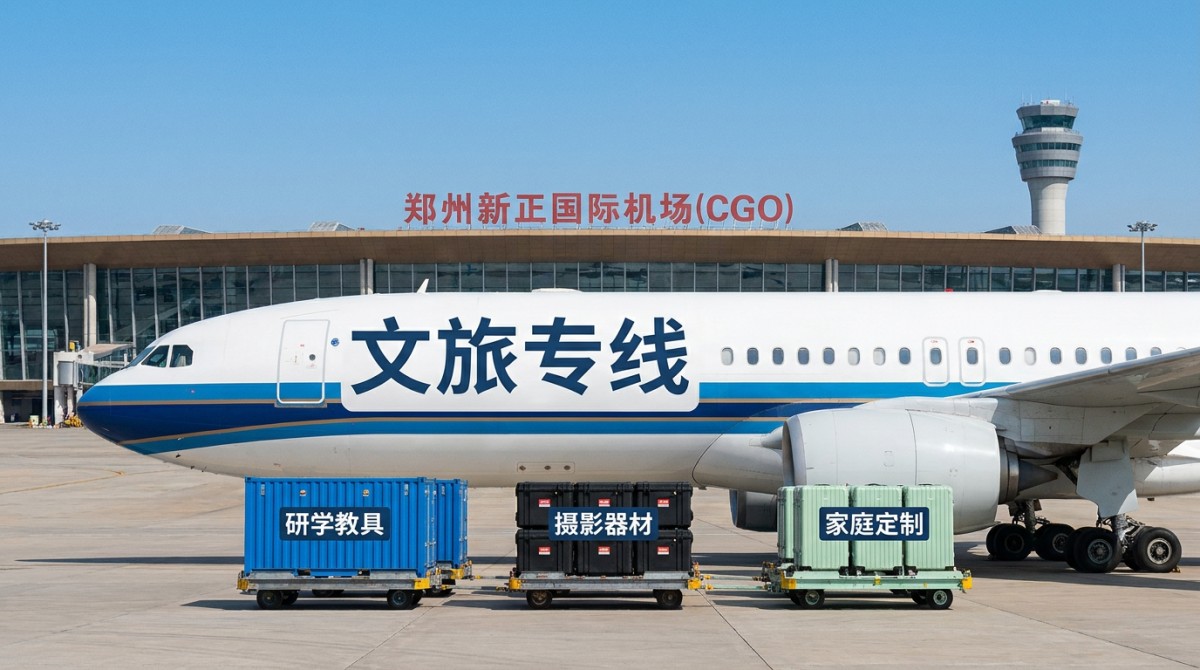
In conclusion, the approval of the Zhengzhou Airport cultural tourism charter flight route is essentially a structural response from the air transport supply side to the segmented outbound tourism demand. While it hasn't changed the overall international route network, it provides a more certain capacity interface for vertical sectors such as study tours, photography tours, and family-customized tours. Currently, it's more appropriate to understand it as a "capability-verification policy pilot," its industry significance lying not in adding a few new routes, but in whether it can promote the formation of a standardized service paradigm for themed charter flights.
Information Sources: Information published on the official website of the Civil Aviation Administration of China (approval document number pending verification, dated May 6, 2026); official announcement from Zhengzhou Xinzheng International Airport (no detailed rules have been released as of May 10, 2026). Areas to be continuously monitored: actual frequency of charter flights, utilization rate of themed cabins, and approval rate of applications from overseas tour operators.
Your 1:1 travel consultant will respond within 1 business day
How to plan your trip
- Hebei Launches Five “Trendy Hebei” Premium Tourism Routes for Inbound Travelers, Moving Toward Standardized Offerings
- The 12th Qionghai Tanmen Coastal Foraging Festival Opens on August 16
- Guangxi’s Digital Silk Road Accelerates: Orah Mandarin Juice Secures an Italian Order, Drawing Attention to Export Standards for Souvenirs
- New Inquiry Triggered by Coastal Cultural Tourism Space Standards
- Zhuanghe’s agro-cultural tourism model draws ASEAN attention, highlighting the compliance requirements for the internationalization of camping and intangible cultural heritage handicrafts
Monthly travel guide
- Typhoon “White Dolphin” Forces Henan Scenic Areas to Close, Putting Summer Ground-Handling Services Under Pressure
- RCEP Implementing Rules for Indonesia Take Effect: Zero Tariffs for Cultural and Tourism Services Alongside Strict Customer Service Requirements
- Saudi Arabia’s New SASO Regulations Take Effect: Taqat Certification Required Before Chinese-Language Cultural Tourism Services Can Access Visit Saudi
- Zhengzhou Launches a Dedicated LCL Shipping Route for Cultural and Tourism Materials, Cutting Freight Costs by 18%
- Luoyang Cold Chain Intensification: Cultural and Creative Exports Delivered in 9 Days
- Expedited Pre-Approval for Group Visas to Three Southeast Asian Countries
- Tightening air freight capacity at Zhengzhou Airport delays the delivery of cultural and tourism materials
- Vietnam's New Regulations on Bus Monitoring Requirements for Group Tours
- Saudi SAMA New Regulations on Travel Liability Insurance Compliance Preparation
- Japanese tourists' new regulations for entering Henan local transport vehicles
- Wai Gao Qiao Wen Travel customs bonded warehouse summer group equipment fast lane
- JTB Warning: Risks in Henan’s September Red Leaf Family Tour Purchases
Popular destinations
- Hebei Launches Five “Trendy Hebei” Premium Tourism Routes for Inbound Travelers, Moving Toward Standardized Offerings
- The 12th Qionghai Tanmen Coastal Foraging Festival Opens on August 16
- Guangxi’s Digital Silk Road Accelerates: Orah Mandarin Juice Secures an Italian Order, Drawing Attention to Export Standards for Souvenirs
- New Inquiry Triggered by Coastal Cultural Tourism Space Standards
- International promotion of Enshi graduation travel drives inbound tourism cooperation
Why choose us

High cost-performance and transparent experience
Offer astonishing low prices without hidden tourism traps, enabling travelers to explore at lower costs while avoiding unnecessary spending loopholes, ensuring transparent consumption.

Personalization and dedicated service
Support 100% free customization, paired with one-on-one expert service, crafting exclusive itineraries based on travelers' specific needs, while providing professional guidance to enhance the personalization and professionalism of the journey.

Premium itinerary planning
Compact yet rich itineraries allow travelers to experience more within limited time; simultaneously, carefully selected hotels in prime locations provide convenient lodging conditions, overall enhancing travel comfort and experience.