Welcome to Our Travel Agency!




Travel Guide
On 2026年5月6日, the Liaoning-Shandong passenger ro-ro route's ‘weekend tour’ product was officially launched in Dalian, marking the first systematic shift of Bohai Bay water transport infrastructure toward integrated culture-tourism functions. This event is not merely the launch of a tourism product, but a practical implementation of policy through which transport vehicles serve as carriers and cross-industry value redistribution is achieved via modular service restructuring——the Ministry of Culture and Tourism has listed it as a typical case of regional collaborative innovation, reflecting institutional-level recognition and promotional intent at the national level for the integrated development of ‘transport + culture-tourism’, and creating structural impacts across multiple industrial chains including shipping, culture-tourism equipment, and regional consumer services.
Event Overview
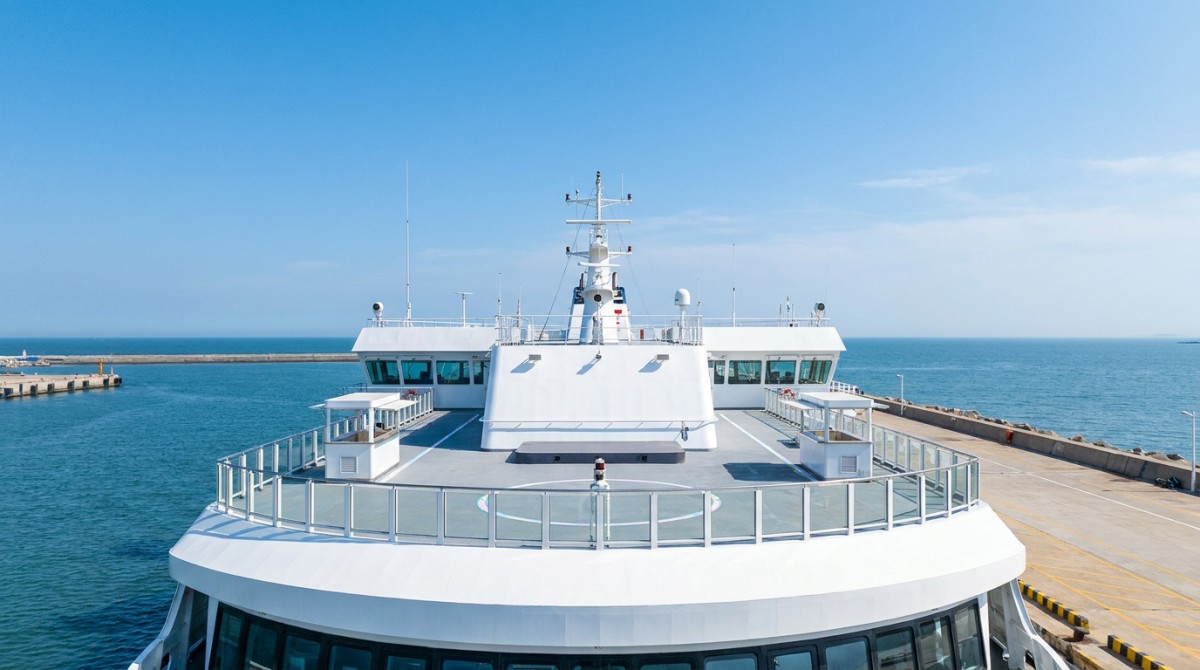
On 2026年5月6日, the Liaoning-Shandong passenger ro-ro route's ‘weekend tour’ product was launched in Dalian. The project transforms traditional passenger ro-ro vessels into a ‘micro-vacation space at sea’ equipped with a sightseeing deck, light dining area, and small cultural exhibition and performance space. This model has been officially listed by the Ministry of Culture and Tourism as a typical case of regional collaborative innovation. Its standardized cabin service modules (including detachable catering units, sound and lighting environment control systems, and cultural content embedding interfaces) are attracting attention from some island cruise operators in Southeast Asia, and are regarded as a cost-advantaged Chinese solution for vessel function upgrades.
Which Sub-sectors Are Affected
Direct Trading Enterprises
The main impact stems from structural changes in export-oriented trade of supporting ship equipment. Previously, passenger ro-ro vessel exports were mainly focused on delivery of basic transport capacity, but now, backed by the Ministry of Culture and Tourism case endorsement, Southeast Asian buyers have begun inquiring about ‘micro-vacation modular packages’ (such as prefabricated sightseeing cabin bodies and mobile kitchen units), and order attributes are shifting from ‘complete vessel EPC’ to ‘functional modules + local integration’. The impacts are reflected in: shorter contract cycles, increased complexity of technical clauses, and higher requirements for localized after-sales service capabilities.
Raw Material Procurement Enterprises
The direct impact comes from increased demand for non-standard raw materials such as new lightweight composite materials for ships, low-noise deck paving materials, and food-grade stainless steel modular supports for onboard use. Traditional shipbuilding raw material procurement mainly focused on steel plates, cables, and standard pipes, whereas the construction of micro-vacation spaces must adapt to scenarios such as high-frequency disassembly, salt spray corrosion resistance, and rapid cleaning, forcing raw material suppliers to expand into small-batch, high-value-added categories such as special alloys and antibacterial coating substrates. The impacts are reflected in: increased procurement frequency but reduced per-batch volume, placing higher demands on supply chain responsiveness and sample validation capabilities.
Processing and Manufacturing Enterprises
The core impact comes from a shift in production organization logic. Original passenger ro-ro vessel manufacturing focused on structural strength and safety compliance, but now it must simultaneously meet diverse indicators under culture-tourism scenarios such as spatial aesthetics, passenger flow routing, acoustic isolation, and interfaces for cultural content loading. For example, sightseeing deck railings must balance wind protection and anti-dazzle functions, allow embedded AR guide terminals, and reserve mounting points for lighting art installations. The impacts are reflected in: production lines needing additional ergonomic testing stations and cultural compatibility review procedures, while the increased proportion of customization leads to a rise in unit labor-hour costs of about 12%–18% (according to internal trial production data from CSSC Group).
Supply Chain Service Enterprises
The main impact stems from the deepening granularity of services. Existing ship logistics mainly emphasized transportation of large components and port lifting operations, while new derived demands now include temperature-controlled ‘door-to-cabin’ delivery of modular assemblies, pre-review of cross-border content compliance for cultural exhibition and performance equipment, and joint certification of crew qualifications for culture-tourism services. The impacts are reflected in: a single logistics service provider finding it difficult to cover the entire chain, significantly increasing the likelihood of cross-industry collaboration platforms emerging (such as ‘onboard culture-tourism service integrators’); insurance products also need to develop new categories such as ‘temporary culture-tourism function retrofit liability insurance’.
Key Points of Attention and Response Measures for Relevant Enterprises or Practitioners
Pay Close Attention to the Ministry of Culture and Tourism's Follow-up Standardization Process
At present, the ‘micro-vacation space at sea’ has no national or industry standard yet and is being promoted only in the form of a case example. Enterprises need to closely track the progress of the jointly drafted Waterway Passenger Transport Culture-Tourism Integration Service Specifications (Draft for Comments) by the Ministry of Culture and Tourism and the Ministry of Transport, especially quantitative provisions concerning sightseeing deck load-bearing safety thresholds, fire separation distances for catering modules, and volume limits for cultural performances, so as to avoid rework in later retrofits.
Assess the Genuine Intent of Modular Procurement in the Southeast Asian Market
The attention from Southeast Asian buyers is real, but currently most are still in the technical due diligence stage. Enterprises should not expand production capacity too early, and are advised to prioritize establishing technical dialogue channels with the Maritime and Port Authority of Singapore (MSA) and Indonesia's Directorate General of Sea Transportation (DGML), so as to verify the possibility of mutual recognition of certification for ‘Chinese modules’ and reduce export compliance risks.
Build Cross-disciplinary Collaborative Design Capabilities
Neither ship design institutes nor culture-tourism planning companies alone can independently complete such projects. Enterprises should establish a standing collaborative team including hull engineers, spatial designers, cultural curators, and food safety consultants, focusing on resolving the engineering-experience balance between ‘vessel stability compensation’ and ‘peak visitor experience’. For example: after increasing the weight of the sightseeing deck glass curtain wall, the ballast water management system algorithm must be optimized simultaneously.
Editorial Viewpoint / Industry Observation
Observably, this case is less about a new tourism product and more about institutional recognition of ‘transport infrastructure as experiential platform’. The Ministry of Culture and Tourism’s endorsement signals a policy pivot toward valuing multi-functional utilization of existing transport assets—not just for efficiency gains, but for regional consumption upgrading. Analysis shows that the real bottleneck lies not in technical feasibility, but in fragmented industry governance: maritime safety regulations, food service licensing, and cultural performance management remain under separate ministries, creating operational friction for integrated operators. Current attention should focus on whether pilot zones (e.g., Bohai Bay) will be granted regulatory sandbox authority to issue unified permits.
Conclusion
The upgrade of the Liaoning-Shandong ‘weekend tour’ passenger ro-ro ferry is not an isolated product iteration, but the starting point for redefining the functions of transport assets. Its industry significance lies in verifying that existing infrastructure can release value increments far beyond transportation itself through service modularization, providing a low-capital-expenditure, high-social-benefit micro-vacation infrastructure path for coastal urban clusters. It is more appropriately understood as follows: under the backdrop of ‘dual circulation’, China's industrial policy is shifting from ‘building new’ to ‘empowering existing’, that is, assigning existing infrastructure new roles, new standards, and new value chains.
Information Sources
- Official website of the Ministry of Culture and Tourism, “Notice on the First Batch of Typical Cases of Regional Culture-Tourism Collaborative Innovation in 2026” (published on 2026年5月4日)
- Water Transport Bureau of the Ministry of Transport, “Implementation Plan for the Pilot Service Upgrade of the Liaoning-Shandong Passenger Ro-ro Route” (internal circulated draft, 2026年4月)
- For continued observation: progress in joint standard formulation by the Ministry of Culture and Tourism and the Ministry of Transport, signing status of the first batch of Southeast Asian procurement letters of intent, and tourist repurchase rate and average spending data after 3个月 of operation of pilot vessels in Bohai Bay
Your 1:1 travel consultant will respond within 1 business day
How to plan your trip
- Hebei Launches Five “Trendy Hebei” Premium Tourism Routes for Inbound Travelers, Moving Toward Standardized Offerings
- The 12th Qionghai Tanmen Coastal Foraging Festival Opens on August 16
- Guangxi’s Digital Silk Road Accelerates: Orah Mandarin Juice Secures an Italian Order, Drawing Attention to Export Standards for Souvenirs
- New Inquiry Triggered by Coastal Cultural Tourism Space Standards
- Zhuanghe’s agro-cultural tourism model draws ASEAN attention, highlighting the compliance requirements for the internationalization of camping and intangible cultural heritage handicrafts
Monthly travel guide
- Typhoon “White Dolphin” Forces Henan Scenic Areas to Close, Putting Summer Ground-Handling Services Under Pressure
- RCEP Implementing Rules for Indonesia Take Effect: Zero Tariffs for Cultural and Tourism Services Alongside Strict Customer Service Requirements
- Saudi Arabia’s New SASO Regulations Take Effect: Taqat Certification Required Before Chinese-Language Cultural Tourism Services Can Access Visit Saudi
- Zhengzhou Launches a Dedicated LCL Shipping Route for Cultural and Tourism Materials, Cutting Freight Costs by 18%
- Luoyang Cold Chain Intensification: Cultural and Creative Exports Delivered in 9 Days
- Expedited Pre-Approval for Group Visas to Three Southeast Asian Countries
- Tightening air freight capacity at Zhengzhou Airport delays the delivery of cultural and tourism materials
- Vietnam's New Regulations on Bus Monitoring Requirements for Group Tours
- Saudi SAMA New Regulations on Travel Liability Insurance Compliance Preparation
- Japanese tourists' new regulations for entering Henan local transport vehicles
- Wai Gao Qiao Wen Travel customs bonded warehouse summer group equipment fast lane
- JTB Warning: Risks in Henan’s September Red Leaf Family Tour Purchases
Popular destinations
- Hebei Launches Five “Trendy Hebei” Premium Tourism Routes for Inbound Travelers, Moving Toward Standardized Offerings
- The 12th Qionghai Tanmen Coastal Foraging Festival Opens on August 16
- Guangxi’s Digital Silk Road Accelerates: Orah Mandarin Juice Secures an Italian Order, Drawing Attention to Export Standards for Souvenirs
- New Inquiry Triggered by Coastal Cultural Tourism Space Standards
- International promotion of Enshi graduation travel drives inbound tourism cooperation
Why choose us

High cost-performance and transparent experience
Offer astonishing low prices without hidden tourism traps, enabling travelers to explore at lower costs while avoiding unnecessary spending loopholes, ensuring transparent consumption.

Personalization and dedicated service
Support 100% free customization, paired with one-on-one expert service, crafting exclusive itineraries based on travelers' specific needs, while providing professional guidance to enhance the personalization and professionalism of the journey.

Premium itinerary planning
Compact yet rich itineraries allow travelers to experience more within limited time; simultaneously, carefully selected hotels in prime locations provide convenient lodging conditions, overall enhancing travel comfort and experience.