Welcome to Our Travel Agency!




Travel Guide
On May 9, 2026, South Korea's Ministry of Land, Infrastructure and Transport completed the allocation of international route traffic rights, directionally awarding most of the quotas among 35 newly added or expanded international routes to major hub cities in China. Although this move does not directly involve trade rules or tariff adjustments, by substantively improving the stability of air transport capacity supply and flight frequency density between China and South Korea, it provides structural support for industries intensive in cross-border personnel mobility, especially affecting niche sectors that rely on high-frequency, small-batch, time-sensitive business exchanges and group tour services.
Event Overview
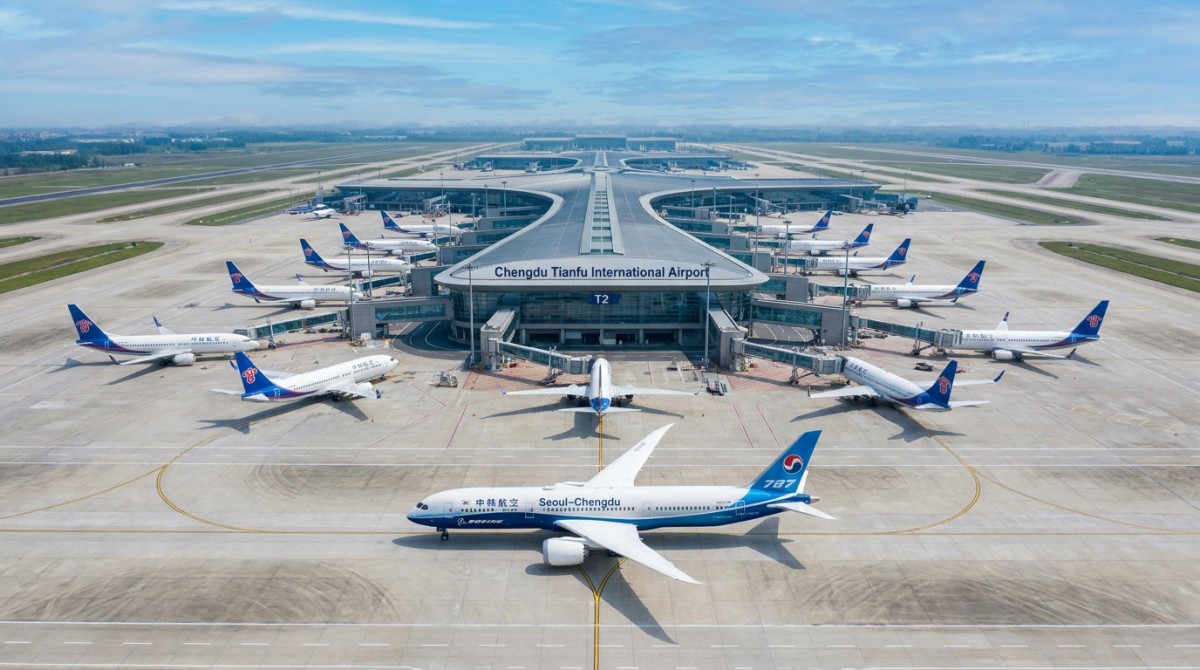
On May 9, 2026, South Korea's Ministry of Land, Infrastructure and Transport completed the allocation of international route traffic rights for the 2026–2027 aviation season. In this allocation, a total of 35 international routes were newly added or expanded, with most quotas clearly directed toward Chinese cities, including Beijing, Shanghai, Guangzhou, Chengdu, Xiamen, and others. The specific operating carriers, flight frequencies, and takeoff and landing schedules for each route have not yet been released in a unified manner, nor has there been synchronized disclosure of the progress of coordinated approval by the Civil Aviation Administration of China for the relevant slot resources.
Which Sub-Sectors Will Be Affected
Direct trading enterprises: The direct impact from this route expansion is limited, as cargo transportation still mainly relies on sea freight and all-cargo aircraft; however, the response efficiency of business reception for South Korean B2B buyers, buying delegations, and trade fair clients will improve significantly. Analysis suggests that the cycle of the “last mile” business loop, such as traveling to China for sample inspection, factory audits, and contract signing, is expected to be shortened by 1–2 working days, indirectly enhancing order conversion rates and customer stickiness.
Raw material procurement enterprises: Buyers that need to travel frequently between China and South Korea for on-site quality control, supplier audits, or technical coordination, such as importers of supporting materials for South Korean semiconductor equipment and purchasers of active cosmetic ingredients, will benefit from more stable direct flight schedules. What deserves more attention at present is that second-tier hubs such as Chengdu and Xiamen have been included in key allocation, meaning that the cost of in-person coordination at supply chain nodes in central and western China as well as the southeastern coast will decline, potentially driving procurement layouts to extend toward more diversified regions.
Processing and manufacturing enterprises: The travel flexibility of Korean management personnel, technical experts, and quality engineers from Korean-invested manufacturing enterprises in China, especially in auto parts and electronics assembly, for factory inspections, commissioning, and training in China will increase. From an industry perspective, high-frequency, low-latency personnel accessibility can reduce the risk of production line coordination disruptions caused by flight cancellations or delays, but it will not change the existing production capacity layout or localized labor structure.
Supply chain service enterprises: Travel agencies and channel service providers focused on China-South Korea MICE (meetings, incentives, conferences, and exhibitions), educational study tours, and customized business inspection trips will benefit directly. Route expansion will significantly ease the pressure of charter flight coordination during peak seasons and reduce additional cost fluctuations caused by temporary cabin adjustments and schedule changes. It is more appropriate to understand this as — the institutional loosening on the capacity supply side is gradually being transformed into greater certainty on the service delivery side.
Key Points of Attention and Response Measures for Relevant Enterprises or Practitioners
Pay attention to the progress of Chinese slot coordination and the pace of inaugural flight implementation
The allocation of rights by South Korea's Ministry of Land, Infrastructure and Transport does not mean the routes will be launched immediately. Enterprises need to track the slot approval results of the Civil Aviation Administration of China and the actual route launch plans of airlines, especially the inaugural flight timing of newly prioritized cities such as Chengdu and Xiamen, to avoid excessive front-loading of capacity planning.
Dynamically assess the maturity of supporting services in destination cities
Beijing and Shanghai already have well-established MICE reception systems; while places such as Chengdu and Xiamen have obtained route quotas, local soft infrastructure such as Korean-speaking tour guides, multilingual convention and exhibition venues, and cross-border payment convenience is still in a growth stage. It is recommended to prioritize pilot projects for small and medium-sized group programs and accumulate local execution experience.
Optimize personnel travel strategies and cost models
Newly added routes bring expectations of airfare competition, but in the initial stage they may show the characteristics of “more frequency, fewer discounts”. Enterprises should recalculate the cost-efficiency ratio of direct flights vs transfers based on their own travel frequency, team size, and time sensitivity, and avoid mechanically applying historical budget templates.
Editorial Viewpoint / Industry Observation
Observably, this route expansion reflects South Korea’s strategic recalibration toward China not as a singular manufacturing base, but as a diversified service and experience destination — especially for high-value B2B engagement beyond traditional trade. Analysis shows the emphasis on Chengdu and Xiamen signals intent to deconcentrate from Beijing/Shanghai, testing regional capacity for integrated business tourism ecosystems. It is not a tariff-level policy shift, yet functions as infrastructure-level enabler for human-centric industrial collaboration.
Conclusion
In essence, this adjustment in route resource allocation is a precise补位 on the supply side of air transportation. Its industry significance lies not in creating an entirely new market, but in reducing friction costs and uncertainty under existing cooperation models. A rational observation is: it will not reverse the fundamentals of China-South Korea economic and trade relations, but it may accelerate the normalized implementation pace of high-value-added service scenarios, such as joint R&D deployment, customized talent training, and cross-border compliance collaboration.
Information Source Notes
Announcement on the official website of South Korea's Ministry of Land, Infrastructure and Transport (published on May 9, 2026, document number: MOCT-2026-INT-AIR-017); data pending public disclosure on the international traffic rights management platform of the Civil Aviation Administration of China (not updated as of May 12, 2026); continued observation pending: actual route launch plans of various airlines, details of slot approval by Chinese airports, and follow-up revision trends of the bilateral aviation agreement between China and South Korea.
Your 1:1 travel consultant will respond within 1 business day
How to plan your trip
- Hebei Launches Five “Trendy Hebei” Premium Tourism Routes for Inbound Travelers, Moving Toward Standardized Offerings
- The 12th Qionghai Tanmen Coastal Foraging Festival Opens on August 16
- Guangxi’s Digital Silk Road Accelerates: Orah Mandarin Juice Secures an Italian Order, Drawing Attention to Export Standards for Souvenirs
- New Inquiry Triggered by Coastal Cultural Tourism Space Standards
- Zhuanghe’s agro-cultural tourism model draws ASEAN attention, highlighting the compliance requirements for the internationalization of camping and intangible cultural heritage handicrafts
Monthly travel guide
- Typhoon “White Dolphin” Forces Henan Scenic Areas to Close, Putting Summer Ground-Handling Services Under Pressure
- RCEP Implementing Rules for Indonesia Take Effect: Zero Tariffs for Cultural and Tourism Services Alongside Strict Customer Service Requirements
- Saudi Arabia’s New SASO Regulations Take Effect: Taqat Certification Required Before Chinese-Language Cultural Tourism Services Can Access Visit Saudi
- Zhengzhou Launches a Dedicated LCL Shipping Route for Cultural and Tourism Materials, Cutting Freight Costs by 18%
- Luoyang Cold Chain Intensification: Cultural and Creative Exports Delivered in 9 Days
- Expedited Pre-Approval for Group Visas to Three Southeast Asian Countries
- Tightening air freight capacity at Zhengzhou Airport delays the delivery of cultural and tourism materials
- Vietnam's New Regulations on Bus Monitoring Requirements for Group Tours
- Saudi SAMA New Regulations on Travel Liability Insurance Compliance Preparation
- Japanese tourists' new regulations for entering Henan local transport vehicles
- Wai Gao Qiao Wen Travel customs bonded warehouse summer group equipment fast lane
- JTB Warning: Risks in Henan’s September Red Leaf Family Tour Purchases
Popular destinations
- Hebei Launches Five “Trendy Hebei” Premium Tourism Routes for Inbound Travelers, Moving Toward Standardized Offerings
- The 12th Qionghai Tanmen Coastal Foraging Festival Opens on August 16
- Guangxi’s Digital Silk Road Accelerates: Orah Mandarin Juice Secures an Italian Order, Drawing Attention to Export Standards for Souvenirs
- New Inquiry Triggered by Coastal Cultural Tourism Space Standards
- International promotion of Enshi graduation travel drives inbound tourism cooperation
Why choose us

High cost-performance and transparent experience
Offer astonishing low prices without hidden tourism traps, enabling travelers to explore at lower costs while avoiding unnecessary spending loopholes, ensuring transparent consumption.

Personalization and dedicated service
Support 100% free customization, paired with one-on-one expert service, crafting exclusive itineraries based on travelers' specific needs, while providing professional guidance to enhance the personalization and professionalism of the journey.

Premium itinerary planning
Compact yet rich itineraries allow travelers to experience more within limited time; simultaneously, carefully selected hotels in prime locations provide convenient lodging conditions, overall enhancing travel comfort and experience.