Welcome to Our Travel Agency!




Travel Guide
On June 5, 2026, the Ministry of Culture and Tourism's "Yuyoutong" platform officially launched its English-version API interface. This change is not merely the addition of another external distribution tool, but also means that Henan's cultural and tourism resources have begun to enter a more standardized stage of interface-based coordination in cross-border booking, electronic contract signing, and multi-currency settlement. For overseas OTAs, travel agencies, MICE service providers, as well as scenic areas, hotels, local reception operators, and fulfillment service providers, what deserves attention is not only the integration capability itself, but also business links that directly affect transaction execution, such as inventory synchronization, contract traceability, settlement currencies, and delivery timeliness.
What business capabilities have been clearly defined in this launch
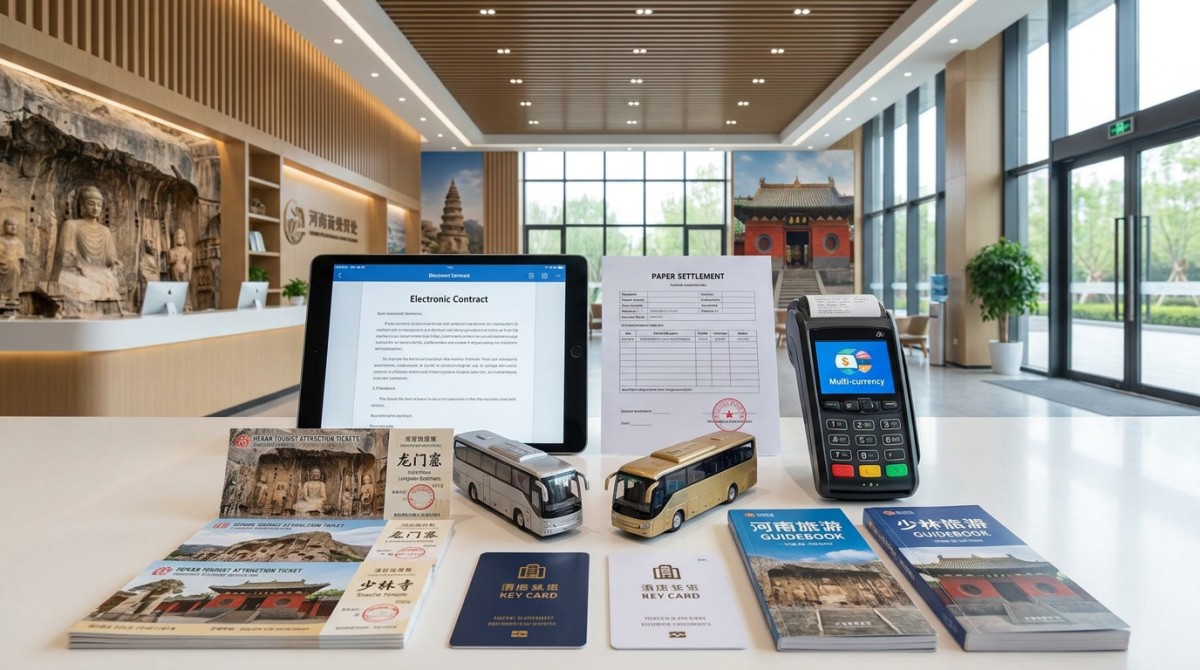
Confirmed information shows that the Ministry of Culture and Tourism's "Yuyoutong" platform fully opened its English-version API interface on June 5, 2026, serving overseas OTAs, travel agencies, and MICE service providers. The API covers resources such as attraction tickets, hotels, chartered vehicles, tour guides, and study tour courses across Henan Province, supporting real-time inventory inquiries, one-click booking, electronic contract signing, and automatic settlement in multiple currencies, including USD, EUR, JPY, KRW.
At the same time, the first batch of connected platforms, including Expedia, Japan Travel, and Trip.com, has already achieved T+0 inventory synchronization for core products such as the Longmen Grottoes in Luoyang and the Shaolin Temple, with the delivery cycle shortened to within 48 hours. Based on the currently confirmed information, what has already been implemented includes API opening, functional scope, the first batch of connected platforms, as well as the synchronization and delivery performance of some core products.
The transaction chain is beginning to shift from "manual coordination" to "interface-based rules"
For overseas distribution channels, inventory and settlement rules need to be verified earlier in the process
From an analytical perspective, after the official launch of the English API, the most direct impact on overseas OTAs, travel agencies, and MICE service providers is first reflected in the further standardization of the transaction chain. Processes that previously relied on manual inventory confirmation, back-and-forth email confirmation of orders, or offline coordination of settlements may gradually shift to being completed through API fields, inventory status, and electronic contract workflows. This means that when integrating, channel partners need to pay greater attention to the synchronization frequency of available resources, the standards for order confirmation, the way electronic contracts are retained, and the financial and reconciliation processes corresponding to automatic settlement in multiple currencies.
For scenic areas and local fulfillment providers, pressure on delivery pace will become more direct
From the perspective of business execution, resource providers such as scenic areas, hotels, chartered vehicles, tour guides, and study tour courses may feel more clearly the fulfillment constraints brought by T+0 inventory synchronization. Once the API displays resources to overseas channels, inventory updates, availability status, and delivery preparation become closer to real-time coordination. For these entities, the affected links mainly include inventory maintenance, order confirmation, service scheduling, and delivery response. In particular, against the backdrop of the delivery cycle being shortened to within 48 hours, there may be less room for manual back-entry, delayed confirmation, or temporary coordination.
For supply chain coordinators, electronic contracts and multi-currency settlement deserve continued attention
From observation, the opening of capabilities for electronic contract signing and automatic settlement in USD, EUR, JPY, KRW will also affect supply chain services and financial coordination. For service providers participating in the cross-border distribution of cultural and tourism resources, subsequent attention needs to focus on whether contract text adaptation, retention of settlement documents, reconciliation standards, and post-order settlement handover are consistent with existing internal processes. Although more detailed execution rules have not yet been disclosed in the current information, judging from the API capabilities themselves, contracts and settlement are no longer merely back-office support matters, but will become integral parts of whether transactions can be implemented smoothly.
What practical changes enterprises should focus on at present
First verify the boundaries of inventory responsibility after API integration
For enterprises preparing to integrate or already participating in distribution, what currently deserves more attention is the allocation of responsibilities after inventory synchronization. Especially under the clearly defined conditions of real-time inquiry and T+0 synchronization, enterprises need to pay attention to whether internal inventory management can support timely updates of externally available status, and how situations such as failed order confirmation or temporary resource changes should be connected with channel partners. The input information does not provide more detailed execution rules, so this part is better understood as a practical priority that requires continuous verification.
Simultaneously sort out arrangements for electronic contracts and document trace retention
Since the platform already supports electronic contract signing, relevant enterprises need to pay attention to trace retention management after contract signing, version consistency, and the corresponding relationship between existing order data and settlement data. For participants in cross-border transactions, this relates not only to internal review efficiency, but also to whether transaction materials are complete and traceable in the event of subsequent fulfillment disputes. What is currently known is that the function has gone live; as for the specific documentation standards and execution requirements, these still need to be based on subsequent official statements.
Assess in advance the impact of multi-currency settlement on finance and procurement planning
Support for automatic settlement in USD, EUR, JPY, KRW means that some enterprises may need to synchronously adjust internal processes in collections, payments, quotations, or procurement arrangements. From an analytical perspective, both overseas channels and resource suppliers should pay attention to whether the settlement process matches existing financial systems, reconciliation cycles, and business approval workflows. Especially in cross-product bundled sales scenarios, changes in settlement methods may affect order splitting, resource procurement, and delivery arrangements.
Pay attention to service readiness after the delivery cycle is shortened
Disclosed information shows that the delivery cycle for some core products has been shortened to within 48 hours. For relevant service providers, what currently needs to be closely observed is not simply pursuing faster order acceptance, but whether internal confirmation, resource allocation, and service delivery can adapt to a shorter chain. If more categories and channels join later, this rhythm change may place more obvious demands on order processing and after-sales coordination.
From an industry perspective, this is more like an execution signal than a simple feature launch
From an industry perspective, the signal released by this news is not merely that "Yuyoutong" has added an English interface or several new API functions, but that the cross-border distribution of cultural and tourism resources is moving toward standardized connectivity, online contracting, and automatic settlement. From an analytical perspective, the first batch of platforms has already achieved T+0 inventory synchronization for core products, indicating that this change already has practical execution scenarios and should not be understood merely as a conceptual pilot.
But at the same time, it should also be noted that the current public information is still concentrated on the scope of API opening, the first batch of connected entities, and the performance of some products. The input information does not provide more detailed execution standards, documentation requirements, dispute resolution mechanisms, or the degree of adaptation of different categories in actual fulfillment. Therefore, it is more appropriate to understand it as an execution signal that has already begun to be implemented, while also being a regulatory development that still requires continued observation of details and market feedback.
How this launch should be understood at the current stage
Overall, the official launch of the "Yuyoutong" English API on June 5, 2026 means that transaction coordination for Henan's cultural and tourism resources toward overseas distribution channels is moving from manual matchmaking to API-based execution. For the industry, what truly needs attention is not the function names themselves, but whether inventory synchronization, electronic contracts, multi-currency settlement, and shortened delivery cycles will gradually become normalized requirements.
Therefore, it is more appropriate at present to understand this news as a change in rules and processes that has entered the practical operation stage: it has already sent a clear execution direction, but regarding compliance standards, data integration, fulfillment details, and industry feedback, there is still a need for continued observation going forward.
Basis of this article and key points for subsequent verification
This article is generated based on the news headline, event occurrence time, and event summary provided by the user. The confirmed facts are limited to the launch time of the "Yuyoutong" English API, the target users opened to, the functional scope, supported currencies, the first batch of connected platforms, and information such as T+0 inventory synchronization for some core products and the shortening of the delivery cycle to within 48 hours.
For this type of event, it is usually still necessary to continuously cross-check with official announcements, releases from regulatory authorities, industry association information, standardization documents, and authoritative media reports. Since the input content does not provide specific official source links, the relevant official statements, subsequent implementation details, and scope of application still need further follow-up. Content worthy of continued observation includes whether API execution standards will be further refined, whether requirements for electronic contracts and settlement documentation will be clarified, whether unified standards will emerge for the fulfillment arrangements of different categories, as well as the actual integration and execution feedback from market participants.
Your 1:1 travel consultant will respond within 1 business day
How to plan your trip
- Hebei Launches Five “Trendy Hebei” Premium Tourism Routes for Inbound Travelers, Moving Toward Standardized Offerings
- The 12th Qionghai Tanmen Coastal Foraging Festival Opens on August 16
- Guangxi’s Digital Silk Road Accelerates: Orah Mandarin Juice Secures an Italian Order, Drawing Attention to Export Standards for Souvenirs
- New Inquiry Triggered by Coastal Cultural Tourism Space Standards
- Zhuanghe’s agro-cultural tourism model draws ASEAN attention, highlighting the compliance requirements for the internationalization of camping and intangible cultural heritage handicrafts
Monthly travel guide
- Typhoon “White Dolphin” Forces Henan Scenic Areas to Close, Putting Summer Ground-Handling Services Under Pressure
- RCEP Implementing Rules for Indonesia Take Effect: Zero Tariffs for Cultural and Tourism Services Alongside Strict Customer Service Requirements
- Saudi Arabia’s New SASO Regulations Take Effect: Taqat Certification Required Before Chinese-Language Cultural Tourism Services Can Access Visit Saudi
- Zhengzhou Launches a Dedicated LCL Shipping Route for Cultural and Tourism Materials, Cutting Freight Costs by 18%
- Luoyang Cold Chain Intensification: Cultural and Creative Exports Delivered in 9 Days
- Expedited Pre-Approval for Group Visas to Three Southeast Asian Countries
- Tightening air freight capacity at Zhengzhou Airport delays the delivery of cultural and tourism materials
- Vietnam's New Regulations on Bus Monitoring Requirements for Group Tours
- Saudi SAMA New Regulations on Travel Liability Insurance Compliance Preparation
- Japanese tourists' new regulations for entering Henan local transport vehicles
- Wai Gao Qiao Wen Travel customs bonded warehouse summer group equipment fast lane
- JTB Warning: Risks in Henan’s September Red Leaf Family Tour Purchases
Popular destinations
- Hebei Launches Five “Trendy Hebei” Premium Tourism Routes for Inbound Travelers, Moving Toward Standardized Offerings
- The 12th Qionghai Tanmen Coastal Foraging Festival Opens on August 16
- Guangxi’s Digital Silk Road Accelerates: Orah Mandarin Juice Secures an Italian Order, Drawing Attention to Export Standards for Souvenirs
- New Inquiry Triggered by Coastal Cultural Tourism Space Standards
- International promotion of Enshi graduation travel drives inbound tourism cooperation
Why choose us

High cost-performance and transparent experience
Offer astonishing low prices without hidden tourism traps, enabling travelers to explore at lower costs while avoiding unnecessary spending loopholes, ensuring transparent consumption.

Personalization and dedicated service
Support 100% free customization, paired with one-on-one expert service, crafting exclusive itineraries based on travelers' specific needs, while providing professional guidance to enhance the personalization and professionalism of the journey.

Premium itinerary planning
Compact yet rich itineraries allow travelers to experience more within limited time; simultaneously, carefully selected hotels in prime locations provide convenient lodging conditions, overall enhancing travel comfort and experience.