Welcome to Our Travel Agency!




On May 22, 2026, Sabre Travel Network released a Middle East market report showing that family outbound travel bookings from Saudi Arabia, the UAE, and Qatar surged by 140% year-on-year during the summer of 2026 (July-August). This growth is not a simple spillover from the recovery of the broader tourism industry, but rather driven by a structural shift in demand—customized family-oriented cultural and tourism products centered on Chinese culture, intangible cultural heritage crafts, and nature-based study tours have become a key growth driver, directly propelling Chinese outbound cultural and tourism service companies to accelerate their localization process.
Event Overview
According to Sabre Travel Network's Middle East Market Report dated May 22, 2026, bookings for family outbound travel to Saudi Arabia, the UAE, and Qatar for the summer of 2026 (July-August) surged by 140% year-on-year, with inquiries for products such as 'Chinese cultural theme family camps' and 'intangible cultural heritage handicrafts + landscape study tours' increasing by 217%. Chinese customized travel agencies are accelerating the adaptation of Arabic-language itineraries, halal catering compliance solutions, and family-friendly visa processing procedures.
Which sub-sectors will be affected?
Direct trading enterprises : These mainly refer to licensed outbound travel agencies and MCN-type content service providers that deliver cultural and tourism products to end consumers in the Middle East. The impact stems from a shift in order structure from 'standardized group tours' to 'high-priced, low-frequency, and highly customized' tours, leading to longer contract periods, higher prepayment ratios, and increased compliance review requirements. The impact manifests in the need to restructure customer education scripts on the sales side and simultaneously upgrade multilingual electronic signature and Sharia-compatible clause libraries on the back end.
Raw material procurement companies : This specifically refers to procurement entities that provide localized service resources for cultural tourism projects, such as halal-certified catering suppliers in the Middle East, bilingual study tour instructor brokerage agencies, and overseas warehouse partners for intangible cultural heritage material kits. The reason for this impact is that Chinese customized travel agencies have significantly increased their requirements for service granularity, no longer simply procuring basic 'hotel + transportation' packages, but breaking them down to micro-units such as 'daily handicraft instructor qualification certification' and 'temperature sampling and recording of children's halal meals'. The impact is reflected in the accelerated iteration of procurement standard documents, and an increase in compliance verification costs of approximately 35% (according to feedback from the first batch of pilot agencies).
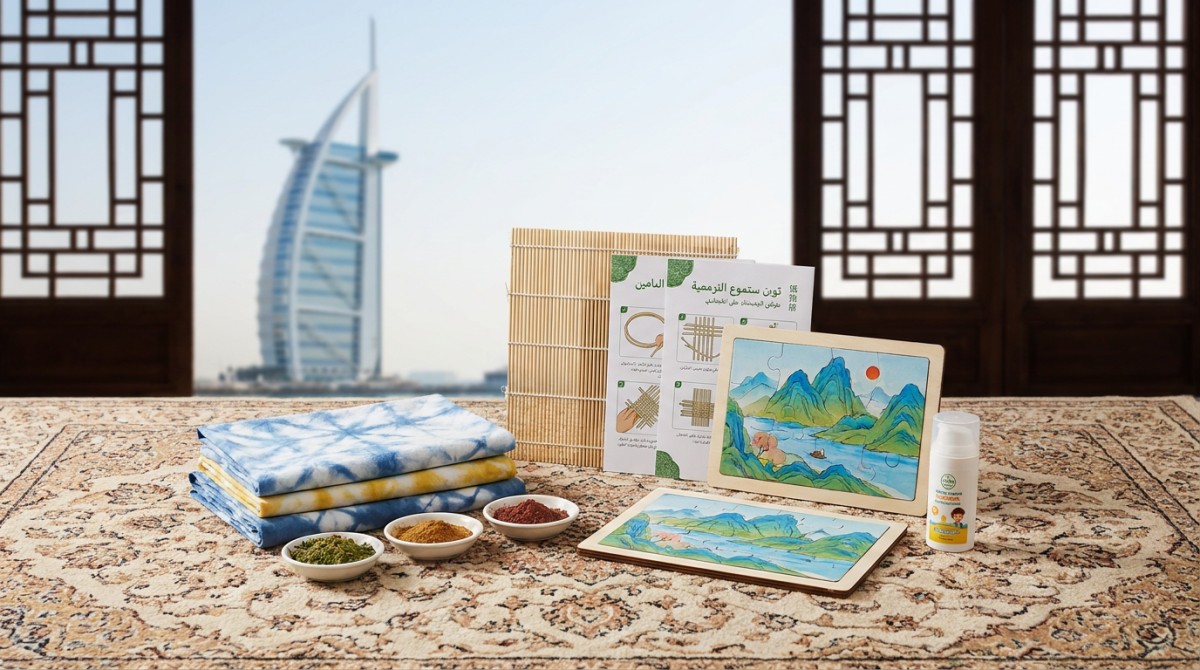
Processing and manufacturing enterprises include manufacturers of intangible cultural heritage derivative products, manufacturers of educational toys, and manufacturers of child-friendly travel equipment. The impact stems from a shift in end-user demand from 'souvenir consumption' to 'process-oriented experiential carriers.' For example, tie-dyed fabrics must provide Arabic instructions and alcohol-free color-fixing agent formulas; bamboo-woven educational toys must pass GCC child product safety certification (GSO 2024 version). The impact is reflected in increased investment in localizing product technical documentation, and the need for flexible, small-batch production capabilities to become a barrier to entry.
Supply chain service companies , including cross-border payment service providers, multilingual insurtech platforms, and visa collaboration SaaS system providers, are affected because the responsibilities of parties involved in family travel are more complex (the rights and responsibilities of guardians, underage travelers, and third-party service providers need to be mapped in real time), rendering traditional B2B settlement and risk control models ineffective. The impact manifests in the need to quickly implement a 'family unit-level fund supervision module' and an 'automatic compensation trigger mechanism for halal service defaults'; two insurtech platforms completed sandbox testing in late May.
Key areas of focus and corresponding countermeasures for relevant enterprises or practitioners
Prioritize completing the full-chain compliance certification for halal services
This requirement extends beyond catering to 12 key aspects, including religious descriptions in itineraries, the setting of prayer areas in study tour venues, and the halal-certified excipients of children's sunscreen ingredients. More noteworthy is the fact that GCC member countries have initiated a public consultation on the draft "Guidelines for the Classification of Halal Services for Family Tourism," with the three-tier certification system potentially implemented in Q4 2026.
Building Arabic content production infrastructure
To avoid relying on general translation engines, it is necessary to establish a 'cultural and tourism-specific terminology database' (including Arabic equivalents in child development psychology, verb conjugation rules for intangible cultural heritage crafts, etc.) and embed it into the itinerary generation system. Analysis shows that customized travel agencies that have not deployed a terminology database have an average Arabic inquiry conversion rate that is 22 percentage points lower than the industry average.
Stress test launched for family-friendly visa collaboration process
The focus of the verification was on three key capabilities: the notarization chain of authorization letters for minors traveling alone, the interface for remote video interviews with guardians, and the connection of the legal validity of multilingual emergency medical authorization letters. Observations show that only 37% of existing SaaS platforms support real-time access to OCR recognition results of Chinese-Arabic bilingual authorization documents for visa officers in the six GCC countries.
Editor's Viewpoint / Industry Observation
Observably, this surge is not merely cyclical demand recovery but signals a structural shift in China's outbound cultural service export model—from 'destination showcase' to 'co-created experiential infrastructure'. The 217% inquiry growth for culture-integrated products suggests that Middle Eastern families are increasingly treating Chinese heritage not as exotic spectacle, but as pedagogical resource for intercultural competence development. Analysis shows that the realneck bottle now lies not in marketing reach, but in the scalability of cross-regulatory operational protocols—especially where Islamic jurisprudence, GCC consumer protection law, and China's outbound tourism service standards intersect.
Conclusion
The recent surge in family tourism to the Middle East represents a crucial turning point in cultural service exports, shifting from a "traffic-driven" to a "system-adaptation-driven" approach. This doesn't mean all cultural and tourism enterprises need to immediately enter the Middle East; rather, it should be understood as the underlying logic of global competition shifting from "accessibility" to "trustworthiness for families." Rational observation indicates that companies that first complete localized compliance infrastructure will gain substantial influence in the next phase of regional cultural and tourism service standard setting.
Information source explanation
Data source: Sabre Travel Network, "Middle East Tourism Market Quarterly Report 2026 (May 2026 Edition)," original report number STR-MEA-2026-Q2. Note: The legislative progress of GCC member countries' guidelines on the classification of halal services for family tourism and the implementation details of the new GSO regulations for children's educational toys certification are still pending official release by national standardization organizations (such as SASO and ESMA) by the end of the third quarter of 2026. This column will continue to monitor these developments.
Your 1:1 travel consultant will respond within 1 business day
How to plan your trip
- Hebei Launches Five “Trendy Hebei” Premium Tourism Routes for Inbound Travelers, Moving Toward Standardized Offerings
- The 12th Qionghai Tanmen Coastal Foraging Festival Opens on August 16
- Guangxi’s Digital Silk Road Accelerates: Orah Mandarin Juice Secures an Italian Order, Drawing Attention to Export Standards for Souvenirs
- New Inquiry Triggered by Coastal Cultural Tourism Space Standards
- Zhuanghe’s agro-cultural tourism model draws ASEAN attention, highlighting the compliance requirements for the internationalization of camping and intangible cultural heritage handicrafts
Monthly travel guide
- Typhoon “White Dolphin” Forces Henan Scenic Areas to Close, Putting Summer Ground-Handling Services Under Pressure
- RCEP Implementing Rules for Indonesia Take Effect: Zero Tariffs for Cultural and Tourism Services Alongside Strict Customer Service Requirements
- Saudi Arabia’s New SASO Regulations Take Effect: Taqat Certification Required Before Chinese-Language Cultural Tourism Services Can Access Visit Saudi
- Zhengzhou Launches a Dedicated LCL Shipping Route for Cultural and Tourism Materials, Cutting Freight Costs by 18%
- Luoyang Cold Chain Intensification: Cultural and Creative Exports Delivered in 9 Days
- Expedited Pre-Approval for Group Visas to Three Southeast Asian Countries
- Tightening air freight capacity at Zhengzhou Airport delays the delivery of cultural and tourism materials
- Vietnam's New Regulations on Bus Monitoring Requirements for Group Tours
- Saudi SAMA New Regulations on Travel Liability Insurance Compliance Preparation
- Japanese tourists' new regulations for entering Henan local transport vehicles
- Wai Gao Qiao Wen Travel customs bonded warehouse summer group equipment fast lane
- JTB Warning: Risks in Henan’s September Red Leaf Family Tour Purchases
Popular destinations
- Zhuanghe’s agro-cultural tourism model draws ASEAN attention, highlighting the compliance requirements for the internationalization of camping and intangible cultural heritage handicrafts
- Tongcheng Travel data: Summer “factory tours” booking popularity rises by 36%, with family travelers leading demand
- Saudi OTA Opens a Direct Procurement Channel for Henan Inbound Ground Services
- JIS S 0022:2026 Takes Effect, Requiring Bilingual Contingency Plans and Route Record Archiving for Customized Tours
- TripAdvisor Summer Rankings Released: Luoyang Itinerary Named Among the TOP 10 Family Travel Destinations in Asia
Why choose us

High cost-performance and transparent experience
Offer astonishing low prices without hidden tourism traps, enabling travelers to explore at lower costs while avoiding unnecessary spending loopholes, ensuring transparent consumption.

Personalization and dedicated service
Support 100% free customization, paired with one-on-one expert service, crafting exclusive itineraries based on travelers' specific needs, while providing professional guidance to enhance the personalization and professionalism of the journey.

Premium itinerary planning
Compact yet rich itineraries allow travelers to experience more within limited time; simultaneously, carefully selected hotels in prime locations provide convenient lodging conditions, overall enhancing travel comfort and experience.