Welcome to Our Travel Agency!




On June 1, 2026, centered on the coordination of inbound tourism services for the summer peak season, the Ministry of Culture and Tourism launched a pilot for the multilingual cultural and tourism booking platform “Yuyoutong”, and from June opened API direct connectivity with mainstream overseas OTA systems. This change deserves industry attention, not only because it involves adjustments to the rules governing inbound tour booking and distribution, but also because it directly affects the ordering methods, inventory synchronization, and order response workflows of overseas travel agencies, channel distributors, Henan local reception service providers, as well as related supply chain service links.
What has been clarified in this change
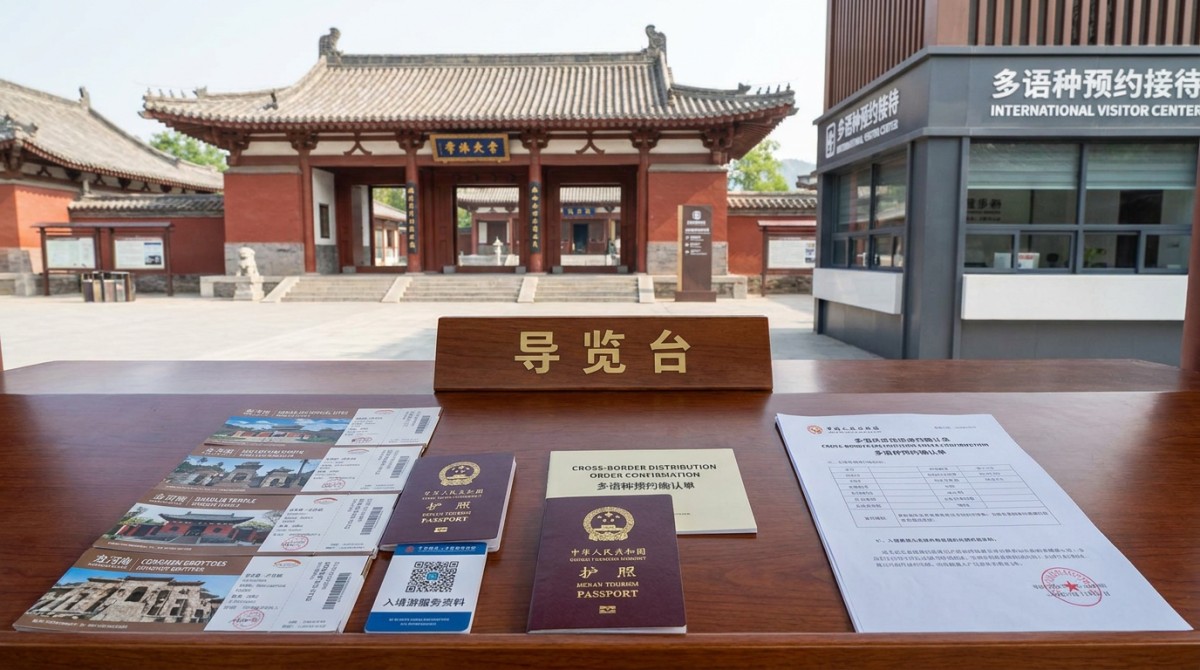
According to the information provided, the Ministry of Culture and Tourism has officially piloted the multilingual cultural and tourism booking platform “Yuyoutong”. Starting from June 2026, the platform fully supports four languages: English, French, German, and Spanish, and opens API direct connectivity with mainstream overseas OTA systems such as Booking.com and Expedia.
The confirmed information also includes: this arrangement will reduce the technical barriers and operating costs for overseas travel agencies booking Henan local reception services, while also helping improve order response efficiency and inventory synchronization accuracy. For distributors and channel partners targeting the European, American, Latin American, and European markets, their procurement processes will gain more direct room for optimization.
What adjustments may occur in the procurement chain and fulfillment rhythm
Order-taking and procurement methods of overseas distributors will become more standardized
From the perspective of the business chain, the first parties affected are distributors, channel partners, and overseas travel agencies on overseas OTAs. The reason is that API direct connectivity means that when booking Henan local reception services, they may shift from previous methods that relied more on manual communication, repeated entry, or indirect confirmation to more direct platform-level system integration. The impact is mainly reflected in order capture, inventory confirmation, response speed, and procurement operating costs.
From an analytical perspective, what such enterprises currently need to focus on is not “whether demand exists”, but whether the business rules after system access match their own procurement processes, such as whether product listing information, inventory update logic, order confirmation standards, and multilingual display content meet daily distribution requirements. Although the direction of change is already clear, the specific implementation details still need follow-up verification.
Henan local reception service providers will face higher system coordination requirements
For local reception service providers in Henan, this change may bring more direct fulfillment pressure. Because the platform supports multiple languages and is directly connected with mainstream overseas OTA systems, once front-end orders enter the distribution chain more smoothly, the back-end maintenance of local reception resource inventory, service confirmation, response timeliness, and delivery coordination will be more easily magnified and tested.
From an industry perspective, the practical changes relevant enterprises need to pay attention to include: whether inventory information can be synchronized in a timely manner, whether service information for multilingual buyers is clear, and whether the pace of order confirmation and delivery can adapt to higher-frequency online distribution. The key point here is not new certification requirements, but the compliant expression and fulfillment consistency of existing service supply under digital order-taking scenarios.
The importance of platform integration services and technical support links is rising
For enterprises that provide system integration, order management, or supply chain coordination services, this change sends a relatively clear execution signal: inbound tourism procurement and booking processes are further moving toward platformization, interface-based integration, and standardization. Relevant service providers may need to pay closer attention to practical issues such as interface adaptation, data synchronization, abnormal order handling, and multilingual information presentation.
From observation, this impact is more reflected in delivery efficiency and process compliance. If an enterprise participates in relevant integration work, it should focus on checking interface documentation, field rules, inventory synchronization mechanisms, and traceability paths after order changes, so as to avoid a situation where front-end channels are connected but back-end fulfillment cannot be stably supported.
Matters currently more worth enterprises checking in advance
First look at interface access, and do not focus only on traffic opportunities
From an analytical perspective, the primary change brought by API direct connectivity is not simply increased exposure, but the systematic restructuring of procurement and fulfillment processes. Relevant enterprises need to first confirm whether they have the capability to handle interface orders, including whether basic processes such as order reception, confirmation feedback, inventory updates, cancellations, and rescheduling can adapt to platform-based requirements.
Multilingual information expression must remain consistent with actual delivery
“Yuyoutong” already supports English, French, German, and Spanish, which means the accuracy of product information, service descriptions, and booking content in cross-language scenarios will become more important. In practice, enterprises should pay attention to the consistency of multilingual page content, service scope descriptions, and order information, so as to avoid procurement misunderstandings or delivery disputes caused by unclear expression.
Pay attention to whether inventory and response mechanisms are truly synchronized
Confirmed information shows that this change helps improve inventory synchronization accuracy and order response timeliness. For enterprises, this does not mean the effect has already been automatically achieved. What is more worthy of attention is whether internal inventory management, manual confirmation processes, and platform order mechanisms can remain consistent. If the front-end system has already achieved rapid ordering, but the back end still relies on delayed manual processing, the improvement in procurement efficiency may be limited.
Continue paying attention to follow-up implementation standards and platform rule updates
What is currently clear is the pilot, multilingual support, and the direction of API direct connectivity, but the input information does not provide more detailed implementation specifications. Therefore, enterprises still need to continue paying attention to subsequent official statements, platform access rules, business standards, and actual market feedback, especially specific requirements related to order-taking qualifications, information maintenance, interface usage, and fulfillment management.
This is more like an execution signal rather than a final change
From observation, this piece of information is more appropriately understood as an execution signal that has already begun to be implemented, rather than a final rule in which all business details have been fully finalized. What it clearly indicates is that, for the inbound tourism market, cultural and tourism booking and local reception procurement links are moving toward multilingual capability, platformization, and direct connectivity with cross-border distribution systems.
At the same time, it should also be noted that the input information does not provide more detailed supporting rules, so the industry should not yet infer broader conclusions from this alone. What is currently more worthy of attention is whether there will be more specific access standards, platform operation standards, service delivery requirements, and feedback from market participants in actual use. These contents will determine whether policy convenience can ultimately be stably transformed into procurement efficiency and fulfillment efficiency.
For the inbound tourism supply chain, the key point is that “process optimization has begun”
Overall, this multilingual pilot of “Yuyoutong” and the arrangement for API direct connectivity with overseas OTA systems have already released a relatively clear direction of industry change: the procurement and booking processes related to inbound tourism are lowering the barriers to cross-language and cross-system integration. For overseas travel agencies, channel partners, distributors, and Henan local reception service providers, the impact is first reflected at the operational level in order acquisition, inventory synchronization, and delivery coordination.
Rationally speaking, this information is currently more suitable to be understood as the optimization of process rules and execution methods, rather than a conclusion from which definite market results can be directly inferred. Enterprises should focus on system access preparation, the accuracy of multilingual information, inventory management, and tracking of follow-up implementation rules.
Basis of this article and directions for follow-up verification
This article is generated based on the news headline, event occurrence time, and event summary provided by the user. The core information includes: the relevant pilot arrangement on June 1, 2026, the scope of multilingual support, and the API direct connectivity between “Yuyoutong” and mainstream overseas OTA systems such as Booking.com and Expedia. Such events usually still need to be cross-verified with official announcements, releases by regulatory authorities, information from industry associations, reports by authoritative media, and subsequent platform explanations.
It should be noted that the input did not provide specific official source links, so the relevant details still require continuous follow-up verification. Content worth continued observation later includes: platform access details, implementation standards, changes in business rules, actual industry feedback, and the implementation status on the enterprise side.
Your 1:1 travel consultant will respond within 1 business day
How to plan your trip
- China Tourism Academy Releases Report on Autumn Trends in China's Domestic Customized Tour Market
- Visiting China for the First Time: How Many Cities Should You Include in a 15-Day Grand Tour?
- Is a geology exploration tour suitable for elementary school students?
- Is it worth hiring a guide for a visit to the Terracotta Army?
- Hebei Launches 5 “Trendy Hebei” Signature Tour Routes, Standardizing Inbound Tourism Services
Monthly travel guide
- Luoyang launches the “Autumn Charm of the Divine Capital” tourism promotion to build anticipation for winter travel
- Typhoon “White Dolphin” Forces Henan Scenic Areas to Close, Putting Summer Ground-Handling Services Under Pressure
- RCEP Implementing Rules for Indonesia Take Effect: Zero Tariffs for Cultural and Tourism Services Alongside Strict Customer Service Requirements
- Saudi Arabia’s New SASO Regulations Take Effect: Taqat Certification Required Before Chinese-Language Cultural Tourism Services Can Access Visit Saudi
- Zhengzhou Launches a Dedicated LCL Shipping Route for Cultural and Tourism Materials, Cutting Freight Costs by 18%
- Luoyang Cold Chain Intensification: Cultural and Creative Exports Delivered in 9 Days
- Expedited Pre-Approval for Group Visas to Three Southeast Asian Countries
- Tightening air freight capacity at Zhengzhou Airport delays the delivery of cultural and tourism materials
- Vietnam's New Regulations on Bus Monitoring Requirements for Group Tours
- Saudi SAMA New Regulations on Travel Liability Insurance Compliance Preparation
- Japanese tourists' new regulations for entering Henan local transport vehicles
- Wai Gao Qiao Wen Travel customs bonded warehouse summer group equipment fast lane
Popular destinations
- JETRO Releases 2026 Summer Procurement Guide: “June” Graduation Season Custom Tours Heat Up
- Zhengzhou Culture and Tourism Digital Cockpit Goes Live, Reducing Cross-Border Delivery to 72 Hours
- Henan 12-entry tour routes receive special funding support
- Yu-Jin Joint Ticket launches cross-border distribution channel, English manual goes online simultaneously
- Meituan International Edition Open Hanyu Travel Weekly API Interface
Why choose us

High cost-performance and transparent experience
Offer astonishing low prices without hidden tourism traps, enabling travelers to explore at lower costs while avoiding unnecessary spending loopholes, ensuring transparent consumption.

Personalization and dedicated service
Support 100% free customization, paired with one-on-one expert service, crafting exclusive itineraries based on travelers' specific needs, while providing professional guidance to enhance the personalization and professionalism of the journey.

Premium itinerary planning
Compact yet rich itineraries allow travelers to experience more within limited time; simultaneously, carefully selected hotels in prime locations provide convenient lodging conditions, overall enhancing travel comfort and experience.