Welcome to Our Travel Agency!




Travel Guide
On May 29, 2026, the 2026 Beijing International Cultural Tourism Consumption Expo concluded, and information disclosed at the event showed that Henan already has 127 cultural tourism merchants connected to China’s first inbound self-service consumption platform, with overseas bank card acceptance coverage rising to 91%. This update is worth close attention from cultural tourism merchants, payment service-related parties, distribution channels, as well as retail and catering operators serving inbound tourists, because what it reflects is not a single merchant onboarding action, but that the efficiency of the "payment acceptance—RMB settlement—tax refund到账" chain in inbound consumption is being compressed, and this change has already begun to show up in average order value and terminal sales data.
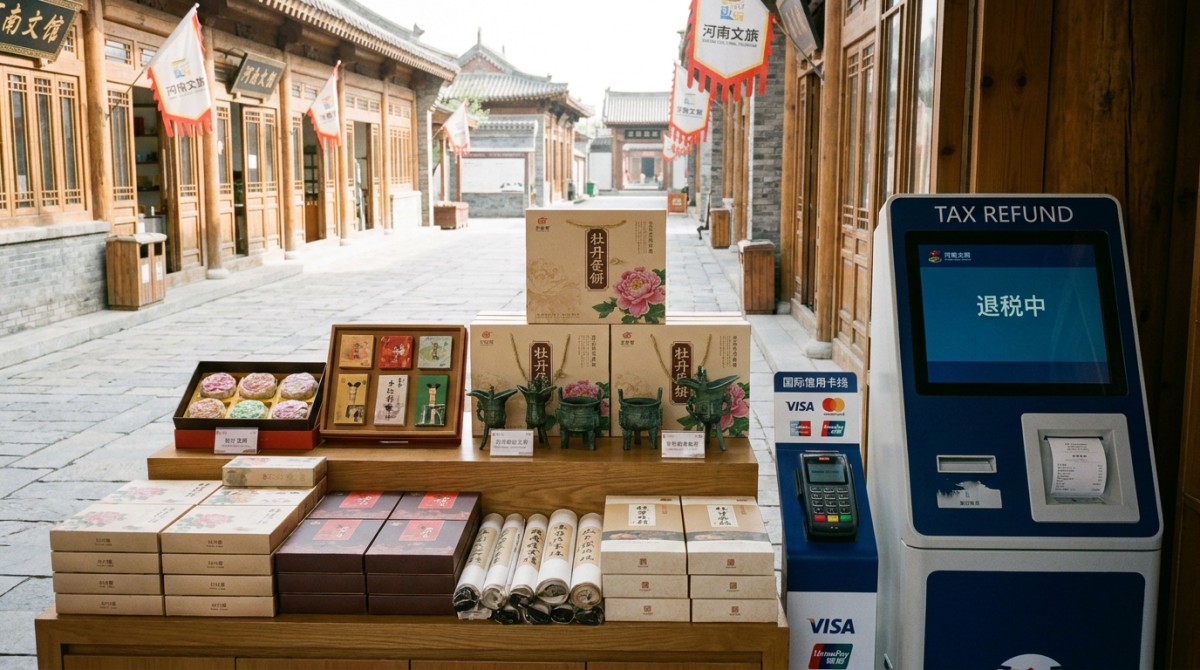
Judging from the information disclosed at the expo, tangible results have already been achieved in the payment and tax refund chain
Confirmed information shows that all 127 cultural tourism merchants in Henan have already connected to China’s first inbound self-service consumption platform, involving merchants such as Luoyang Peony Pastry Workshop, Shaolin Vegetarian Restaurant, and Longmen Cultural Creativity Flagship Store. The platform supports Visa, Mastercard, and UnionPay international cards, and provides "real-time tax refund + RMB settlement" services.
At the same time, platform data shows that the average order value of overseas cardholder spending increased by 37% compared with the same period last year, and the average refund到账 time was shortened to 48 hours. The summary also explicitly mentions that this change has significantly improved repeat purchase intention among overseas tourists and terminal sales efficiency for distributors.
In addition, according to the headline information, overseas bank card acceptance coverage has risen to 91%. Based on the disclosed content, the core focus of this update is on cross-border payment acceptance capability in cultural tourism consumption scenarios, tax refund processing efficiency, and the direct feedback of these changes on consumption conversion performance.
What is affected is not only the merchant front end, but also multiple coordinated links in inbound consumption
For frontline merchants serving tourists, the focus is shifting toward transaction efficiency
From an industry perspective, the first to be affected are cultural creativity, catering, and tourism retail merchants directly serving inbound tourists. The reason is that after platform integration, tourists’ payment method choices, settlement experience, and tax refund convenience are considered within the same consumption chain, and the transaction efficiency at the merchant front end no longer depends only on the products themselves, but also on whether overseas bank card payment and subsequent tax refund can be completed smoothly.
The impact is mainly reflected in cashiering, settlement, and repeat purchase-related links. In the disclosed data, the simultaneous appearance of rising average order value and shorter refund到账 time indicates that improved transaction convenience may be strengthening single-purchase spending amounts and subsequent repeat purchase willingness. For frontline merchants, the changes that need attention going forward will center on the payment preferences of overseas cardholding users, feedback on the tax refund experience, and the actual conversion differences among different business formats after platform integration.
Distribution and channel sides place more emphasis on terminal sales feedback
From observation, the reason distributors deserve attention is that the summary directly mentions improved terminal sales efficiency. For channel circulation links, this means that improvements in payment and tax refund experience at terminal stores or consumption scenarios may be shortening tourists’ decision-making time from "browsing" to "transaction," thereby affecting restocking rhythm and product turnover performance.
This type of impact mainly falls on terminal sales feedback, product organization, and regional stocking judgments. Especially for cultural creativity products, local specialty foods, and scenic area consumer goods categories, whether the improvement in sales momentum can be sustained still requires channel parties to continue observing actual store performance, rather than making broader judgments based solely on information disclosed at a single expo.
For payment and supporting service providers, the focus is on scenario adaptation capability
For payment acceptance, clearing and settlement, and related supporting service providers, the signal released by this update is that cultural tourism consumption scenarios are placing higher demands on integrated capabilities of "payable, settleable, and tax-refundable." The increase in overseas bank card acceptance coverage to 91% indicates that clear progress has been made in acceptance network construction, but the actual operating results under different merchant formats, cashier processes, and peak tourist periods remain business priorities that service providers need to continue verifying.
The impact is mainly reflected in merchant onboarding, system coordination, and service response links. What is currently more worth attention is whether platform-based capabilities can maintain a stable experience across more real consumption scenarios, and whether the merchant side has sufficient operational familiarity to accommodate growth in inbound consumption.
For relevant enterprises, which practical issues deserve closer attention at present
First, see whether there is a gap between "already connected" and "able to use"
From an analytical perspective, merchant connection to the platform itself is a clear fact, but connection does not mean that on-site operations are already completely smooth. For enterprises and practitioners, what currently needs attention is whether cashiers, store service staff, and tourist communication links can already stably support Visa, Mastercard, and UnionPay international card payments, and whether the usage sequence, prompt methods, and explanatory wording of "real-time tax refund + RMB settlement" in actual consumption are clear.
Key categories need to verify whether transaction improvement has truly materialized at the store level
The disclosed data reflects that the average order value of overseas cardholder spending increased by 37% year on year, but for merchants, what matters more is verifying whether this improvement is truly reflected in their own key categories. For typical cultural tourism consumer goods such as cultural creativity products, local specialty foods, and scenic area catering, follow-up attention should be paid to overseas tourist order structures, order value changes, and repeat purchase clues, rather than simply treating platform integration as a pure payment upgrade.
Incorporate changes in refund timeliness into customer communication and performance explanations
The shortening of the average refund到账 time to 48 hours is a relatively business-meaningful indicator in this update. For frontline operators and service providers, this means that when receiving overseas tourists, handling pre-sales inquiries, and guiding purchases, tax refund到账 timeliness can be included as part of the consumption explanation. It should be noted that what can be confirmed here is the platform’s disclosed data itself; in actual communication, enterprises should still base explanations on executable on-site procedures, avoiding directly equating general data with the result of every transaction.
Continue paying attention to subsequent rule descriptions and applicable boundaries
What is currently more worthy of attention is that the information disclosed at the expo mainly explains platform access scope, supported payment card types, and transaction results that have already appeared, but the input information does not elaborate on subsequent more detailed applicable rules, store operation details, and execution boundaries under different scenarios. When advancing business, relevant enterprises should separately view subsequent official statements, platform rule updates, and actual store execution conditions, avoiding directly extrapolating phased results into universal conclusions for all scenarios.
This is more like a signal of improved efficiency rather than an already finalized comprehensive result
From observation, this update first indicates that the key bottleneck in inbound cultural tourism consumption is shifting from "whether payment can be made" to "whether the entire transaction can be completed efficiently and quickly form a positive experience." Judging from the disclosed results such as a 37% increase in average order value, the shortening of average refund到账 to 48 hours, and improved terminal sales efficiency, the optimization of payment acceptance and tax refund efficiency has already begun to show results at the level of consumption performance.
At the same time, however, it is more appropriate to understand this as a directional industry signal rather than a final result that has already formed a comprehensive conclusion. The reason is that what can currently be confirmed is the connection status of 127 merchants in Henan, the platform’s support capabilities, and some phased data performance; as for the stability of this model across more regions, more merchant types, or longer cycles, continued observation is still needed.
From an industry perspective, the reason this update is important lies not in a single technical concept, but in that it is prompting cultural tourism retail, payment services, and distribution terminals to begin forming more direct data correlations around "inbound consumption conversion efficiency." The industry’s next focus is likely to fall on actual usage rates after integration, conversion differences among different categories, and whether the service experience can remain continuously stable.
Its significance for the cultural tourism consumption industry is shifting from access volume to operational quality
Overall, the information disclosed at the close of the 2026 Beijing International Cultural Tourism Consumption Expo at least indicates two changes that have already emerged: first, Henan cultural tourism merchants have made clear progress in connecting to the inbound consumption platform; second, the optimization of payment acceptance and tax refund timeliness has already produced observable results at the levels of average order value and terminal sales.
However, viewed rationally, this update is currently more suitable to be understood as a signal of industry efficiency improvement that is being implemented. For merchants, channels, and service providers, what truly needs follow-up is not just whether they are connected to the platform, but whether transaction conversion, store execution, and tourist repeat purchase feedback after connection can continue to be realized.
Basis of this article and directions for subsequent verification
This article was generated based on the information headline, event occurrence time, and event summary provided by the user, and the confirmed facts all come from the relevant input content. In routine verification of this type of information, official announcements, corporate announcements, industry association information, authoritative media reports, and relevant platform public explanations are usually also combined for cross-verification.
It should be explained that specific official source links were not provided in the input, so this article does not cite external links or supplement unverified information. If continued observation is needed later, it is recommended to focus on subsequent changes in platform-related rule descriptions, actual merchant execution conditions, follow-up changes in overseas bank card acceptance coverage, and whether average order value and refund timeliness data maintain consistent performance over a longer period.
Your 1:1 travel consultant will respond within 1 business day
How to plan your trip
- China Tourism Academy Releases Report on Autumn Trends in China's Domestic Customized Tour Market
- Visiting China for the First Time: How Many Cities Should You Include in a 15-Day Grand Tour?
- Is a geology exploration tour suitable for elementary school students?
- Is it worth hiring a guide for a visit to the Terracotta Army?
- Hebei Launches 5 “Trendy Hebei” Signature Tour Routes, Standardizing Inbound Tourism Services
Monthly travel guide
- Luoyang launches the “Autumn Charm of the Divine Capital” tourism promotion to build anticipation for winter travel
- Typhoon “White Dolphin” Forces Henan Scenic Areas to Close, Putting Summer Ground-Handling Services Under Pressure
- RCEP Implementing Rules for Indonesia Take Effect: Zero Tariffs for Cultural and Tourism Services Alongside Strict Customer Service Requirements
- Saudi Arabia’s New SASO Regulations Take Effect: Taqat Certification Required Before Chinese-Language Cultural Tourism Services Can Access Visit Saudi
- Zhengzhou Launches a Dedicated LCL Shipping Route for Cultural and Tourism Materials, Cutting Freight Costs by 18%
- Luoyang Cold Chain Intensification: Cultural and Creative Exports Delivered in 9 Days
- Expedited Pre-Approval for Group Visas to Three Southeast Asian Countries
- Tightening air freight capacity at Zhengzhou Airport delays the delivery of cultural and tourism materials
- Vietnam's New Regulations on Bus Monitoring Requirements for Group Tours
- Saudi SAMA New Regulations on Travel Liability Insurance Compliance Preparation
- Japanese tourists' new regulations for entering Henan local transport vehicles
- Wai Gao Qiao Wen Travel customs bonded warehouse summer group equipment fast lane
Popular destinations
- JETRO Releases 2026 Summer Procurement Guide: “June” Graduation Season Custom Tours Heat Up
- Zhengzhou Culture and Tourism Digital Cockpit Goes Live, Reducing Cross-Border Delivery to 72 Hours
- Henan 12-entry tour routes receive special funding support
- Yu-Jin Joint Ticket launches cross-border distribution channel, English manual goes online simultaneously
- Meituan International Edition Open Hanyu Travel Weekly API Interface
Why choose us

High cost-performance and transparent experience
Offer astonishing low prices without hidden tourism traps, enabling travelers to explore at lower costs while avoiding unnecessary spending loopholes, ensuring transparent consumption.

Personalization and dedicated service
Support 100% free customization, paired with one-on-one expert service, crafting exclusive itineraries based on travelers' specific needs, while providing professional guidance to enhance the personalization and professionalism of the journey.

Premium itinerary planning
Compact yet rich itineraries allow travelers to experience more within limited time; simultaneously, carefully selected hotels in prime locations provide convenient lodging conditions, overall enhancing travel comfort and experience.