Welcome to Our Travel Agency!




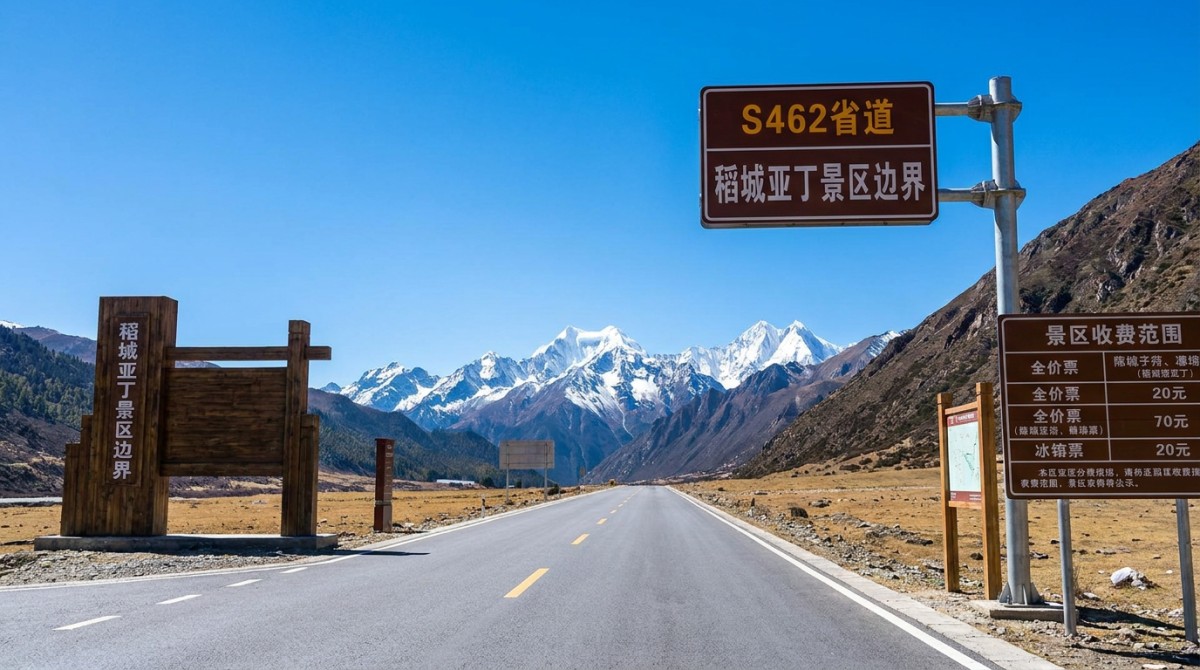
In late May 2026,the inclusion of Sichuan Daocheng Yading Scenic Area’s S462 Provincial Road within the ticket-charging scope triggered cross-border service compliance complaints from travel operators in multiple countries,the Ministry of Culture and Tourism launched a special review on May 25,and simultaneously deployed a nationwide self-inspection among national A-level scenic areas on the ‘charging boundaries for traffic routes’。This incident is directly related to segmented fields such as inbound tourism services,cross-border tourism product design,scenic area operations,and cultural tourism supply chain management,marking that the compliance of the boundary between public service provision and commercial charging for international visitors in China is entering a phase of intensified regulatory scrutiny。
Event Overview
In late May 2026,several overseas-registered travel operators submitted cross-border service compliance complaints to the Ministry of Culture and Tourism of the People’s Republic of China regarding Daocheng Yading Scenic Area’s inclusion of S462 Provincial Road(an ordinary provincial road in Sichuan Province,not a dedicated scenic-area road)within the ticket-charging scope。The Ministry of Culture and Tourism officially confirmed on May 25 that it had launched a special review,and required national A-level tourist attractions across the country to conduct a comprehensive self-inspection of charging boundaries involving traffic routes。At present,no public notice has disclosed specific review conclusions or rectification deadlines,nor has the nationality composition of the complainants or details of the complaint documents been disclosed。
Which Segmented Industries Will Be Affected
Inbound Tourism Product Design and Wholesale Enterprises
Such enterprises often package and sell combined products based on “Daocheng Yading + Western Sichuan Loop”,and S462 Provincial Road is a regular transit route。If it is clearly identified as a scenic-area charging route,the original route quotation will need to separate traffic access fees from ticket fees,affecting product pricing logic,contract clause wording,and the fulfillment of overseas consumers’ right to know。The impacts are mainly reflected in:the restructuring of price structures in international distribution systems(GDS/OTA backends),compliance updates to multilingual itinerary description documents,and adaptive adjustments to refund,change,and cancellation rules。
International Travel Agencies and Ground-Handling Service Providers
Ground-handling agencies are responsible for the actual passage of tour groups,and if the charging nature of S462 is not clearly informed to foreign guests before departure,service disputes and negative reviews may easily arise。The impacts are mainly reflected in:increased costs for responding to complaints from overseas tourists,blurred boundaries for insurance claims(such as itinerary interruption caused by refusal to pay road tolls),and the need to add charging-policy interpretation modules to tour guide training content。
Scenic Area Operation Management and Ticketing System Service Providers
Most existing ticketing systems are designed based on a “main scenic-area entrance ticket + optional secondary consumption” structure,and lack the capability to identify the legal attributes of public roads and internal scenic-area routes。The impacts are mainly reflected in:the need to support new functions such as itemized billing,scenario-based invoicing,and cross-entity settlement(such as data interfacing with transportation departments);ticketing disclosure interfaces must strengthen annotations of legal basis(such as the applicable boundaries of the Highway Law and the Classification and Evaluation of Quality Grades of Tourist Attractions)。
Cultural Tourism Payment and Settlement Service Providers
For multi-currency payment channels targeting overseas tourists,if they are embedded into a unified scenic-area charging entrance,they may be deemed to participate in “bundled charging”。The impacts are mainly reflected in:increased pressure on compliance review of payment interfaces,transaction records needing to support legal-attribute tags for charging items(such as “administrative and public-service charges” and “operational service charges”),and anti-money-laundering due diligence needing to cover the chain of charging-right ownership。
What Key Points Should Relevant Enterprises or Practitioners Focus On,and How Should They Respond Now
Pay Attention to the Draft for Comments of the Guidelines for Compliance of Traffic Route Charging in A-level Scenic Areas(Trial)to Be Subsequently Released by the Ministry of Culture and Tourism
What deserves more attention at present is whether the Ministry of Culture and Tourism will form generally applicable technical standards or operational criteria based on this incident,rather than merely handling a single case。It is recommended to designate a dedicated person to follow the “Policies and Regulations” and “Notices and Announcements” sections on the official website of the Ministry of Culture and Tourism,with a focus on supporting documents that may be released between June and August。
Sort Out Typical Cases in Existing International Routes Where Provincial/County Roads Are Embedded in Scenic Areas
In addition to S462,similar road network structures exist on the Sichuan-Tibet route,the northwest Yunnan loop,the Gannan grassland route,and others。Enterprises should immediately check whether the national roads,provincial roads,and county roads involved in their own products have been jointly designated by local cultural tourism or transportation departments as “supporting access corridors for scenic areas”,and classify and mark the level of legal basis(local regulations vs. scenic-area self-formulated rules)。
Distinguish Policy Signals from the Actual Pace of Business Implementation
Analysis shows:this review is a compliance-oriented preemptive intervention,not punitive law enforcement。The current stage focuses on “self-inspection and self-correction”,and has not yet entered administrative penalty procedures。Enterprises should not immediately take related routes offline,but must suspend the use of absolute statements such as “free passage on S462”,and instead use neutral reminders such as “passage conditions shall be subject to local on-site announcements”。
Prepare Multilingual Charging-Policy Explanation Material Packages in Advance
These include Chinese-English bilingual versions of Explanation on Passage Fees for S462 Provincial Road,Summary of the Legal Basis for the Charging Scope of Daocheng Yading Scenic Area,and Reminder on Tourist Rights and Remedies,for use by overseas partners。The copywriting must avoid subjective judgments such as “the scenic area has the right to charge”,and focus on objectively citing article numbers from higher-level laws and regulations such as the Sichuan Provincial Expressway Regulations and the Provisions on the Administration of Road Transport Prices。
Editorial Viewpoint / Industry Observation
Observably,this incident is not an isolated scenic-area management dispute,but a concentrated exposure of the blurred boundary between “the public nature of infrastructure” and “the commercialization of tourism products” in the internationalization process of China’s cultural tourism services。It is more like a policy signal——regulators are shifting from governance based on the dimension of “tourist satisfaction” to governance upgrades based on the dimension of “full-chain compliance of cross-border services”。What the industry currently needs to keep watching is not whether a certain road charges fees,but whether the Ministry of Culture and Tourism will include the “charging boundaries for traffic routes” as a veto item in the re-evaluation of A-level scenic areas,and whether this standard will be extended in the future to the access evaluation system for cultural-tourism integration projects(such as intangible cultural heritage towns and key villages for rural tourism)。
Conclusion:this incident marks that cultural tourism services for international visitors have entered a refined management stage with “legal granularity”。At present,it is more appropriate to understand it as a compliance warning,rather than a tightening of market access。Enterprises should view it as an opportunity to optimize service contract design,clarify the boundary between public and private rights and responsibilities,and enhance professionalism in cross-border communication,rather than simply as an additional cost item。
Information source statement:
Main source:public notice on the official website of the Ministry of Culture and Tourism of the People’s Republic of China(May 25,2026);
Items requiring continuous observation:the release time of the Ministry of Culture and Tourism’s special review conclusions,the completion deadline and spot-check mechanism for nationwide self-inspection of A-level scenic areas,and the final determination result regarding the charging nature of S462 Provincial Road。
Your 1:1 travel consultant will respond within 1 business day
How to plan your trip
- Hebei Launches Five “Trendy Hebei” Premium Tourism Routes for Inbound Travelers, Moving Toward Standardized Offerings
- The 12th Qionghai Tanmen Coastal Foraging Festival Opens on August 16
- Guangxi’s Digital Silk Road Accelerates: Orah Mandarin Juice Secures an Italian Order, Drawing Attention to Export Standards for Souvenirs
- New Inquiry Triggered by Coastal Cultural Tourism Space Standards
- Zhuanghe’s agro-cultural tourism model draws ASEAN attention, highlighting the compliance requirements for the internationalization of camping and intangible cultural heritage handicrafts
Monthly travel guide
- Typhoon “White Dolphin” Forces Henan Scenic Areas to Close, Putting Summer Ground-Handling Services Under Pressure
- RCEP Implementing Rules for Indonesia Take Effect: Zero Tariffs for Cultural and Tourism Services Alongside Strict Customer Service Requirements
- Saudi Arabia’s New SASO Regulations Take Effect: Taqat Certification Required Before Chinese-Language Cultural Tourism Services Can Access Visit Saudi
- Zhengzhou Launches a Dedicated LCL Shipping Route for Cultural and Tourism Materials, Cutting Freight Costs by 18%
- Luoyang Cold Chain Intensification: Cultural and Creative Exports Delivered in 9 Days
- Expedited Pre-Approval for Group Visas to Three Southeast Asian Countries
- Tightening air freight capacity at Zhengzhou Airport delays the delivery of cultural and tourism materials
- Vietnam's New Regulations on Bus Monitoring Requirements for Group Tours
- Saudi SAMA New Regulations on Travel Liability Insurance Compliance Preparation
- Japanese tourists' new regulations for entering Henan local transport vehicles
- Wai Gao Qiao Wen Travel customs bonded warehouse summer group equipment fast lane
- JTB Warning: Risks in Henan’s September Red Leaf Family Tour Purchases
Popular destinations
- China's Henan Province 144-Hour Visa-Free Transit Policy in 2026: Latest Regulations & In-Depth Travel Strategies
- The China-Europe Railway Express (Zhengzhou) Launches a Dedicated Train for Culture and Tourism Equipment, Cutting Customs Clearance Time to 48 Hours
- RCEP Cultural and Tourism Services Commitment Upgrade: Faster Market Access for Chinese Outbound Tourism Service Providers in Vietnam and Malaysia
- Japan to Introduce a Credit Point System for Chinese-Speaking Tour Guides, Trial Operation in August
- The EU Clarifies That Digital Platforms for Culture and Tourism Are Subject to GDPR Regulation
Why choose us

High cost-performance and transparent experience
Offer astonishing low prices without hidden tourism traps, enabling travelers to explore at lower costs while avoiding unnecessary spending loopholes, ensuring transparent consumption.

Personalization and dedicated service
Support 100% free customization, paired with one-on-one expert service, crafting exclusive itineraries based on travelers' specific needs, while providing professional guidance to enhance the personalization and professionalism of the journey.

Premium itinerary planning
Compact yet rich itineraries allow travelers to experience more within limited time; simultaneously, carefully selected hotels in prime locations provide convenient lodging conditions, overall enhancing travel comfort and experience.