Welcome to Our Travel Agency!




Travel Guide
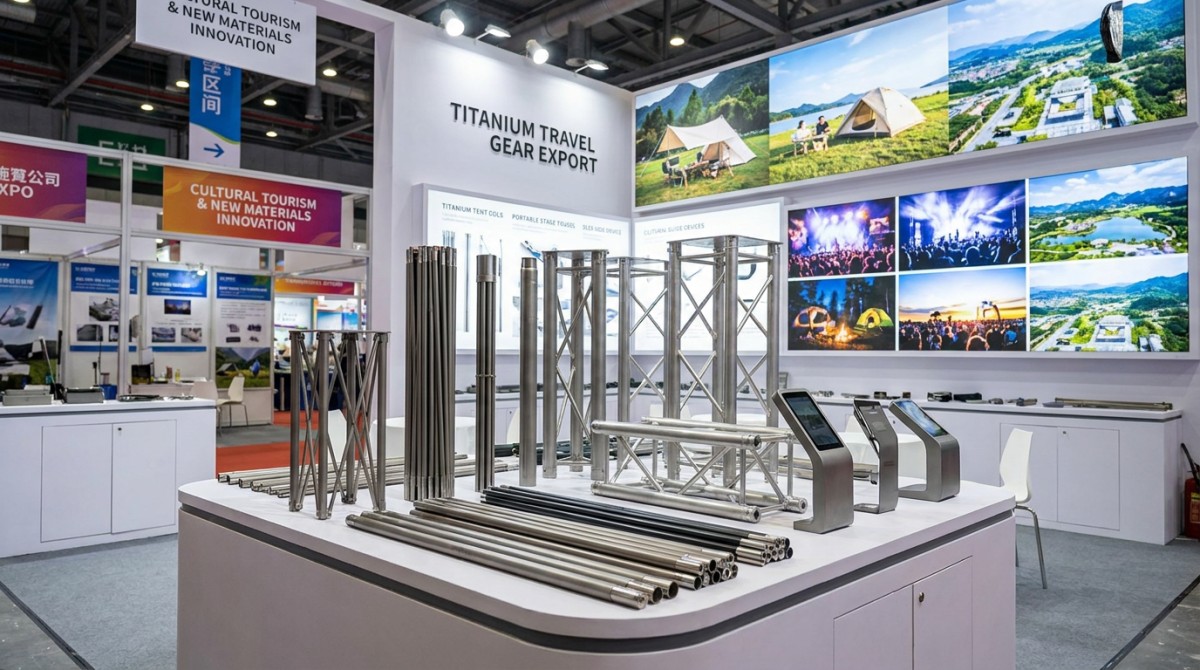
Image placement plan: One image is recommended before the main text to highlight the exhibition theme and the growing focus on lightweight titanium applications for tourism and leisure equipment. The event takes place on June 20, 2026, and matters to export-oriented manufacturers and supply-chain participants because the dedicated new-materials zone and the presence of pre-registered international channel buyers point to rising compliance, specification, and delivery requirements in this product segment.
Confirmed event details
The 2026 titanium industry exposition, organized by Shuangying Holding, is scheduled for June 20–22 in Yongkang, Zhejiang. A dedicated zone for new-material applications in tourism and leisure equipment will be part of the exhibition. The highlighted product categories include titanium-alloy tent supports, portable stage structures, and lightweight scenic-site guide equipment intended for export markets. The event has already attracted pre-registered purchasing interest from international channel buyers including Reisenthel from Germany and Cabela’s from the United States.
How the event may affect market participants
Export trading companies
These businesses are likely to be affected because the exhibition directly connects product showcases with overseas channel procurement. The impact is most visible in customer communication, product positioning, quotation management, and document preparation for export deals. What they may need to watch more closely includes buyer-side product specifications, market-entry compliance expectations, packaging and labeling requirements, and the consistency of technical descriptions across sales materials.
Raw-material sourcing companies
Suppliers and buyers of titanium-related inputs may feel the impact because lightweight end-use equipment often depends on stable material quality and clear performance verification. The influence may appear in sourcing plans, batch consistency control, upstream qualification review, and coordination with downstream fabricators. What deserves attention is whether buyers begin asking for more complete traceability, material certificates, and repeatable quality records linked to export-facing applications.
Processing and manufacturing companies
Fabricators and equipment manufacturers are directly connected to the product categories highlighted at the exhibition. Their exposure comes through drawing interpretation, structural processing, welding or forming quality, assembly reliability, and readiness for overseas orders. They may need to focus on whether product specifications from international channels require tighter dimensional control, clearer testing records, improved durability validation, or stronger technical files for procurement review.
Supply-chain service providers
Logistics, inspection support, warehousing, and trade-service providers may also be influenced because export-oriented lightweight equipment typically requires closer coordination across packing, handling, shipment scheduling, and quality documentation. The practical impact may emerge in delivery planning, inspection timing, document matching, and after-sales traceability support. These participants should pay attention to whether procurement cycles shorten after buyer registration converts into formal orders and whether document-handling requirements become more detailed.
What companies should prepare now
Strengthen certification and compliance review
Companies targeting overseas channel buyers should review whether product files, material declarations, inspection records, and safety-related descriptions are organized in a way that supports procurement screening. Because the showcased products are export-oriented, even early-stage discussions may require a clearer compliance response than domestic-only sales.
Align specifications for lightweight application scenarios
For tent supports, portable stage structures, and guide equipment, manufacturers should pay close attention to specification alignment. This includes dimensions, load-bearing descriptions, connection methods, corrosion-related performance statements, and use-case documentation. Early alignment can reduce later revisions when buyers move from exhibition interest to technical evaluation.
Prepare materials and production for shorter response windows
The presence of pre-registered international channel buyers suggests that some suppliers may face faster sample, quotation, or pilot-order requests. Enterprises should therefore check raw-material readiness, component availability, workshop scheduling, and the capacity to deliver technical samples within practical timeframes.
Improve traceability and after-sales support files
Export-facing equipment purchases often place weight on life-cycle documentation. Companies should organize batch traceability, inspection reports, maintenance instructions, and quality-issue response procedures. This is especially relevant where lightweight structural parts may be reviewed not only for design value but also for long-term service reliability.
Industry observation: compliance may become a bigger differentiator
From an industry perspective, this event is not only a product-display opportunity but also a sign that lightweight titanium applications are moving into buyer groups that typically compare materials, structural reliability, and documentation quality at the same time. Analysis shows that when international channel buyers appear early in the exhibition cycle, suppliers may need to compete less on simple product presence and more on readiness for specification review and order execution.
What deserves closer attention is the way a dedicated application zone can reshape procurement expectations. Observably, once products are framed around tourism and leisure equipment rather than general metal processing, purchasing discussions may place greater emphasis on application-specific requirements, supporting test documents, and consistency across batches. It is more appropriate to understand this as a possible shift in procurement rules at the commercial level, even though no new formal regulation was provided in the input.
Analysis also suggests that manufacturers with stronger technical-document discipline could be better positioned if buyer interest turns into structured sourcing programs. That said, this should be treated as an industry judgment rather than a confirmed outcome.
Measured takeaway for the sector
The upcoming exposition highlights a clear commercial focus on lightweight titanium use in tourism and leisure equipment and signals potential changes in how export-oriented products are reviewed by international channels. The most rational conclusion is that companies across trade, sourcing, manufacturing, and supply-chain services should treat this development as a prompt to improve compliance readiness, technical alignment, and delivery coordination, without assuming automatic order growth or a guaranteed market shift.
Source note and follow-up items
This article was generated based on the user-provided news title, event date, and event summary. For events of this type, companies would normally continue to monitor organizer announcements, exhibitor notices, buyer procurement updates, certification requirements, technical specification documents, and trade-service guidance. Specific official source links were not provided in the input and should be verified continuously.
Items that still require ongoing observation include possible changes in buyer specification language, practical certification expectations, procurement document requirements, supplier qualification standards, and broader industry feedback after the exhibition opens.
Your 1:1 travel consultant will respond within 1 business day
How to plan your trip
- China Tourism Academy Releases Report on Autumn Trends in China's Domestic Customized Tour Market
- Visiting China for the First Time: How Many Cities Should You Include in a 15-Day Grand Tour?
- Is a geology exploration tour suitable for elementary school students?
- Is it worth hiring a guide for a visit to the Terracotta Army?
- Hebei Launches 5 “Trendy Hebei” Signature Tour Routes, Standardizing Inbound Tourism Services
Monthly travel guide
- Luoyang launches the “Autumn Charm of the Divine Capital” tourism promotion to build anticipation for winter travel
- Typhoon “White Dolphin” Forces Henan Scenic Areas to Close, Putting Summer Ground-Handling Services Under Pressure
- RCEP Implementing Rules for Indonesia Take Effect: Zero Tariffs for Cultural and Tourism Services Alongside Strict Customer Service Requirements
- Saudi Arabia’s New SASO Regulations Take Effect: Taqat Certification Required Before Chinese-Language Cultural Tourism Services Can Access Visit Saudi
- Zhengzhou Launches a Dedicated LCL Shipping Route for Cultural and Tourism Materials, Cutting Freight Costs by 18%
- Luoyang Cold Chain Intensification: Cultural and Creative Exports Delivered in 9 Days
- Expedited Pre-Approval for Group Visas to Three Southeast Asian Countries
- Tightening air freight capacity at Zhengzhou Airport delays the delivery of cultural and tourism materials
- Vietnam's New Regulations on Bus Monitoring Requirements for Group Tours
- Saudi SAMA New Regulations on Travel Liability Insurance Compliance Preparation
- Japanese tourists' new regulations for entering Henan local transport vehicles
- Wai Gao Qiao Wen Travel customs bonded warehouse summer group equipment fast lane
Popular destinations
- The Complete 2026 Guide to Inbound Tourism in Henan, China: 144-Hour Visa-Free Transit, the Latest Policies, and In-Depth Travel Tips
- Henan Cultural Tourism Explores the Shift from Traffic to Immersive Experiences
- Liaoning Launches Inbound Tourism Promotion Event for Global Travel Trade, Releases Service Guide
- Shandong Hosts Cultural and Creative Industry Networking Event, Releases Annual Plan for Province-Wide Renewal
- Hong Kong Travel Industry Council Visits Henan, Aiming to Jointly Develop Distinctive Tourism Products
Why choose us

High cost-performance and transparent experience
Offer astonishing low prices without hidden tourism traps, enabling travelers to explore at lower costs while avoiding unnecessary spending loopholes, ensuring transparent consumption.

Personalization and dedicated service
Support 100% free customization, paired with one-on-one expert service, crafting exclusive itineraries based on travelers' specific needs, while providing professional guidance to enhance the personalization and professionalism of the journey.

Premium itinerary planning
Compact yet rich itineraries allow travelers to experience more within limited time; simultaneously, carefully selected hotels in prime locations provide convenient lodging conditions, overall enhancing travel comfort and experience.