Welcome to Our Travel Agency!




Travel Guide
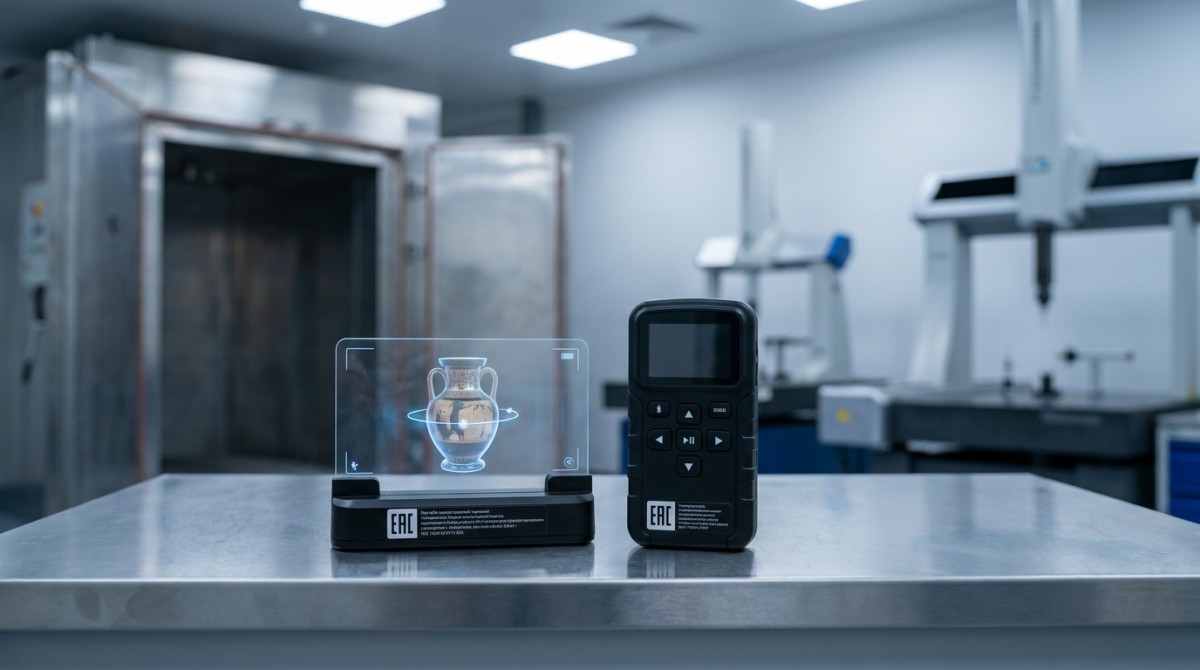
Effective 1 July 2026, new requirements under the Eurasian Economic Union (EAEU) Technical Regulation TR CU 020/2011 — as amended and entered into force on 25 May 2026 — will impose mandatory full-type conformity assessment on smart devices used in cultural and tourism applications entering EAEU member states, including Russia and Kazakhstan. This regulatory shift directly affects manufacturers and exporters of such equipment based in China, increasing compliance lead times and certification expenditures.
Regulatory Timeline and Scope of Application
The revised version of TR CU 020/2011 took legal effect on 25 May 2026. From 1 July 2026 onward, all cultural-tourism smart devices placed on the EAEU market — including AR-guided terminals, voice-guided audio players, and immersive interactive installations — must undergo comprehensive type testing covering electromagnetic compatibility (EMC), electrical safety, and energy efficiency. Test reports must be issued by laboratories accredited under the EAEU mutual recognition framework with CNAS, and recognized by EAEU competent authorities.
Impact Across the Export Supply Chain
Direct Exporters
Export-oriented enterprises supplying devices to EAEU markets face extended time-to-market due to longer test cycles and stricter documentation review. Pre-shipment conformity verification now requires full-type test reports — not just sample-based assessments — making batch-level certification less flexible.
Manufacturers and OEMs
Equipment producers must revalidate product designs against updated EMC and safety thresholds. Internal R&D and QA workflows need alignment with EAEU-specific test protocols, especially for wireless communication modules and power management circuits embedded in interactive devices.
Component and Subsystem Suppliers
Suppliers of critical subsystems — such as battery packs, RF transceivers, or AC/DC converters — may be asked to provide traceable compliance evidence (e.g., certified component declarations or third-party test summaries) to support the final device-level type testing.
Compliance and Certification Service Providers
Testing and certification intermediaries must ensure their laboratory partnerships meet EAEU’s updated accreditation criteria. Demand is expected to rise for end-to-end technical documentation support, including Russian-language user manuals, labeling templates, and declaration of conformity (DoC) drafting aligned with TR CU 020/2011 Annexes.
Key Compliance Priorities for Enterprises
Verify Laboratory Recognition Status
Confirm that the chosen testing laboratory appears on the official EAEU list of CNAS-recognized bodies. Reports from non-listed labs — even if CNAS-accredited — will not satisfy the regulatory precondition.
Align Product Documentation with TR CU Requirements
Update technical files to include detailed EMC test plans, safety risk assessments per IEC 62368-1, and energy consumption measurement records compliant with EAEU metrological standards. Russian-language labels and packaging must reflect full-type test reference numbers.
Adjust Procurement and Delivery Schedules
Factor in a minimum 8–12 week buffer for full-type testing (vs. 3–4 weeks for partial assessments). Reassess order lead times, especially for projects tied to government-funded museum or heritage site upgrades scheduled for Q3–Q4 2026.
Review Supplier Qualification Protocols
Integrate EAEU-specific compliance clauses into supplier agreements — particularly for firmware updates, battery replacements, and enclosure materials — to prevent post-certification nonconformity during surveillance audits.
Industry Perspective: Beyond Compliance Toward Systemic Readiness
Analysis shows this amendment reflects a broader trend toward harmonized, system-level conformity assessment across EAEU sectors — moving beyond component-level checks to integrated device performance validation. Observably, the requirement for CNAS-mutual-recognition labs signals growing emphasis on cross-border test data credibility rather than procedural duplication. What deserves closer attention is how quickly domestic Chinese testing institutions adapt their capabilities to cover full EMC + safety + energy testing in a single accredited scope — a gap currently filled by limited regional partners. From an industry perspective, this change is more appropriately understood as a catalyst for upgrading internal quality infrastructure, not merely an administrative hurdle.
Taking Stock: A Strategic Inflection Point
This update marks a structural tightening of market access conditions for smart cultural-tourism hardware in the EAEU region. While it raises short-term compliance costs and planning complexity, it also incentivizes systematic product development discipline, stronger technical documentation practices, and deeper collaboration between manufacturers and accredited testing entities. The long-term implication is a gradual elevation of baseline quality expectations — benefiting both consumers and reputable suppliers who invest proactively in alignment.
Source Attribution and Ongoing Monitoring
This article is generated exclusively from the provided title, event date (1 July 2026), and summary description. Specific official source links were not provided in the input and should be verified continuously. Stakeholders are advised to monitor subsequent EAEU Customs Union decisions, national implementation guidelines issued by Rosstandart (Russia) and Kazakhstani technical regulators, tender document revisions in public-sector cultural procurement, and updates to the EAEU unified register of accredited laboratories.
Your 1:1 travel consultant will respond within 1 business day
How to plan your trip
- Multiple regions announce autumn break dates for primary and secondary schools; attractions offer benefits such as discounted admission
- China’s Civil Aviation Industry to Implement the 2026/2027 Winter-Spring Flight Schedule from October 25
- Autumn Breaks in Multiple Regions Boost November Travel, Offering Hope for the Traditional Low Season
- China Tourism Academy Releases Report on Autumn Trends in China's Domestic Customized Tour Market
- What should I wear for a winter trip to Harbin and Mohe to cope with the extreme outdoor cold?
Monthly travel guide
- Luoyang launches the “Autumn Charm of the Divine Capital” tourism promotion to build anticipation for winter travel
- Typhoon “White Dolphin” Forces Henan Scenic Areas to Close, Putting Summer Ground-Handling Services Under Pressure
- RCEP Implementing Rules for Indonesia Take Effect: Zero Tariffs for Cultural and Tourism Services Alongside Strict Customer Service Requirements
- Saudi Arabia’s New SASO Regulations Take Effect: Taqat Certification Required Before Chinese-Language Cultural Tourism Services Can Access Visit Saudi
- Zhengzhou Launches a Dedicated LCL Shipping Route for Cultural and Tourism Materials, Cutting Freight Costs by 18%
- Luoyang Cold Chain Intensification: Cultural and Creative Exports Delivered in 9 Days
- Expedited Pre-Approval for Group Visas to Three Southeast Asian Countries
- Tightening air freight capacity at Zhengzhou Airport delays the delivery of cultural and tourism materials
- Vietnam's New Regulations on Bus Monitoring Requirements for Group Tours
- Saudi SAMA New Regulations on Travel Liability Insurance Compliance Preparation
- Japanese tourists' new regulations for entering Henan local transport vehicles
- Wai Gao Qiao Wen Travel customs bonded warehouse summer group equipment fast lane
Popular destinations
- The Complete 2026 Guide to Inbound Tourism in Henan, China: 144-Hour Visa-Free Transit, the Latest Policies, and In-Depth Travel Tips
- The 17th China Yangtze Three Gorges International Tourism Festival Sees 17 Cultural and Tourism Projects Signed
- Multiple regions announce autumn break dates for primary and secondary schools; attractions offer benefits such as discounted admission
- China’s Civil Aviation Industry to Implement the 2026/2027 Winter-Spring Flight Schedule from October 25
- The Guizhou Provincial Government Approves the Guizhou Province 15th Five-Year Plan for Culture and Tourism
Why choose us

High cost-performance and transparent experience
Offer astonishing low prices without hidden tourism traps, enabling travelers to explore at lower costs while avoiding unnecessary spending loopholes, ensuring transparent consumption.

Personalization and dedicated service
Support 100% free customization, paired with one-on-one expert service, crafting exclusive itineraries based on travelers' specific needs, while providing professional guidance to enhance the personalization and professionalism of the journey.

Premium itinerary planning
Compact yet rich itineraries allow travelers to experience more within limited time; simultaneously, carefully selected hotels in prime locations provide convenient lodging conditions, overall enhancing travel comfort and experience.