Welcome to Our Travel Agency!




Travel Guide
The Beijing Inbound Tourism Development Summit 2026—scheduled for June 1–6, 2026—marks a strategic step in aligning China’s cultural tourism supply chain with international procurement standards and service expectations. Its timing and structured matchmaking mechanism directly influence how overseas buyers assess service readiness, compliance transparency, and operational scalability across China’s inbound tourism ecosystem.
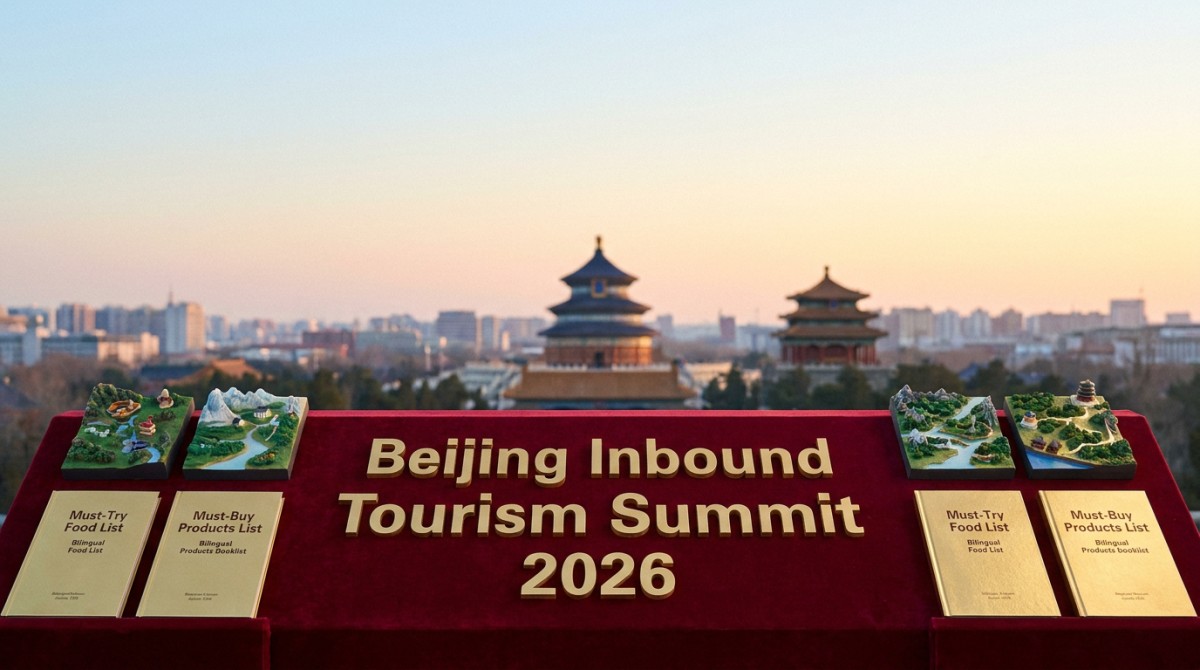
Event Overview: Structured Engagement for Global Market Access
Co-organized by the Beijing Municipal Bureau of Culture and Tourism and the International Exchange and Cooperation Bureau of the Ministry of Culture and Tourism, the summit convened over 300 leading inbound travel operators from more than 40 countries between June 1 and June 6, 2026. A dedicated digital appointment platform facilitated over 3,000 precise B2B matchings. The summit also unveiled three key market-facing tools: a ‘Must-Try Food List’, a ‘Must-Buy Products List’, and eight immersive familiarization routes designed to showcase destination capabilities on-the-ground.
Supply Chain Impact Across Key Operator Roles
Direct Tourism Exporters
These enterprises—offering end-to-end inbound packages, multilingual guided tours, or visa-assisted group services—face heightened expectations for standardized documentation, real-time capacity visibility, and verifiable service certifications. The summit’s emphasis on pre-validated routes and curated lists signals a shift toward outcome-based procurement, where performance evidence (e.g., guest satisfaction metrics, digital engagement rates) may increasingly supplement traditional credentials.
Local Experience Providers & Ground Operators
Regional tour operators, boutique accommodation providers, and activity vendors must now align their offerings with internationally benchmarked quality thresholds—including accessibility features, multilingual digital interfaces, and integrated payment solutions. The ‘immersive familiarization routes’ serve as de facto service blueprints; alignment with these pathways is becoming an implicit qualification for inclusion in buyer shortlists.
Tourism Technology Solution Providers
Firms delivering booking engines, AI-powered translation tools, real-time itinerary optimization platforms, or contactless experience systems are gaining priority access through the summit’s tech-integration focus. Buyers explicitly sought interoperable, GDPR-compliant, and WeChat/Alipay-agnostic solutions—indicating that data governance frameworks and cross-platform compatibility are now core technical bid requirements.
Destination Marketing & Certification Support Services
Organizations offering third-party verification (e.g., sustainability certification, safety audits, language proficiency validation), multilingual content localization, or regulatory compliance advisory services are seeing increased demand. The summit’s structured matchmaking highlighted gaps in standardized, internationally recognized attestations—especially for niche experiences such as culinary heritage tours or intangible cultural heritage workshops.
Strategic Priorities for Market-Ready Enterprises
Prepare for Service-Level Certification Alignment
With buyers relying on curated lists and vetted routes, enterprises should proactively validate their offerings against emerging benchmarks—not only for food safety or hotel star ratings, but also for experiential consistency, inclusive design, and post-trip feedback integration. Third-party verification aligned with ISO 20121 (event sustainability) or UNWTO guidelines is gaining traction.
Optimize Digital Matchmaking Readiness
Participation in future editions requires up-to-date profiles on the official appointment platform—including verified capacity calendars, multilingual service menus, live inventory feeds, and demonstrable integration with global distribution systems (GDS). Technical documentation must clearly specify API protocols, data retention policies, and incident response SLAs.
Strengthen Local-Global Content Bridging
Marketing assets—including route descriptions, vendor bios, and product videos—must be professionally localized beyond translation: culturally contextualized, visually optimized for mobile-first consumption, and compliant with regional data privacy norms (e.g., GDPR, PIPL). Buyers reported declining trust in machine-translated or template-based materials during initial screenings.
Anticipate Dynamic Procurement Cycles
The summit’s six-day format reflects a growing preference for accelerated decision timelines. Suppliers should adjust internal workflows to support rapid response to RFPs, flexible minimum order quantities (MOQs) for pilot groups, and modular pricing structures tied to measurable KPIs (e.g., NPS uplift, repeat booking rate).
Industry Observation: From Transactional Matching to Ecosystem Validation
Analysis shows this summit represents more than a trade fair—it functions as an informal standard-setting forum. The ‘Must-Try’ and ‘Must-Buy’ lists, though non-regulatory, are rapidly evolving into de facto market gateways. Observably, buyers are using them not just for discovery, but as reference frameworks during due diligence—cross-checking supplier claims against list criteria. It is more appropriate to understand this as an emergent layer of soft compliance: while no law mandates inclusion, exclusion increasingly implies non-readiness for scalable international partnership. What deserves closer attention is how local authorities may formalize elements of these lists into municipal service guidelines or incentive eligibility criteria in coming quarters.
Conclusion: A Catalyst for Systemic Supply Chain Maturation
The 2026 summit does not introduce binding regulation—but it crystallizes market-driven expectations that are reshaping procurement behavior, investment priorities, and capability development across China’s inbound tourism value chain. Its enduring significance lies not in policy enforcement, but in accelerating convergence between domestic service delivery and globally accepted benchmarks for reliability, transparency, and guest-centricity.
Source Attribution & Verification Guidance
This article synthesizes information provided in the user-specified title, event date (June 1, 2026), and summary. Specific official source links were not provided in the input and should be verified continuously. Stakeholders are advised to monitor updates from the Beijing Municipal Bureau of Culture and Tourism, the Ministry of Culture and Tourism’s International Exchange and Cooperation Bureau, and official summit communications for forthcoming implementation details, qualification criteria for future editions, and potential integration of summit-generated frameworks into municipal tourism development plans.
Your 1:1 travel consultant will respond within 1 business day
How to plan your trip
- Hebei Launches Five “Trendy Hebei” Premium Tourism Routes for Inbound Travelers, Moving Toward Standardized Offerings
- The 12th Qionghai Tanmen Coastal Foraging Festival Opens on August 16
- Guangxi’s Digital Silk Road Accelerates: Orah Mandarin Juice Secures an Italian Order, Drawing Attention to Export Standards for Souvenirs
- New Inquiry Triggered by Coastal Cultural Tourism Space Standards
- Zhuanghe’s agro-cultural tourism model draws ASEAN attention, highlighting the compliance requirements for the internationalization of camping and intangible cultural heritage handicrafts
Monthly travel guide
- Typhoon “White Dolphin” Forces Henan Scenic Areas to Close, Putting Summer Ground-Handling Services Under Pressure
- RCEP Implementing Rules for Indonesia Take Effect: Zero Tariffs for Cultural and Tourism Services Alongside Strict Customer Service Requirements
- Saudi Arabia’s New SASO Regulations Take Effect: Taqat Certification Required Before Chinese-Language Cultural Tourism Services Can Access Visit Saudi
- Zhengzhou Launches a Dedicated LCL Shipping Route for Cultural and Tourism Materials, Cutting Freight Costs by 18%
- Luoyang Cold Chain Intensification: Cultural and Creative Exports Delivered in 9 Days
- Expedited Pre-Approval for Group Visas to Three Southeast Asian Countries
- Tightening air freight capacity at Zhengzhou Airport delays the delivery of cultural and tourism materials
- Vietnam's New Regulations on Bus Monitoring Requirements for Group Tours
- Saudi SAMA New Regulations on Travel Liability Insurance Compliance Preparation
- Japanese tourists' new regulations for entering Henan local transport vehicles
- Wai Gao Qiao Wen Travel customs bonded warehouse summer group equipment fast lane
- JTB Warning: Risks in Henan’s September Red Leaf Family Tour Purchases
Popular destinations
- China's Henan Province 144-Hour Visa-Free Transit Policy in 2026: Latest Regulations & In-Depth Travel Strategies
- The China-Europe Railway Express (Zhengzhou) Launches a Dedicated Train for Culture and Tourism Equipment, Cutting Customs Clearance Time to 48 Hours
- RCEP Cultural and Tourism Services Commitment Upgrade: Faster Market Access for Chinese Outbound Tourism Service Providers in Vietnam and Malaysia
- Japan to Introduce a Credit Point System for Chinese-Speaking Tour Guides, Trial Operation in August
- The EU Clarifies That Digital Platforms for Culture and Tourism Are Subject to GDPR Regulation
Why choose us

High cost-performance and transparent experience
Offer astonishing low prices without hidden tourism traps, enabling travelers to explore at lower costs while avoiding unnecessary spending loopholes, ensuring transparent consumption.

Personalization and dedicated service
Support 100% free customization, paired with one-on-one expert service, crafting exclusive itineraries based on travelers' specific needs, while providing professional guidance to enhance the personalization and professionalism of the journey.

Premium itinerary planning
Compact yet rich itineraries allow travelers to experience more within limited time; simultaneously, carefully selected hotels in prime locations provide convenient lodging conditions, overall enhancing travel comfort and experience.