Welcome to Our Travel Agency!




Travel Guide
The Chinese government has unveiled the Artificial Intelligence + Tourism Three-Year Action Plan (2026–2028), introducing a targeted certification support framework for AI-powered tourism products entering international markets. Although the exact event date was not specified in the official announcement, the plan was formally released on 30 May 2026 in Beijing. This initiative directly impacts technology-driven tourism service providers, particularly those developing multilingual AI guide systems and intelligent translation terminals, by addressing key compliance barriers in global market access.
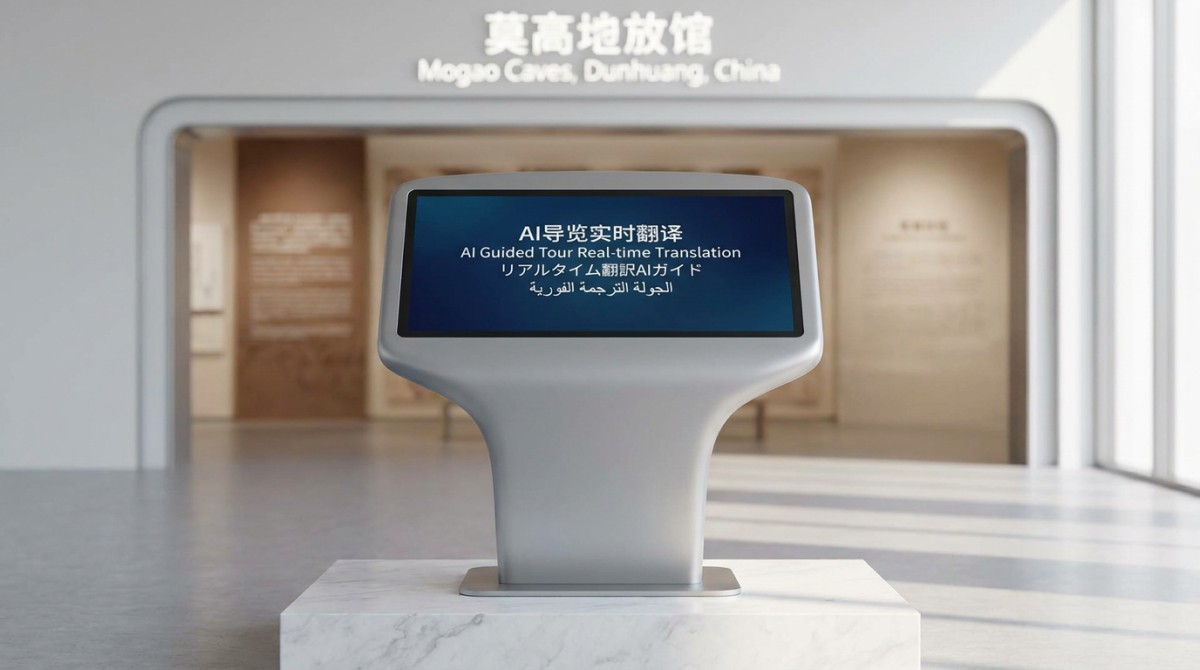
Official Rollout of the AI Tourism Export Certification Support Program
On 30 May 2026, Beijing issued theArtificial Intelligence + Tourism Three-Year Action Plan (2026–2028). For the first time, the plan establishes the AI Tourism Products Overseas Certification Support Program. Under this program, the Ministry of Industry and Information Technology (MIIT) and the China National Certification and Accreditation Administration (CNCA) will jointly set up fast-track mutual recognition channels for CE, UKCA, and ETL certifications—specifically for multilingual AI guide systems and intelligent translation terminals. Additionally, a pilot ‘White List’ system is launched for overseas localized deployment of Chinese-language cultural tourism AI models, aiming to reduce compliance requirements for technology-based tourism service providers seeking international expansion.
Impact Across the Tourism Technology Value Chain
Direct export enterprises
These companies face revised conformity assessment expectations when exporting AI guide hardware or SaaS platforms. The new mutual recognition pathways simplify certification timelines but require early alignment with EU, UK, and North American regulatory documentation standards—including technical files, risk assessments, and language-specific user instructions.
Hardware manufacturing enterprises
Manufacturers of intelligent translation terminals must now ensure product design and firmware architecture accommodate dual-mode certification evidence generation (e.g., both CE and UKCA declarations of conformity). Component-level traceability and third-party test reports aligned with EN/IEC standards become critical pre-shipment requirements.
Software and AI model development firms
Firms deploying Chinese-language AI models abroad must prepare for white-list eligibility criteria—likely including data residency provisions, linguistic validation protocols, and audit-ready model versioning logs. Localized inference engine performance benchmarks may be required for each target jurisdiction.
Supply chain and compliance service providers
Third-party testing labs, certification bodies, and localization vendors will see increased demand for integrated services covering regulatory strategy, multilingual technical documentation, and post-deployment compliance monitoring—especially where white-listed models interface with local data governance regimes.
Key Priorities and Operational Adjustments for Enterprises
Accelerate alignment with CE/UKCA/ETL technical documentation requirements
Enterprises should initiate gap analyses against EN 62366-1 (usability), EN 301 489-1 (EMC), and IEC 62366-2 (AI-enabled medical-device-adjacent usability) — even if not strictly classified as medical devices, many AI guide systems fall under broader ICT equipment safety mandates.
Prepare for white-listed AI model deployment audits
Documentation packages must include model training data provenance, cross-lingual accuracy validation reports per target region (e.g., German, Japanese, Arabic), and evidence of real-time content moderation logic compliant with host-country cultural regulations.
Integrate certification timelines into product development roadmaps
Given the mutual recognition mechanism’s emphasis on concurrent submissions, engineering teams need to synchronize firmware release cycles, test lab scheduling, and technical file finalization—reducing typical 12–16 week certification lead times by up to 40% if prepared in advance.
Industry Observation: Beyond Certification Efficiency
Analysis shows that this initiative signals a strategic shift—from treating AI tourism tools as generic consumer electronics to recognizing them as context-sensitive cultural infrastructure requiring jurisdiction-aware governance. It is more appropriate to understand this as an early-stage institutional response to rising global scrutiny of AI-generated cultural narratives and real-time translation fidelity. What deserves closer attention is how the white-list mechanism may evolve into de facto interoperability standards, influencing procurement specifications in UNESCO World Heritage sites or national museum consortia abroad. Observably, compliance cost reduction is not uniform: while certification acceleration benefits hardware exporters, software vendors face new overhead in linguistic validation and audit readiness—shifting the compliance burden upstream into R&D planning.
Toward Standardized, Jurisdiction-Aware AI Tourism Deployment
This action plan marks a foundational step in formalizing the regulatory interface between AI innovation and cross-border cultural services. Its significance lies less in immediate market access gains and more in establishing precedent: defining AI tourism products as distinct regulatory objects—not merely IT hardware or software—and building institutional capacity for their responsible global scaling. Rational observation suggests that success hinges not on speed of implementation alone, but on transparency in white-list evaluation criteria and harmonization of test methodologies across mutual recognition partners.
Source Attribution and Ongoing Monitoring
This article is generated exclusively from the provided title, event date, and summary. Specific official source links were not provided in the input and should be verified continuously. Readers are advised to monitor upcoming policy implementation guidelines, detailed mutual recognition protocols published by MIIT and CNCA, tender document updates from international cultural institutions, and feedback from pilot white-list participants during 2026–2027.
Your 1:1 travel consultant will respond within 1 business day
How to plan your trip
- Hebei Launches Five “Trendy Hebei” Premium Tourism Routes for Inbound Travelers, Moving Toward Standardized Offerings
- The 12th Qionghai Tanmen Coastal Foraging Festival Opens on August 16
- Guangxi’s Digital Silk Road Accelerates: Orah Mandarin Juice Secures an Italian Order, Drawing Attention to Export Standards for Souvenirs
- New Inquiry Triggered by Coastal Cultural Tourism Space Standards
- Zhuanghe’s agro-cultural tourism model draws ASEAN attention, highlighting the compliance requirements for the internationalization of camping and intangible cultural heritage handicrafts
Monthly travel guide
- Typhoon “White Dolphin” Forces Henan Scenic Areas to Close, Putting Summer Ground-Handling Services Under Pressure
- RCEP Implementing Rules for Indonesia Take Effect: Zero Tariffs for Cultural and Tourism Services Alongside Strict Customer Service Requirements
- Saudi Arabia’s New SASO Regulations Take Effect: Taqat Certification Required Before Chinese-Language Cultural Tourism Services Can Access Visit Saudi
- Zhengzhou Launches a Dedicated LCL Shipping Route for Cultural and Tourism Materials, Cutting Freight Costs by 18%
- Luoyang Cold Chain Intensification: Cultural and Creative Exports Delivered in 9 Days
- Expedited Pre-Approval for Group Visas to Three Southeast Asian Countries
- Tightening air freight capacity at Zhengzhou Airport delays the delivery of cultural and tourism materials
- Vietnam's New Regulations on Bus Monitoring Requirements for Group Tours
- Saudi SAMA New Regulations on Travel Liability Insurance Compliance Preparation
- Japanese tourists' new regulations for entering Henan local transport vehicles
- Wai Gao Qiao Wen Travel customs bonded warehouse summer group equipment fast lane
- JTB Warning: Risks in Henan’s September Red Leaf Family Tour Purchases
Popular destinations
- China's Henan Province 144-Hour Visa-Free Transit Policy in 2026: Latest Regulations & In-Depth Travel Strategies
- The China-Europe Railway Express (Zhengzhou) Launches a Dedicated Train for Culture and Tourism Equipment, Cutting Customs Clearance Time to 48 Hours
- RCEP Cultural and Tourism Services Commitment Upgrade: Faster Market Access for Chinese Outbound Tourism Service Providers in Vietnam and Malaysia
- Japan to Introduce a Credit Point System for Chinese-Speaking Tour Guides, Trial Operation in August
- The EU Clarifies That Digital Platforms for Culture and Tourism Are Subject to GDPR Regulation
Why choose us

High cost-performance and transparent experience
Offer astonishing low prices without hidden tourism traps, enabling travelers to explore at lower costs while avoiding unnecessary spending loopholes, ensuring transparent consumption.

Personalization and dedicated service
Support 100% free customization, paired with one-on-one expert service, crafting exclusive itineraries based on travelers' specific needs, while providing professional guidance to enhance the personalization and professionalism of the journey.

Premium itinerary planning
Compact yet rich itineraries allow travelers to experience more within limited time; simultaneously, carefully selected hotels in prime locations provide convenient lodging conditions, overall enhancing travel comfort and experience.