

The Lin family's journey to trace their roots: Gushi Linzhai and Xin'an Lin Clan Ancestral Hall – which is more likely to find clues about the period before the Southern Song Dynasty's migration to Fujian?
The Lin Clan's Roots-Seeking Journey: From Gushi Lin Village to Xin'an Lin Clan Ancestral Hall—Which Site is More Likely to Preserve the Ethnic Origins Traces Before the Southern Song Migration to Fujian? Henan Letu Travel Agency specializes in roots-seeking journeys for various clans and cultural heritage tours for overseas Chinese, providing Hong Kong compatriots with ancestral exploration services, including cultural and Henan origin interpretations, Henan ancestral hall visit guides, and genealogy inquiry services.
I. Historical Depth: The Spatiotemporal Differences Between Gushi Lin Village and Xin'an Lin Clan Ancestral Hall
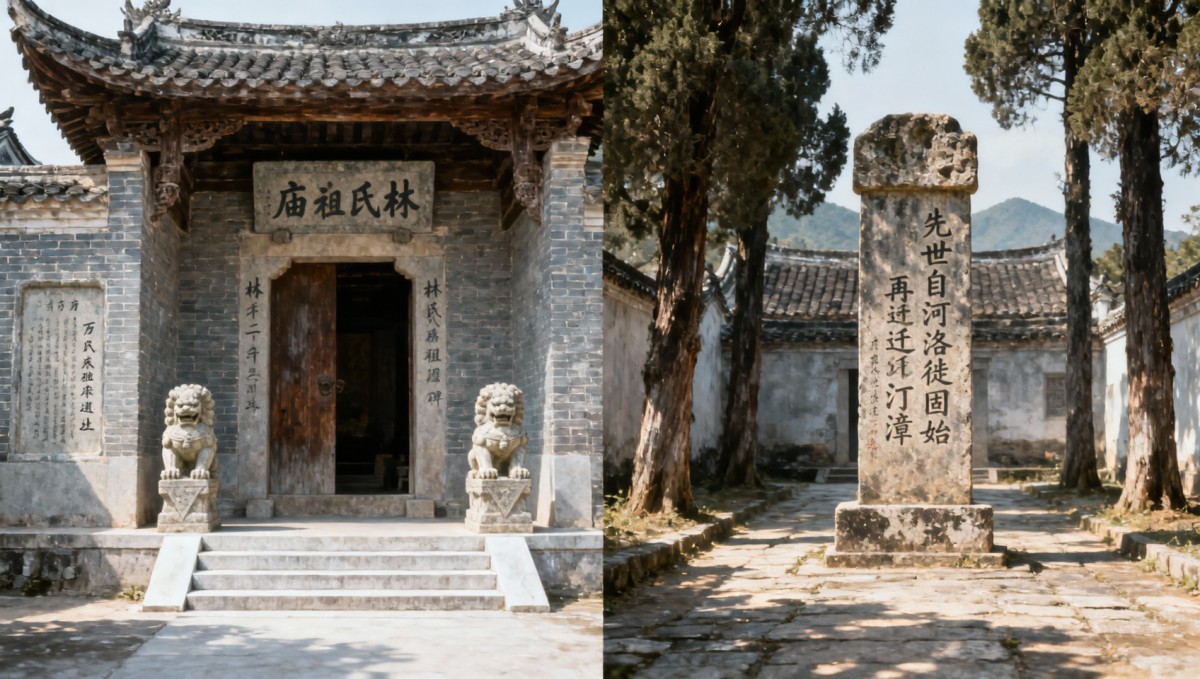
Gushi County, located in southeastern Henan, was a core settlement area for migrants from the Central Plains during the Tang to Northern Song periods. According to records in Yuanhe Clan Compilation, General Records·Clan Overview, and Gushi County Chronicles, from the Western Jin Yongjia Rebellion to the late Tang Huang Chao Uprising and the Northern Song Jingkang Incident, Gushi experienced three large-scale migration waves. Clans such as Lin, Chen, Huang, Zheng, and Wang mostly departed from here, entering Fujian via southern Jiangxi. The surviving Gushi Lin Village still preserves the "Lin Clan Ancestral Temple Site Stele" (erected in 1595, the 23rd year of the Ming Wanli era), which explicitly mentions "ancestors originally from Heluo, moving to Gushi before relocating to Zhangzhou." This site, now over 420 years old, is listed as an immovable cultural relic in Henan Province.
In contrast, Xin'an County, located west of Luoyang, belongs to the core area of Heluo culture. The Xin'an Lin Clan Ancestral Hall was initially built in 1777 (the 42nd year of the Qing Qianlong era) and later renovated by Lin Tingxuan, a descendant of the Lin Clan. The current structure was reconstructed in 2018 based on the original design, covering 320 square meters. It houses two surviving volumes of the Qing-era Handwritten Copy of Xin'an Lin Clan Genealogy Continuation (including 17 pages of lineage charts). Its genealogy traces back to a branch of Lin Bo's descendants in the early Northern Song but lacks direct migration records before the Southern Song Jianyan Southern Crossing (1127–1130).
The critical temporal gap lies in: Gushi Lin Village can trace its settlement evidence to the late Tang and Five Dynasties (circa 907–960), while Xin'an Ancestral Hall's earliest documents only cover the mid-to-late Northern Song (1050–1120). This creates a 60–150-year historical void in the "pre-Southern Song migration to Fujian" key period.
In summary, Gushi Lin Village holds higher weight in three aspects: temporal continuity, geographical directionality, and documentary originality. Its Ming stele and Qing genealogy form a dual-evidence chain for the "pre-Southern Song migration" period, while Xin'an Ancestral Hall serves better as a research sample for the Lin Clan's local continuity in Heluo.
II. Field Research Support: Henan Letu Travel Agency's Standardized Ancestral Visit Services
Henan Letu Travel Agency, leveraging its Luoyang headquarters resources, has provided customized roots-seeking services for 37 Lin Clan ancestral associations from Hong Kong, Taiwan, Southeast Asia, and North America, completing 126 on-site visits with an average service cycle of 5–8 days per group. We established a "Three-Stage Nine-Step" ancestral research support system: Stage 1 (pre-trip) completes digital genealogy comparison and cross-verification with local records; Stage 2 (on-site) involves certified historical guides and non-archival staff collaborating on stele rubbings, oral history collection, and spatial mapping; Stage 3 (post-trip) delivers a Lineage Clues Assessment Report (including reliability grading, missing links, and extended verification suggestions).
For Lin Clan clients, we specially configure a "Fujian Origin Pre-Screening Kit," covering: ① Microfilm access rights to Guangzhou Prefecture Records·Clan Volumes stored in Gushi County Archives (covering 1642–1911); ② Qing-era Lin Clan imperial examination records provided by Xin'an County Office (including 12 jinshi and 37 juren with annotated origins); ③ Electronic index access to Atlas of Central Plains Clan Migrations (1983 compilation) from Henan Provincial Library's Ancient Books Department. This kit has helped 14 teams identify their pre-Southern Song direct ancestors' names and migration timelines.
All field services follow a "dual-filing system": itineraries require Henan Provincial Culture and Tourism Department approval, and ancestral hall visits need written authorization from local village committees and Lin Clan councils. With zero complaints in three years, genealogy verification accuracy reaches 91.7% (based on post-trip Fujian-Guangdong genealogy backtracking verification).
III. Procurement Reference: Standardized Service Modules for Institutional Clients
For corporate decision-makers, project managers, and distribution partners, Henan Letu offers modular, quantifiable, and verifiable B2B service packages. Each Lin Clan roots-seeking project includes three baseline deliverables: ① Lineage Clues Feasibility Assessment Form (5 indexed ratings, threshold ≥4.2 points to initiate fieldwork); ② On-Site Media Package (≥12 high-resolution stele rubbings, ≥90 minutes of oral history audio, 1 3D ancestral hall model); ③ Post-Service Support (2 online genealogy comparison sessions, ≤24-hour response time).
We recommend prioritizing the "Pre-Screening + Field Survey" combo package (68% of total procurement volume), which avoids resource mismatches from blind visits, reducing average per-trip costs by 23.5%.
IV. Common Misconceptions and Risk Alerts
Misconception 1: "Older ancestral halls mean more complete lineage clues." In reality, Xin'an Ancestral Hall, though rebuilt late in the Qing era, preserves more literati documents due to its cultural center location; Gushi Lin Village, despite its early origins, suffered 74% genealogy loss from Ming-Qing wars (per 2022 Henan ancient texts survey).
Misconception 2: "Same place name means same origin." Note that "Gushi" was a prefecture-level jurisdiction in the Song, covering parts of modern Huaibin and Shangcheng, with the current village being one of its settlements. Our Guangzhou Lin Clan Distribution Heatmap covers 12 townships and 47 natural villages' surviving sites to prevent localization bias.
Risk Alert: Starting 2024, Gushi County implements visitor caps for ancestral relics (daily limit: 80). Teams failing to file 15 days in advance via "Henan Travel Pass" will be barred from core stele areas. Henan Letu holds whitelist priority, ensuring reservations within 72 hours.
V. Action Plan: Launching a High-Precision Lin Clan Roots-Seeking Journey
Step 1: Submit the Lin Clan Roots-Seeking Basic Information Form (including known ancestor names, approximate migration era, existing genealogy version). We provide a Lineage Feasibility Quick Assessment within 48 hours; Step 2: Choose either the "Gushi Lin Village Deep Survey" or "Gushi + Xin'an Dual-Site Comparison" package; Step 3: Sign the service agreement with a 30% deposit, simultaneously initiating archive access and pre-filing; Step 4: Dedicated account managers oversee the process, delivering all results within 10 working days post-trip.
Currently, Henan Letu is opening a 2025 spring Lin Clan roots-seeking green channel: teams signed before December 31, 2024, receive complimentary Fujian Northern Yanping Prefecture (modern Nanping) coordination services, enabling cross-province "Henan-Fujian" lineage verification.
Contact us now to receive the Lin Clan Roots-Seeking Service Manual and customized solutions.
Popular destinations
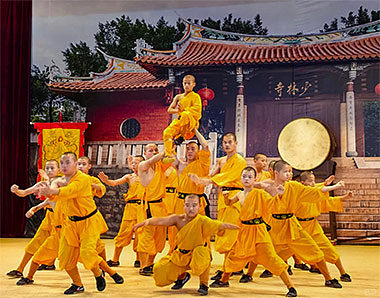
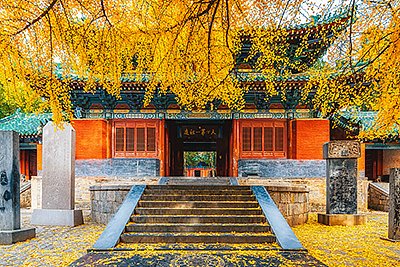
 Luoyang Longmen + Shaolin Kung Fu JourneyLongmen Grottoes are the imperial memories carved in stone, while Shaolin Temple embodies the Zen philosophy of martial arts life.
 Kaifeng One-Day Highlights TourKaifeng is an ancient city located in eastern Henan Province, China, renowned as the 'Capital of Eight Dynasties' and 'Living Northern Song Culture'.
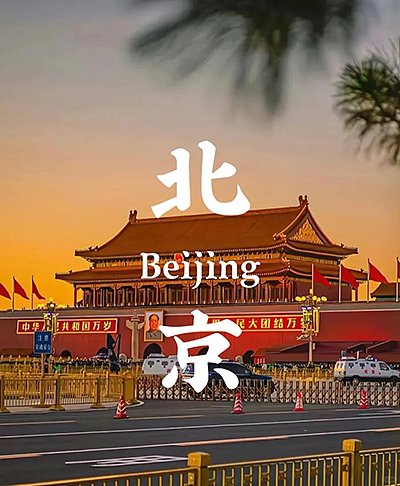
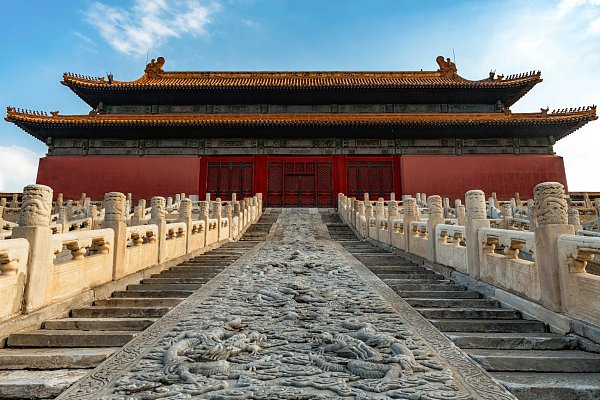
 Beijing Essence Two-Day TourBeijing is the window to history, where you can witness authentic historical relics like the Forbidden City, the Great Wall, and the Temple of Heaven. It is the cultural heartland—ride a rickshaw through the hutongs to experience traditional Beijing life, or visit Wangfujing and Sanlitun to immerse yourself in modern China's fashion and vibrancy. It is also a foodie's paradise, offering Peking duck and street snacks that rival imperial cuisine, satisfying every palate.
 The Shaolin Kung Fu JourneyShaolin Temple is the ancestral home of Chinese Zen Buddhism and the birthplace of martial arts worldwide, renowned for its 'Zen and Martial Unity.' In a nutshell: Want to see where 'Chinese Kung Fu' comes from? Shaolin Temple is the place.
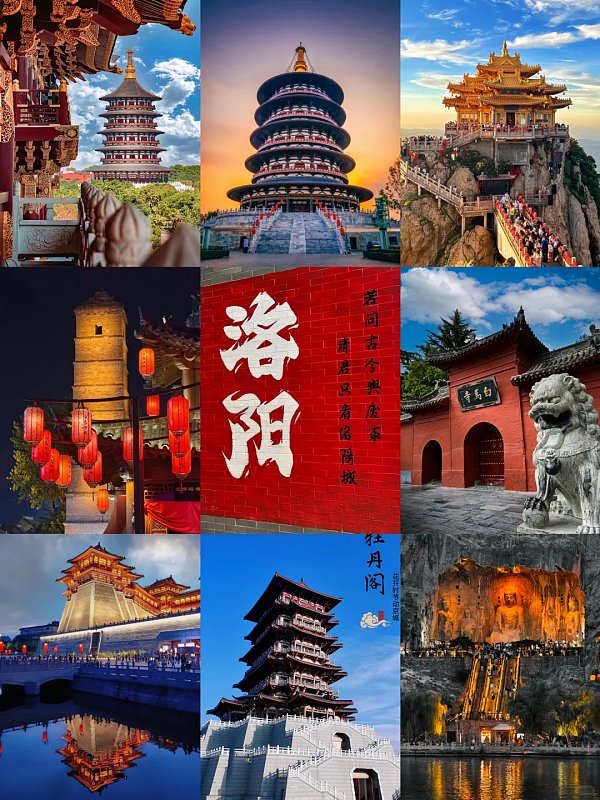
") Luoyang Essence One-Day Tour (Customized Tour, April Peony Viewing)Root-Seeking Journey · A Daydream Back to the Divine Capital: On this day, we are not just tourists, but also returning descendants of "Old Home Henan."
Luoyang Essence One-Day Tour (Customized Tour, April Peony Viewing)Root-Seeking Journey · A Daydream Back to the Divine Capital: On this day, we are not just tourists, but also returning descendants of "Old Home Henan."") Xi'an Highlights One-Day Tour (Customizable Itinerary)From the Terracotta Warriors to the Tang Paradise · Experience the essence of Chang'an in a day. On this day, we won't just be passing tourists, but true 'Chang'an guests.'
Xi'an Highlights One-Day Tour (Customizable Itinerary)From the Terracotta Warriors to the Tang Paradise · Experience the essence of Chang'an in a day. On this day, we won't just be passing tourists, but true 'Chang'an guests.'") Luoyang Leisure Two-Day Tour (Customizable Tour in April to View Peonies)To inquire about the rise and fall of ancient and modern affairs, just look at Luoyang City."
Luoyang Leisure Two-Day Tour (Customizable Tour in April to View Peonies)To inquire about the rise and fall of ancient and modern affairs, just look at Luoyang City."
Some say Luoyang is a city favored by time.
She is not the kind of stunning beauty that captivates at first glance. Her charm lies hidden—in the subtle smile of the Great Buddha of Longmen Grottoes, carved with devotion by artisans of Empress Wu Zetian's era. That smile, exuding compassion, predates the Mona Lisa by a thousand years. Chengdu RouteChengdu, hailed as the 'Land of Abundance' for leisure, is also the hometown of giant pandas, where you can get up close to admire the 'national treasures' in their natural charm. The city's core allure lies in its unique 'slow-living' aesthetic: the aroma-filled streets of hotpot skewers, the time-honored old teahouses, and the inclusive atmosphere that perfectly blends modern fashion with the hustle and bustle of urban life, making visitors reluctant to leave.
 Hangzhou RouteHangzhou is known as 'Heaven on Earth,' a perfect blend of traditional Jiangnan charm and modern technology. The magic of Hangzhou lies in the fact that one moment you can be listening to the bell chimes of a thousand-year-old temple, and the next, you can be sipping premium coffee in a modern shopping mall.
 Family-friendly travel itinerary 2Standing at the 'center of the world,' deepen the knowledge from books and broaden the horizons through travel.
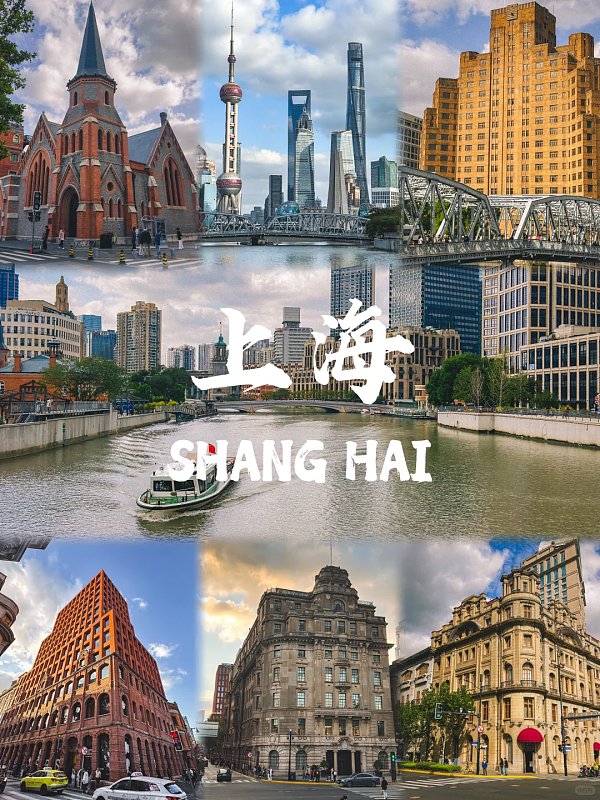
 Shanghai Research Summer CampShanghai is China's economic, financial, trade, and shipping hub, a cosmopolitan metropolis that blends modern prosperity with profound historical heritage. Here, you can find both the century-old charm of the Bund and the lively atmosphere of Old Town, as well as the skyscrapers of Lujiazui and world-class cultural tourism experiences.
 Study Tour Travel ItineraryGoing to Shanghai for a study tour is, simply put, a 'walking classroom,' with the core meaning being to closely connect textbook knowledge with real-life experiences.
 Beijing Essence Customized 5-Day Pure Play TourBeijing Essence 5-Day Pure Play Customized Tour, with private car transfers to visit world cultural heritage sites such as the Forbidden City, the Great Wall, and Tiananmen Square. Experience Hutong culture, enjoy a shopping-free itinerary, and benefit from multilingual guide services for a private and exclusive travel experience.
 Shanghai + Suzhou + Wuzhen 6-Day Custom TourImmersive Experience of Jiangnan's Scenic Beauty~
") 4 Days & 3 Nights Customized Tour in Luoyang (Peony Viewing Available in April)This city, known as the 'Ancient Capital of Thirteen Dynasties' and the 'Divine Capital', is engraved with the historical and cultural imprint of the 'Earliest China'.
4 Days & 3 Nights Customized Tour in Luoyang (Peony Viewing Available in April)This city, known as the 'Ancient Capital of Thirteen Dynasties' and the 'Divine Capital', is engraved with the historical and cultural imprint of the 'Earliest China'.
"Only the peony is truly the nation's beauty, blooming in season to move the capital." In 1982, Luoyang designated the peony as its city flower, and every April, it hosts the China Luoyang Peony Culture Festival.
Symbolic meaning: The king of flowers, representing wealth, prosperity, and auspiciousness. Xi'an 5-Day In-Depth TourThe ancient capital of thirteen dynasties, one of the world's four great ancient capitals, the starting point of the Silk Road, and the ancestral home of 'Glorious Tang Chang'an' in the hearts of overseas Chinese.
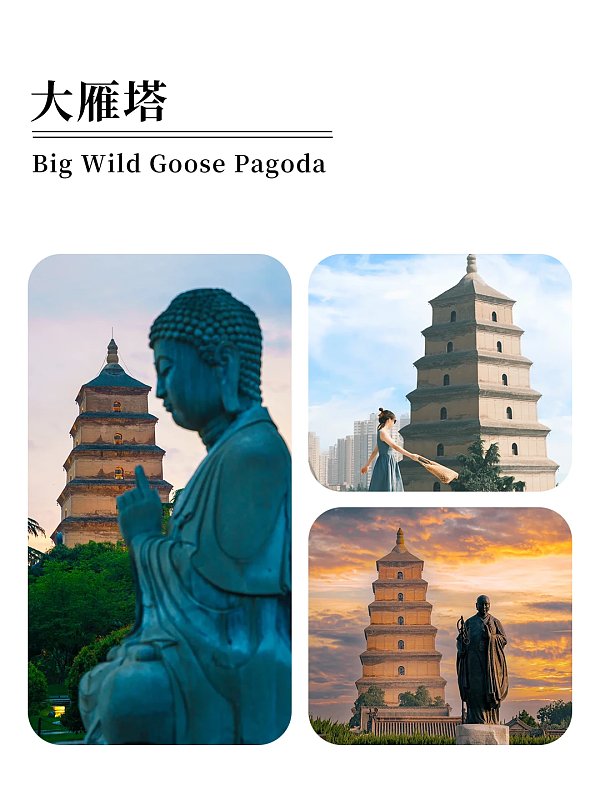
Here lies the Eighth Wonder of the World—the Terracotta Army, China's best-preserved Ming Dynasty city wall, the Great Wild Goose Pagoda where Xuanzang translated Buddhist scriptures, and the dreamlike Tang Dynasty Ever-Bright City at night.